
I. Exploring the World of CNC and CNC Press Brakes
CNC press brakes, vital in sheet metal fabrication, outperform manual models in precision, efficiency, and safety. Their role in manufacturing is set to grow. To better understand how CNC models compare to other types, you can also explore the NC vs CNC Press Brake: Key Differences.
CNC, short for Computer Numerical Control, refers to an automated machine tool controlled by a program. The control system can logically process a program with control codes or other symbolic instructions. By decoding these through a computer, the machine tool performs the pre-set actions.
CNC technology offers high automation, significantly reducing labor intensity. It ensures high precision and stable quality in part production.
With its high production efficiency, it can drastically shorten product development cycles. CNC provides a fast track for the research and development of new products, as well as improvements and modifications to existing products.
II. What is a CNC Press Brake
1. Intro: CNC Brake
A CNC press brake uses equipped dies (either general or specialized) to bend sheet metal in its cold state into workpieces of various geometric cross-sectional shapes. For those seeking a comprehensive look at bending mechanics and control systems, you can explore the Press Braking and CNC Technology Guide.
2. Unpacking the CNC Press Brake
(1) Frame
The main structure that provides stability and support for the machine.
(2) Ram
The ram section uses hydraulic transmission, consisting of the ram, cylinders, and a mechanical stop block fine-tuning structure.
The left and right cylinders are fixed to the frame, using hydraulics to move the piston (rod), driving the up-and-down movement of the ram. The mechanical stop block's adjustment is controlled by the numerical control system.
(3) Worktable
The worktable section is operated by a button box, causing the motor to drive the backgauge to move forward and backward.
The distance of movement is controlled by the numerical control system, with a minimum reading of 0.01 millimeters (both front and back positions have travel switch limits).
(4) Bed
The lower part of a bending machine where the workpiece is placed during bending.
(5) Hydraulic System
The hydraulic system is responsible for generating the force required to bend the workpiece. It typically consists of hydraulic cylinders, pumps, valves, hoses, and hydraulic power units. The hydraulic system controls the movement of the ram, clamping of the workpiece, and other hydraulic functions.
(6) Synchronization System
Unlike a conventional bending machine, this machine uses servo valves and grating rulers to form a closed-loop hydraulic circuit, thus precisely controlling the various movements of the press brake.
(7) Control System
The control system is the brain of a CNC press brake. It includes a computer control panel or touch screen interface that allows the operator to input bending parameters, program sequences, and monitor the machine's status. The control system communicates with various components and sensors to execute the programmed bending operations.
(8) Motor Controls
The electrical system includes motor controls to regulate the operation of electric motors used in the press brake. These controls can include motor starters, contactors, servo drives, or variable frequency drives (VFDs). They govern the speed, direction, and torque of the motors, controlling the movement of the ram, back gauge, and other motorized parts.
(9) Back Gauge
An electric or manual adjustment device that allows precise positioning of the workpiece for bending. It helps ensure consistent and accurate bending angles.
(10) Control Panel
The control panel is where the operator interacts with the CNC press brake. It typically includes a touch screen interface or computer control system. The operator can input bending parameters, program sequences, and monitor the machine's status and diagnostics.
(11) Foot Pedal
In addition to the control panel, some CNC press brakes are equipped with a foot pedal, which allows the operator to activate specific functions, such as clamping or releasing the workpiece.
(12) Crowning System
To compensate for the deflection of the bending machine frame and maintain consistent bending accuracy, some CNC press brakes are equipped with a crowning system. It can adjust the shape of the bed to counteract any deformation caused by bending forces.
(13) Tooling
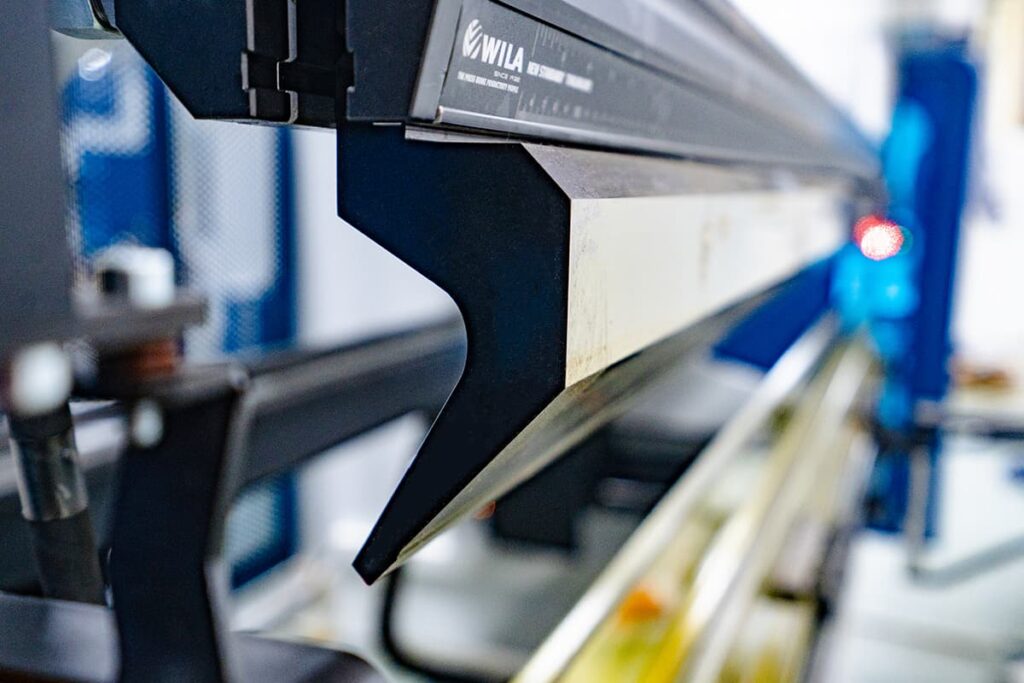
Tooling is a crucial part of the CNC press brake, as it shapes the workpiece during bending. Tooling includes a punch, which applies the bending force, and a die, which provides the desired bending angle. Different types of punches and dies are used depending on the material, thickness, and desired bend angle.
(14) Tool Storage
CNC press brakes often integrate tool storage systems into the machine. These systems can accommodate multiple tool options, allowing for quick tool changes to meet different bending requirements.
(15) Safety Features
The electrical system has safety features to protect the operator and prevent accidents. These include safety light curtains, emergency stop buttons, safety interlock devices, and other safety devices. The electrical system ensures that these safety features are properly integrated and functional, enhancing the overall safety of the CNC press brake.
(16) Wiring and Cables
The electrical system includes wiring and cables used to connect various electrical components, sensors, and actuators. Proper wiring and cable management are crucial for maintaining electrical safety, minimizing interference, and ensuring reliable communication between components.
3. Diverse Types of CNC Press Brakes
Hydraulic CNC Press Brakes
Hydraulic CNC press brakes are renowned for their high force capabilities and flexibility in handling heavy-duty tasks. Introduced in the 1960s, these machines revolutionized bending operations by offering precise control over ram speeds and stroke lengths.
- Key Features:
- Utilizes hydraulic cylinders to control the ram's motion, enabling smooth and consistent bending.
- High tonnage capacity, suitable for thick and tough materials like steel and titanium.
- Advanced synchronization systems (e.g., electro-hydraulic) ensure uniform force distribution across the workpiece.
- Advantages:
- Highly versatile, capable of bending a wide range of materials and thicknesses.
- Superior precision due to adjustable ram speeds and force application.
- Robust construction for demanding applications in industries like construction, automotive, and heavy machinery.
- Applications:
- Construction: Bending beams and structural components for skyscrapers and bridges.
- Heavy machinery: Producing durable parts for industrial equipment.
- Aerospace: Crafting components requiring tight tolerances.
Electric CNC Press Brakes
Electric CNC press brakes are designed for energy efficiency and fast operation, making them ideal for applications requiring high speed and precision with thinner materials.
- Key Features:
- Powered by servo-electric motors, offering precise control over ram movement.
- Quiet operation with minimal vibration compared to hydraulic models.
- Low energy consumption, reducing operational costs by up to 50%.
- Advantages:
- Environmentally friendly with reduced energy usage.
- High-speed operation improves productivity in high-volume production environments.
- Compact design with fewer moving parts, leading to lower maintenance requirements.
- Applications:
- HVAC industry: Bending ducts and fittings with precise airflow dimensions.
- Light metal fabrication: Producing components for furniture or decorative metalwork.
- Electronics: Crafting enclosures and thin sheet metal parts.
Hybrid CNC Press Brakes
Hybrid press brakes combine the strengths of hydraulic systems with the energy efficiency of electric motors. These machines are versatile enough to handle both medium and heavy-duty tasks while maintaining eco-friendliness.
- Key Features:
- Uses a combination of hydraulic cylinders and servo-electric motors for optimal performance.
- Energy savings of up to 50% compared to traditional hydraulic models.
- Reduced noise levels while maintaining high force capabilities.
- Advantages:
- Balances power and efficiency, making it suitable for diverse applications.
- Lower environmental impact due to reduced energy consumption.
- Quieter operation enhances workplace conditions.
- Applications:
- Automotive industry: Bending chassis parts and body panels.
- Renewable energy sector: Crafting components for wind turbines or solar panel mounts.
- General fabrication: Handling a mix of light and heavy materials efficiently.
High-Tonnage CNC Press Brakes
High-tonnage press brakes are engineered for large-scale applications requiring exceptional force and durability. These machines are indispensable in industries that deal with massive workpieces or thick materials.
- Key Features:
- Tonnage capacities ranging from hundreds to thousands of tons.
- Long bed lengths (up to 30 feet) for handling oversized materials.
- Rugged construction to withstand harsh operating conditions.
- Advantages:
- Capable of bending extremely thick or large sheets with precision.
- Suitable for heavy-duty environments where reliability is critical.
- Customizable configurations to meet specific industrial requirements.
- Applications:
- Shipbuilding: Forming large structural parts for maritime vessels.
- Power generation: Producing components for wind turbines or power plants.
- Transportation: Crafting parts for trains, buses, and other large vehicles.
Tandem Press Brakes
Tandem press brakes consist of two synchronized machines working together to bend exceptionally long workpieces. They can also operate independently when needed, providing unmatched flexibility in production environments.
- Key Features:
- Full synchronization ensures uniform bends across lengthy materials.
- Modular configuration allows independent operation of each machine when not used as a tandem system.
- Advanced CNC controls simplify programming for complex bending tasks.
- Advantages:
- Enhanced capacity for bending extra-long sheets or beams (e.g., up to several meters).
- Increased productivity by reducing cycle times for large-scale projects.
- Versatility in handling both long and short materials efficiently.
- Applications:
- Construction: Producing long beams or pillars for architectural projects.
- Aerospace: Bending large aircraft components like wing sections or fuselage panels.
- Shipbuilding: Forming robust parts required in maritime engineering.
4. Key Features and Benefits
CNC press brakes offer several features and benefits that enhance their performance and convenience:
- Automatic Backgauge System: Adjusts the backgauge position automatically based on the bending program, enabling exact bending processes.
- Multi-Axis Control: Allows for more complex bending operations and polygonal bending through the control of multiple axes (Y-axis, X-axis, and R-axis).
- Touchscreen Control Panel: Provides an intuitive interface for operators to input commands, monitor the bending process, and adjust parameters.
- Bending Angle Measurement System: Ensures accuracy and consistency in bending results through precise angle measurement.
- Automatic Tool Change: Enables quick switching and adjustment of different bending tools to accommodate varying bending requirements.
- Advanced Safety Features: CNC press brakes are equipped with advanced safety features like light curtains and interlock systems to protect operators during operation.
5. Advantages Over Traditional Press Brakes
CNC press brakes offer several advantages over traditional manual or mechanical bending methods:
- Higher Accuracy and Precision: Allows for exact repeatability and minimal human intervention, reducing error rates and improving efficiency.
- Flexibility and Versatility: Enables the easy realization of complex shapes and angles, with adjustable parameters such as bending length, angle, and back gauge position.
- Increased Productivity: Automates the bending process, saving time and drastically reducing human error.
III. Operational and Maintenance Tips for CNC Press Brakes
How to Operate a CNC Press Brake
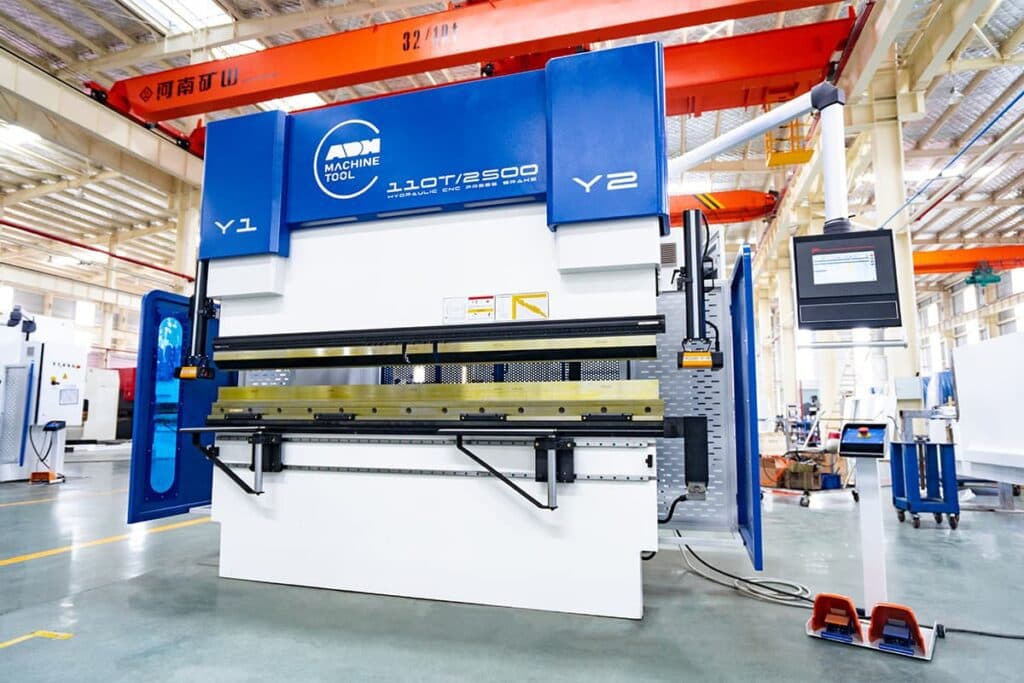
1. Safety First: Always wear proper safety gear, including safety glasses and gloves. Make sure your work area is clean and free of obstructions.
2. Understand Job Requirements: Review the design specifications of the workpiece you are bending, including material type, thickness, and bending angle.
3. Set up the Machine: Input the required data into the CNC system, such as bending angle, plate thickness, bending speed. The machine should have a library of materials to choose from and can automatically adjust its settings based on those inputs.
4. Installation and Inspection of Tooling: Set up suitable dies and punches according to specifications. Make sure they are properly secured and aligned to avoid any inaccuracies during bending.
5. Loading: Put the sheet metal on the support of the machine and align it with the back gauge or other positioning devices.
6. Test run: If possible, use a piece of scrap for a test run. This helps ensure the machine is set up correctly and the bends are accurate.
7. Start Bending Process: Once everything is set correctly, start the machine. Monitor the process to make sure everything runs smoothly.
8. Inspection: After bending, the workpiece is inspected to ensure that it meets the design specifications. Use appropriate measuring tools such as protractors, calipers, or a coordinate measuring machine (CMM).
9. Shutdown and Cleanup: When the job is complete, shut down the machine, remove tools, and clean up the work area.
Maintenance Tips
Daily and Monthly Maintenance
Perform daily cleaning and inspection, checking for loose bolts and connections. At least monthly, tighten all bolts and connections to prevent issues caused by vibration during operation.
Bi-Monthly Maintenance
Every two months, check and lubricate all grease fittings (Zerks) to ensure smooth operation.
Annual and Periodic Maintenance
Create a full backup of your control programming every few months. Annually, or as recommended by the manufacturer, conduct a comprehensive maintenance check. This includes inspecting wiring and connections for damage or looseness, testing safety circuits, and replacing worn-out parts.
Hydraulic System Maintenance
Regularly check and refill hydraulic fluid levels to prevent overheating and maintain performance. Replace hydraulic filters according to the manufacturer’s recommendations to avoid straining the system. Inspect for hydraulic leaks around cylinders, hoses, and seals, as these could indicate worn parts needing replacement.
IV. What Is the Difference Between Manual Press Brake and CNC Press Brake
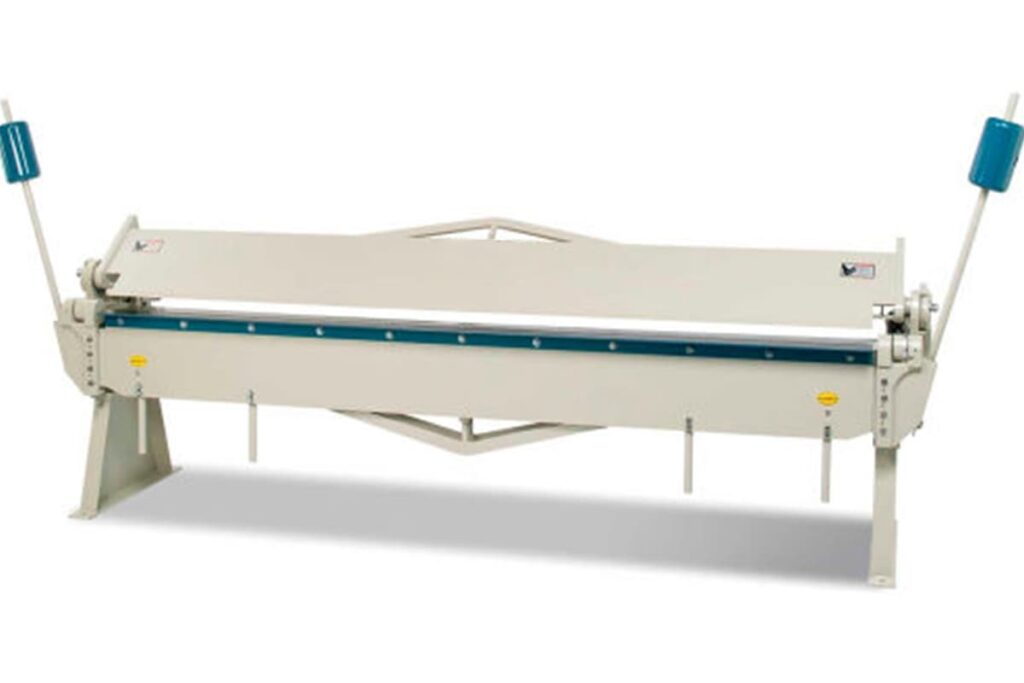
Precision: CNC press brakes, due to their computer-controlled operation, offer a higher level of precision than manual press brakes. They can bend metal with accurate dimensions and angles. Manual press brakes, however, depend on the operator's skills, which can lead to variability in results.
Speed & Efficiency: CNC press brakes can operate continuously at high speeds, significantly increasing productivity. On the other hand, manual press brakes require manual intervention and physical labor, making them slower and less efficient.
Automation: CNC press brakes can automatically execute complex operations once programmed, reducing the requirement for continuous operator input. In contrast, manual press brakes require operators to stay actively engaged and input consistently.
Flexibility and Complexity: CNC press brakes, because of their programmability, can handle complex bending operations, making them adaptable for various tasks, including intricate and complicated designs. Manual press brakes have a more limited capability in handling complex tasks.
Safety: CNC press brakes are generally safer than manual press brakes as they limit direct interaction with the machine during operation, reducing the risk of operator injuries.
Training: Operating a CNC press brake requires knowledge of the machine's programming and operation, while manual press brakes need more traditional machining skills. The technical skill level required for CNC operation may be higher than manual operation.
Cost: The upfront cost of manual press brakes is typically lower than CNC press brakes. However, in the long run, the higher productivity, precision, and less waste of CNC press brakes might make them more cost-effective.
Output: With their high speed and level of automation, CNC press brakes are the ideal choice for large-scale production. Manual press brakes are better suited for smaller runs or prototype creation, where the advantage of longer setup times for CNC machines is less significant.
| Feature | Manual/NC Press Brakes | CNC Press Brakes |
| Automation Level | Minimal/Semi-Automated | Fully Automated |
| Precision | Operator-dependent | High Precision |
| Setup Time | Long | Short |
| Energy Efficiency | Moderate | High |
| Noise Levels | Higher | Lower |
| Material Handling | Limited | Versatile |
V. FAQs
1. What industries commonly use CNC press brakes?
CNC press brakes are widely used in industries that demand precision and efficiency in metal bending operations. Key sectors include the automotive industry, where they produce components like car panels and chassis parts; the aerospace industry, which requires high-precision parts such as fuselage sections; and the construction industry, for creating metal beam supports and architectural elements.
Additionally, they are crucial in the HVAC and sheet metal industry for ducting and custom brackets, as well as in the electrical and electronics industry for small, intricate components. These machines are essential for maintaining high standards of quality and efficiency across these sectors.
2. How do I choose the right type of CNC press brake for my business?
Selecting the right CNC press brake depends on your specific production requirements. Consider the following key factors:
- Material Type and Thickness: The type of metal (e.g., aluminum, steel) and its thickness determine the tonnage and bending force required. For thicker materials, a hydraulic or hybrid press brake may be more suitable, while thinner sheets can be efficiently handled by electric models.
- Bending Length: Evaluate the maximum length of the metal sheets you need to bend. Tandem press brakes are ideal for extra-long sheets, while standard machines suffice for smaller workpieces.
- Complexity of Bends: If your projects involve intricate bends or multi-axis operations, opt for a CNC press brake with advanced control systems and multi-axis capabilities.
- Production Volume: For high-volume production, prioritize machines with faster cycle times and automation features. Electric press brakes are known for their speed and efficiency in such scenarios.
- Budget and Maintenance: Consider long-term costs, including energy consumption and maintenance. Electric models are energy-efficient and require less upkeep, while hydraulic systems offer higher force but need regular maintenance.
VI. Conclusion
CNC press brakes play a critical role in manufacturing and the metal fabrication industry. They offer precision, efficiency, and versatility in shaping metal parts, reducing waste and human errors.
So now that you know what it is and how it works, the next step is to purchase a machine that will yield the best output for you.
ADH is a professional sheet metal machinery manufacturer with 20 years of experience. The press brake is our flagship product.
We can help you choose the right press brake and provide robust after-sales support. If you need information about our press brake, please contact our sales staff or browse our press brake product page.














 English
  العربية
  বাংলা
বাংলা  Български
  Čeština
  Dansk
Dansk  Nederlands
  Deutsch
  Suomi
Suomi  Français
  Ελληνικά
  עִבְרִית
  हिन्दी
  Magyar
  Bahasa Indonesia
  Italiano
  日本語
日本語  Қазақ тілі
  한국어
한국어  Bahasa Melayu
  Norsk bokmål
  فارسی
فارسی  Polski
  Português
  Português do Brasil
  Română
  Русский
  Српски језик
  Slovenčina
  Español de México
  Español
  Svenska
  Kiswahili
  தமிழ்
தமிழ்  Türkçe
  ไทย
ไทย  Tagalog
  Українська
  Tiếng Việt
  اردو
اردو  简体中文
简体中文  香港中文
香港中文  繁體中文
繁體中文 