
In the world of modern manufacturing and design, precision and efficiency are key, and CO2 laser cutting machines have become indispensable tools in achieving both. But what is CO₂ laser cutting machine? How do these intricate devices work, and what makes them so versatile?
These advanced devices harness the power of carbon dioxide gas, electricity, and optics to produce a high-intensity laser beam capable of cutting, engraving, or marking a wide range of materials with unparalleled accuracy.
From intricate designs on wood to precise cuts in acrylic or textiles, CO2 laser cutting machines offer versatility and reliability across industries like manufacturing, signage, and even art. Whether you're a curious learner or a professional exploring the possibilities of laser technology, understanding the fundamentals of these machines is the first step toward unlocking their potential.
I. The Evolution of CO₂ Laser Cutting Technology
In the modern manufacturing industry, laser cutting technology is becoming increasingly indispensable. It features high precision, fast speed, and strong flexibility, and is widely used in many spheres.
The CO₂ laser cutting machine stands out from many cutting technologies for its extraordinary performance and wide usage. It has become an indispensable core tool in modern manufacturing technology.
The development of CO₂ laser cutting technology dates back to the 1960s, which was mainly designed for laboratories. With the advancement of technology, this cutting method is gradually accepted by industry.
In the 21st, with the rapid development of electronics and computers, the precision and speed of CO₂ laser-cutting machines have been improved significantly.
They can cut various materials more precisely, including metals, nonmetals, and composite materials, satisfying multi-production needs. The key to CO₂ laser cutting machine lies in deep recognition of its working principle, structure characteristics, and application spheres.
II. Fundamentals of CO₂ Laser Cutting
Definition and Basic Concept
A carbon dioxide laser, is also known as a CO2 laser. CO₂ laser cutting is an advanced processing technology, that generates a laser beam via a CO₂ gas mixture under specific conditions and focuses and controls its movement to achieve materials precise cutting.
This technology is famous for its high efficiency, high precision, and adaptability, which is widely used in modern industry.
Basic Components of a CO₂ Laser Cutter
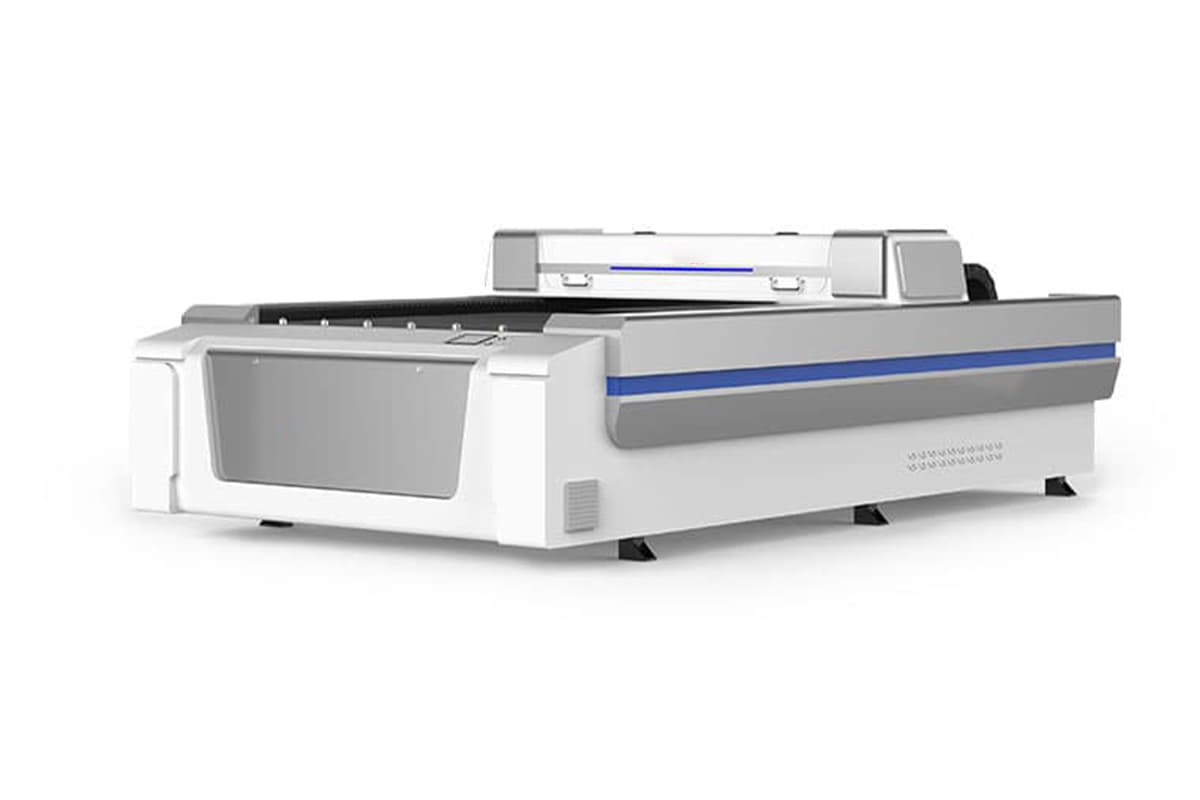
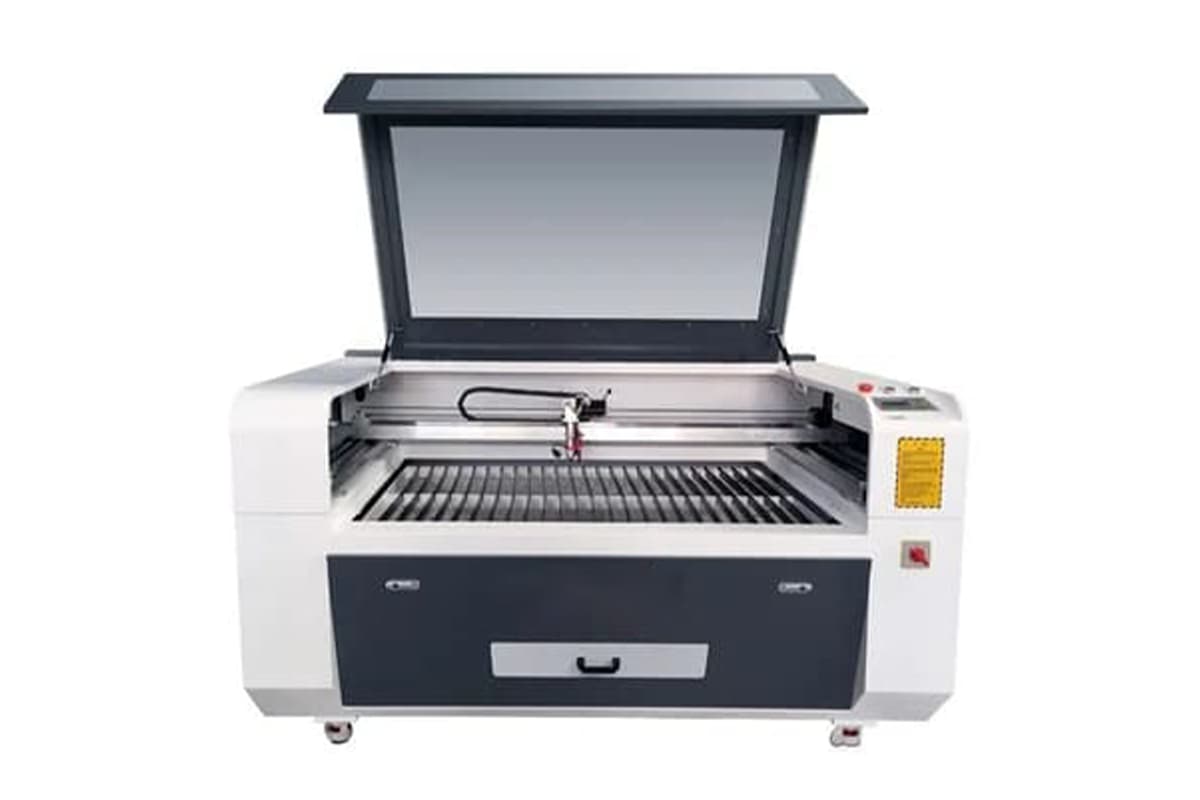
Laser generator: the core component of the laser machine. It uses electricity inspiration to make CO₂ gas molecules inspired to emit constant or pulse lasers.
Optical system: it includes components like reflectors and lenses, which are used to transmit, guide, and focus the laser beams on the surface to be cut.
Machine tool: it supports materials to be cut, and is equipped with a precise driven system (like a servo motor) to ensure the laser head moves according to the anticipated path.
Control system: it is used to accept and design documents, convert graphic information into cutting instructions, and at the same time, monitor and adjust the equipment operation state.
Cooling system: maintain the working temperature of the laser generator and other high-temperature parts, keeping the equipment operating stable.
Smoke exhaust and dust removal device: it is used to handle the smoke and waste during the cutting operation, to protect the working environment.
How Does A CO2 Laser Cutter Work
The Process Step-by-Step
Laser Beam Generation
The laser is generated in a gas-filled tube containing a mixture of CO2, nitrogen, and helium. When high-voltage electricity is applied, it excites the CO2 molecules, causing them to emit photons, which are the basic particles of light.
Beam Delivery and Focusing
Once generated, the laser beam is directed through a series of mirrors and lenses, guiding it to the laser head. The final mirror and focus lens in the laser head concentrate the beam onto a precise point on the material's surface, creating the high-energy density needed for cutting or engraving.
Material Interaction
The focused laser beam heats the material to melt or vaporize it, ensuring clean and precise cuts. This interaction is crucial as different materials react uniquely to laser energy. Sometimes, auxiliary gases like oxygen or nitrogen are used to enhance the cutting process.
Control Systems
The CNC system controls the laser head's movement and adjusts settings like power, speed, and gas pressure for accurate cutting. This system ensures that the laser follows the desired patterns with high precision and consistency.
Materials Compatible with CO₂ Cutting
Wood and Wood-Based Materials
CO2 lasers are ideal for cutting and engraving wood, offering smooth, precise edges. Common options include plywood for structural uses, MDF for furniture and design, and hardwoods or softwoods for detailed decorative work.
Paper and Cardboard
Paper and cardboard are lightweight materials that CO2 lasers handle effortlessly. These materials are perfect for creating custom packaging, intricate craft designs, and unique greeting cards.
Acrylic and Plastics
Acrylic is a standout material for CO2 laser cutting, producing smooth, polished edges without the need for extra finishing. This makes it ideal for signage, displays, and decorative items like awards. However, avoid materials like polycarbonate and ABS, which can melt and release hazardous fumes.
Leather and Textiles
CO2 lasers perform exceptionally well on natural and synthetic fabrics, offering clean cuts without fraying. Common applications include natural leather for engraving and cutting, fabrics for precision in clothing and accessories, and faux leather, which has lower emissions than certain synthetic materials.
Rubber and Organic Materials
CO2 lasers are effective on rubber, making them useful for industrial and crafting purposes. Additionally, some organic materials, such as cork, can be laser-cut or engraved for customized designs.
Materials to Avoid
Some materials are unsafe for CO2 laser cutting due to toxic fumes or equipment damage. For example, PVC and vinyl release harmful chlorine gas, while polycarbonate and ABS plastics tend to melt and emit dangerous fumes. Additionally, fiberglass and materials with halogens, like chlorine or bromine, should also be avoided.
Understanding the Precision of CO₂ Lasers
The precision of CO₂ laser cutting is determined by the quality of the laser beam, the performance of the focus system, and the position precision of the machine tool.
Its high precision relies on the laser beam which can focus on very small light spots, and the area affected by heat during the cutting process is smaller, thus achieving micron-level cutting accuracy and high-quality edge-trimming effects.
Specialized Applications with CO2 Lasers
While CO2 lasers are not typically used for cutting metals, they can mark or engrave metal surfaces with the use of specialized coatings like Cermark. However, for cutting metals, fiber lasers are generally recommended.
Types of CO₂ Lasers: Continuous Wave and Pulsed Lasers
CO₂ laser cutting machines can be divided into two types according to the different ways of laser emitting:
Continuous wave: continuously emits laser with stable power, suitable for occasions requiring mass thickness material continuous cutting or high-speed continuous production.
Pulsed laser: emit laser in the form of a short, high-intensity energy pulse, especially suitable for cutting for fine fabrication and slim material, and can decrease energy input while maintaining cutting quality, lowering the heat influence region.
III. Advantages of CO₂ Laser Cutting
Precision and Accuracy
One of the advantages of CO₂ laser cutting technology lies in extremely high precision and accuracy.
The laser beam can focus on the very small spotlight, making the cut width very narrow and the heat influence region small, achieving micron-level cutting precision.
This high precision characteristic not only ensures cutting rim smoothness and verticality but also performs well in complex shape and fine component fabrication, which can meet the strict needs of aerospace, automotive parts, and other precision manufacturing fields.
Versatility in Materials and Applications
CO₂ laser cutting machine can be applied to multiple materials, including metals (like stainless steel, carbon steel, aluminum, etc.) and nonmetal materials (like wood, plastic, glass, leather, cloth).
This flexibility makes CO₂ laser cutting technology widely used in multiple industries, ranging from mechanical manufacturing, and advertising decoration industry to handicraft production and other fields.
What’s more, CO₂ laser cutting can be handled easily whether for mass production or small-scale production, offering abundant solutions for modern manufacturing.
Efficiency and Speed
Compared with the traditional cutting method, CO₂ laser cutting features a significant speed advantage. higher power lasers can instantly melt or vaporize materials, greatly improving cutting efficiency.
At the same time, a CO₂ laser cutting machine can operate continuously high-speed working projects, and finish the long-time mass production tasks under no supervision.
Besides, its ability to fast-changing different cutting patterns also decreases the time for changing blades and adjusting the tooling, further improving the overall working efficiency.
Operational Advantages
The operational benefits of CO2 laser cutters contribute to their widespread adoption in various fields. Non-contact cutting minimizes damage to both the material and the machine, reducing maintenance costs. This method also reduces risks associated with conventional cutting tools. While generally consuming more power than fiber lasers, CO2 lasers can be more efficient for specific materials and applications.
Cost and Maintenance
CO2 laser cutters are known for their cost-effectiveness and reliability. Compared to fiber lasers, CO2 laser cutters often have lower initial purchase costs, though operational costs may be higher due to power consumption. With decades of proven use, CO2 lasers are well-established and reliable, with a significant user base familiar with their operation.
Applications Across Industries
The versatility and precision of CO2 laser cutters make them valuable tools in various industries. In the medical field, CO2 lasers are used for procedures like skin resurfacing and other cosmetic treatments due to their precision. They are crucial for cutting and engraving materials in manufacturing, prototyping, and the signage industry. CO2 lasers are also popular in the arts for engraving and cutting intricate designs on materials like wood and leather, supporting creative and decorative applications.
IV. Limitations and Considerations
Material Limitations
CO₂ laser mainly generates infrared light, suitable for most metal and nonmetal materials, such as stainless steel, carbon steel, aluminum, wood, leather, plastic, etc.
As for some highly reflective metals (like copper, and aluminum) or some extremely thin or thick materials, they will face problems like low energy absorb efficiency, and large heat influential region, affecting the cutting effect and equipment lifespan.
Besides, the transparent or translucent materials are unsuitable for CO₂ laser cutting because the laser is difficult to penetrate.
Safety and Handling
The safety and correct operation of CO₂ laser cutting are the key to keeping production running smoothly. The laser power is strong and focuses precisely. If it is not properly protected, it will harm the human body, especially the eyes.
Therefore, the operator must wear the specialized protective glasses, and ensure the working area is without a physical barrier and smoke purification system, to decrease potential dangers and environmental pollution.
At the same time, strictly obeying the operation procedures, regularly maintaining and checking the equipment, and strengthening the operator’s safety training, are all important measurements to ensure the safety of laser cutting operations.
Cost Analysis: Investment vs. Output
Introducing CO₂ laser cutting technology means a relatively large initial investment input, including equipment purchasing, supporting system installation, consumable fees, and daily operation and maintenance costs.
However, this technology can bring significant production efficiency improvement, production precision optimization, and waste rate decrease, these advantages can be transformed into long-term economic profit.
The enterprise evaluates whether to adopt CO₂ laser cutting or not, should combine factors like self-production ability, product characteristics, and market position to proceed with detailed cost-profit analysis, make sure the investment cycle, ensure an ideal proportional relationship between investment and output, maximum to utilize this advanced technology to create value.
V. CO₂ Laser Cutting in Various Industries
Application in Aerospace
In the aerospace sphere requiring high technology, and high precision, CO₂ laser cutting technology plays a pivotal role. Its superior ability to proceed and precisely achieve complex shape design makes it an ideal choice for manufacturing airplane components and spacecraft structural parts.
For example, use CO₂ laser cutting to precisely manufacture titanium alloy, aluminum alloy, and other aviation-specific materials, generate lightweight and high-strength fuselage parts, wing skins, engine parts, etc.
At the same time, the degree of laser cutting process automation is high, which can effectively improve production efficiency, and decrease artificial error, ensuring aerospace products' high quality and consistency.
Role in Automotive Manufacturing
CO₂ laser cutting also plays a significant role in automotive manufacturing, especially for car body manufacturing and parts processing.
Because of fast speed cutting, high precision, and small heat influential region, it can cut automobile steel plates, stainless steel plates, and other metal plates efficiently, and can be used to generate various complex three-dimensional structural components such as car doors, roofs, bumpers, etc.
Besides, the advanced laser cutting technology is beneficial to reducing material waste, and optimizing process procedures, thus ensuring product quality while decreasing the production cost, which is in line with the automotive industry's pursuit of lean production and sustainable development needs.
Usage in Art and Design
In the creative field of art and design, CO₂ also performs well. The designer can utilize this advanced technology to transform two-dimensional graphics into exquisite three-dimensional works.
Whether metal sculpture, wooden crafts, leather products, or glass art, all can be achieved by accurate and fine laser cutting.
It gives designers unprecedented freedom, making them achieve fine and intricate patterns and geometric shapes on various materials, promoting the art creation into new dimensions.
Electronics Industry
In the electronics industry, CO2 lasers are widely used for cutting and engraving circuit boards and other delicate parts. Their ability to produce intricate patterns and fine details with precision ensures that the material remains undamaged, making them ideal for applications requiring high accuracy.
Medical Applications
In the medical field, CO2 lasers play a vital role in both surgical and dental procedures. They are used for skin resurfacing, tumor removal, gum reshaping, and lesion removal. The laser's ability to precisely target areas minimizes damage to surrounding tissues, resulting in faster healing times and reduced discomfort for patients.
Material Processing
CO2 laser cutting machines are versatile tools capable of processing a wide range of materials. They excel at cutting organic materials such as wood, paper, acrylic, plastics, leather, fabrics, and rubber, making them invaluable in industries like furniture manufacturing, fashion, and packaging. Additionally, they can process certain inorganic materials like glass and ceramics, which are commonly used in glassware and custom ceramic production. Composite materials like carbon fiber and fiberglass are also effectively handled by CO2 lasers, supporting industries that require strong, lightweight components.
Besides, with miniaturization and personalization trends of laser cutting equipment, more and more artists and designers have started to introduce the technology into their workshops and regard it as an essential tool to improve work quality and innovation.
VI. CO2 vs Other Laser Technologies
CO₂ laser cutting technology
The core component of CO₂ laser cutting technology is CO₂ gas lasers, the working wavelength is 10.6 microns. Because of its relatively long wavelength, this type of laser has a good absorption rate toward nonmetal materials. It can perform well in handling wood, plastic, acrylic, textiles, and many other organic materials.
CO₂ laser cutting can offer a high-quality cutting rim, the incision is small and smooth, especially suitable for applicable occasions requiring fine fabrication and direct welding. However, it has lower electrical conversion efficiency and higher maintenance cost compared with solid laser.
It has good performance but is not as efficient as fiber laser when cutting thicker materials, especially steel and stainless steel ranging from thin to medium thickness.
Fiber laser cutting technology

Fiber laser cutting technology adopts solid-state fiber laser, the wavelength is 1.06 microns, which is more easier for metal materials to absorb, showing extremely high efficiency and speed in cutting metal sheets.
Fiber laser cutter features compact structures, and a high energy transformation rate, which can be up to 30%, far higher than 10% of CO₂ laser, making it weigh a lot in operation cost and consumption.
However, when faced with nonmetal cutting tasks or thick metal cutting, the penetrating ability of fiber laser is not better than CO₂ laser.
Fiber laser cutting vs CO2 laser cutting
| Key Differences | CO2 Lasers | Fiber Lasers |
| Wavelength | Longer wavelength (10.6 micrometers), better suited for non-metallic materials | Shorter wavelength (1.06 micrometers), ideal for cutting metals |
| Material Suitability | Better suited for non-metallic materials | Excels at cutting metals, particularly reflective materials like aluminum and copper |
| Cutting Speed and Precision | Slower cutting speeds and lower precision | Faster cutting speeds and higher precision, suitable for high-volume metal cutting |
YAG laser cutting technology
YAG (neodymium-doped yttrium aluminum garnet) laser cutting machine is also a type of solid laser, which has relatively high peak power, suitable for micromachining and hard materials cutting.
However, the YAG laser is not as efficient as the fiber laser because of its relatively small average power in continuous cutting operations. Especially for high-volume industrial applications, its market share is gradually replaced by fiber laser cutting machines.
In a nutshell, when choosing laser cutting technology, many factors such as practical application scenarios, material types to be cut, thickness, precision, and operation cost should be considered.
CO₂ laser cutting machine weighs a lot in nonmetal material fabrication, and fiber laser cutting is more suitable for metal thin sheet requirements of mass-scale, high-speed, and high-precision.
With the development and advancement of the technology, various laser technologies have been optimized and improved, offering more variety of solutions for customers.
| Aspect | Fiber Laser | YAG Laser |
| Wavelength | Operates at 1.06 micrometers | Operates at 1.06 micrometers |
| Efficiency | More efficient | Less efficient |
| Cutting Speed | Faster | Slower |
| Precision | Higher | Lower |
| Material Suitability | More cost-effective for metal cutting | Less cost-effective for metal cutting |
VII. Conclusion
In our passage, we delve into talking about the CO₂ laser cutting machine’s core principle, application, and importance in modern manufacturing.
We can see that the CO₂ laser cutting machine not only features high efficiency, high precision, and strong adaptability but is also the first choice in many industries when handling various materials due to its excellent performance.
Choosing the appropriate CO₂ laser-cutting machine should take many factors into consideration. Welcome to consult the ADH machine tool, which can offer you professional support.













 English
  العربية
  বাংলা
বাংলা  Български
  Čeština
  Dansk
Dansk  Nederlands
  Deutsch
  Suomi
Suomi  Français
  Ελληνικά
  עִבְרִית
  हिन्दी
  Magyar
  Bahasa Indonesia
  Italiano
  日本語
日本語  Қазақ тілі
  한국어
한국어  Bahasa Melayu
  Norsk bokmål
  فارسی
فارسی  Polski
  Português
  Português do Brasil
  Română
  Русский
  Српски језик
  Slovenčina
  Español de México
  Español
  Svenska
  Kiswahili
  தமிழ்
தமிழ்  Türkçe
  ไทย
ไทย  Tagalog
  Українська
  Tiếng Việt
  اردو
اردو  简体中文
简体中文  香港中文
香港中文  繁體中文
繁體中文