
I. Introduction
Entering the world of precision and efficient laser cutting is far more than a routine procurement—it’s a strategic decision that directly impacts your production efficiency, cost management, and the future growth of your business. Before diving in, explore the Best Laser Cutting Machines for Your Workshop to gain insight into the most suitable models for your requirements.
With a vast array of technologies on the market, from CO2 to fiber lasers, and a multitude of models and specifications, users can easily become overwhelmed by the sheer volume of information, risking costly mistakes due to poor judgment.
This guide is designed as your personalized decision-making tool, helping you systematically analyze each technology and cut through the complexities. Whether you’re an individual creator, a small business, or a large industrial operation, we’re here to help you clarify your specific needs and strike the optimal balance between performance, application, and budget. Our goal is to empower you to make confident decisions that maximize long-term value, ensuring every investment strengthens your competitive edge.
II. Fundamentals of Laser Cutting Technology
1. Principles of Laser Cutting Technology
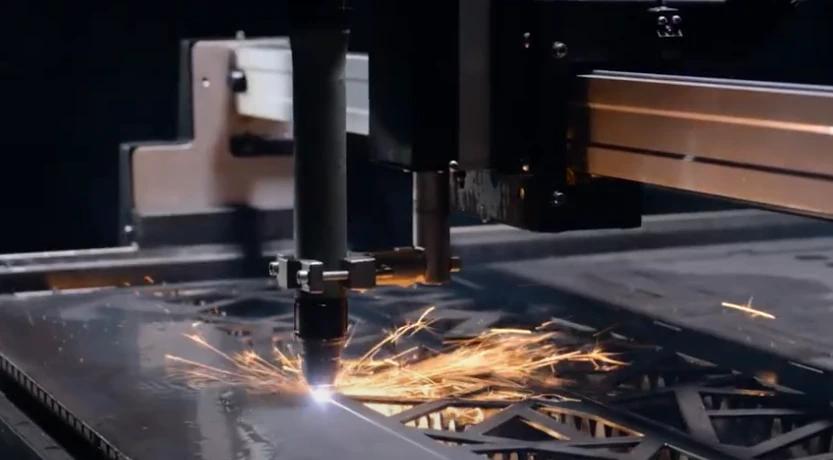
Laser cutting technology uses a focused beam of high-energy laser light to irradiate the workpiece. This process rapidly melts, vaporizes, ablates, or burns the material, while a coaxial stream of high-speed gas (known as assist gas) blows away the molten or vaporized material, achieving precise thermal cutting.
2. Advantages of Laser Cutting
| Advantages | Description |
|---|---|
| High Precision and Quality | Narrow cut width, small heat-affected zone, suitable for precision part processing. |
| High Efficiency | Fast cutting speed (far surpasses traditional mechanical cutting), significant advantages in mass production. |
| Non-Contact Processing | Laser without physical contact avoids material mechanical deformation or tool wear. |
| Wide Range of Materials | Can cut metals, plastics, wood, acrylic, composite materials, etc. |
Laser cutting technology's advantages are not only reflected in its efficiency and multi-material compatibility, but also in its significant reduction of production costs. You can further compare the performance characteristics of different models by downloading our Brochures.
III. Comparing Features and Specifications
1. Types of Laser Cutting Machines
(1) Laser Source Classification
1) CO2 Laser Cutting Machines
CO2 lasers use a mixture of carbon dioxide gases as the active medium. Through gas discharge, the laser is generated, focused into a powerful spot to melt or vaporize material, and assist gas removes the resulting debris. The wavelength is typically 10.6μm, which is better absorbed by non-metal materials.
The purchase cost is lower than that of fiber lasers, but the photoelectric conversion efficiency is only 10%-15%. They also require regular replacement of laser gases and frequent maintenance and calibration of mirrors, leading to higher operational and upkeep costs.
2) Fiber Laser Cutting Machines
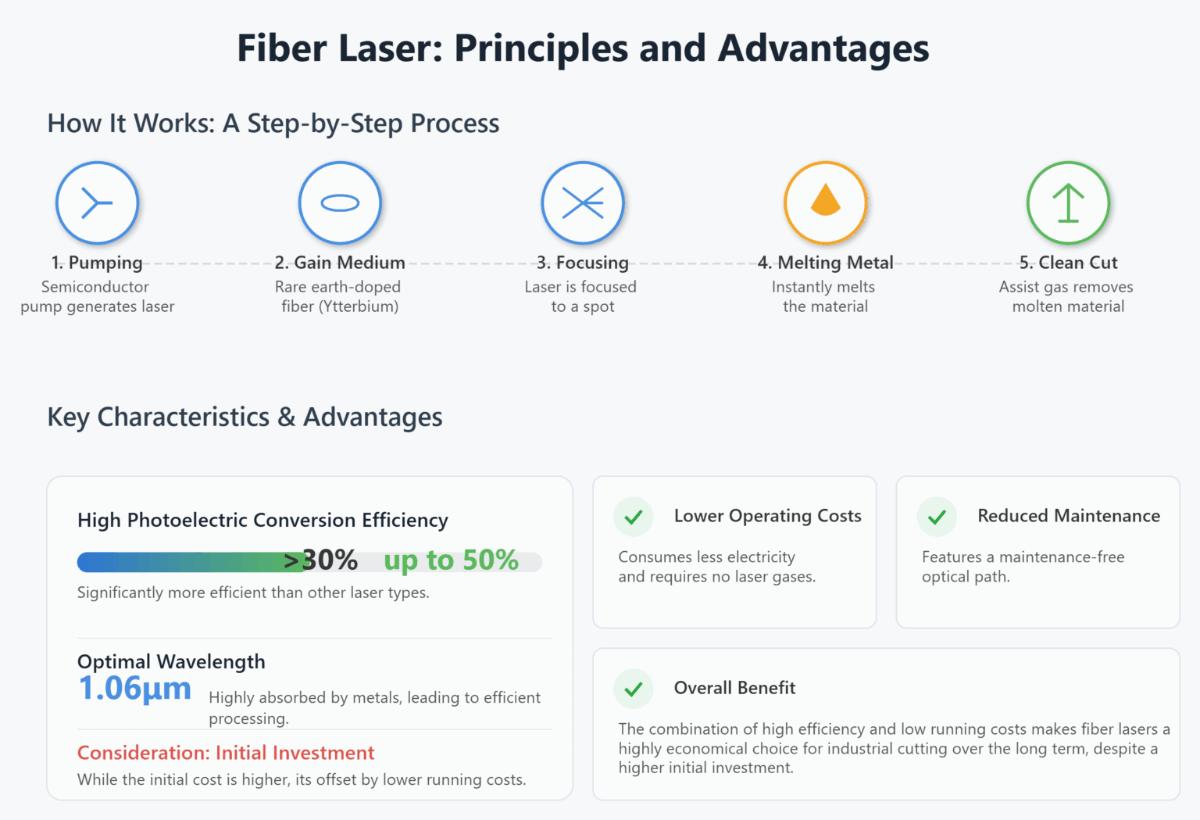
Fiber lasers use rare earth-doped fibers, such as ytterbium, as the gain medium. A semiconductor pump generates the laser, which is focused into a highly concentrated spot that instantly melts metal. High-pressure assist gas then removes the molten material for a clean, precise cut. The wavelength is about 1.06μm, which metals absorb more readily.
Although the initial investment is higher, fiber lasers typically offer a photoelectric conversion efficiency above 30%—and can reach up to 50%. They require no laser gases, have a maintenance-free optical path, consume less electricity, and have lower operating and maintenance costs.
If you’re comparing wattage options for fiber lasers, check out Understanding Laser Cutting Machine Wattage: A Comprehensive Guide to learn how different power levels affect cutting capabilities.
If you are considering purchasing a fiber laser cutting machine, you can browse the Single Table Fiber Laser Cutting Machine to view specific models and their performance characteristics.
3) Solid-State Laser Cutting Machines
Nd:YAG Laser Cutting Machines:
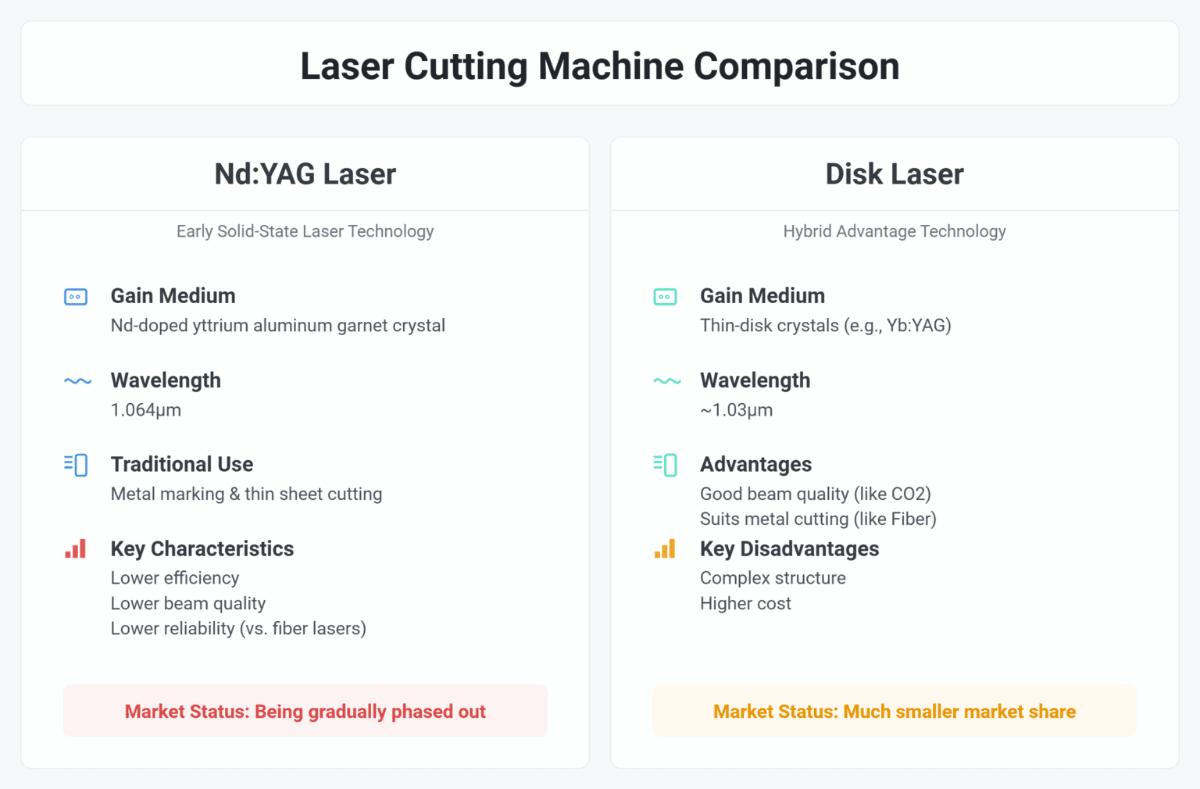
These early solid-state lasers use neodymium-doped yttrium aluminum garnet crystals as the gain medium and operate at a wavelength of 1.064μm. Traditionally used for metal marking and thin sheet cutting, they have lower efficiency, beam quality, and reliability compared to modern fiber lasers and are being gradually phased out.
Disk Laser Cutting Machines:
These use thin-disk crystals (such as Yb:YAG) as the gain medium and operate at a wavelength of about 1.03μm. They combine some advantages of CO2 lasers’ beam quality with fiber lasers’ suitability for metal cutting. However, their complex structure and higher cost mean they hold a much smaller market share compared to fiber lasers.
For your reference, the following table summarizes these options:
| Type | Applicable Materials | Purchase Cost | Maintenance Cost | Main Advantages | Main Disadvantages |
|---|---|---|---|---|---|
| CO2 Laser | Mainly non-metallic materials (such as acrylic, wood, leather), can also process some metals | Low | High | Smooth cutting surface, mature technology, good absorption rate for non-metallic materials | High energy consumption, requires regular replacement of laser gas and other consumables, complex maintenance process |
| Fiber Laser | Mainly metallic materials (such as carbon steel, stainless steel, aluminum, copper, etc.) | High | Low | Extremely high electro-optical conversion efficiency, energy-saving, almost maintenance-free, fast cutting speed | High initial equipment investment, edge quality may be slightly inferior to CO2 when cutting thick metal plates |
| Nd:YAG Solid-State Laser | Metal and some non-metallic materials | Medium | High | Strong material adaptability, can easily achieve pulsed or continuous wave (CW) output | Low electro-optical conversion efficiency, high power consumption, short lamp pump life, gradually being replaced by fiber lasers |
| Disk Laser | Mainly metallic materials | High | Medium | Excellent beam quality, good power stability, very suitable for high-precision and high-quality welding and cutting | Relatively complex technical structure, high overall solution cost, small market share |
In short, for metal cutting, a fiber laser cutting machine is the top choice, while for non-metal materials, a CO₂ laser cutting machine is preferred. Although fiber laser cutting machines require a higher upfront investment, they offer lower maintenance costs, making them a smart long-term choice.
(2) Classification by Mechanical Structure
1) Gantry-type Laser Cutting Machine
The crossbeam is supported at both ends by rails on either side, providing excellent rigidity. This design is ideal for large-format, high-precision, and heavy-duty cutting tasks.
2) Cantilever-type Laser Cutting Machine
Here, the crossbeam is supported on just one side, resulting in a compact structure and a smaller footprint. This type is suitable for medium-format processing and environments where space is limited.
3) Hybrid-drive Laser Cutting Machine
An optimized version of the gantry type, the key improvement lies in the X-axis drive: the cutting head’s movement along the crossbeam (X-axis) is handled by an independent drive system, separate from the Y-axis movement of the crossbeam. For a deeper understanding of this mechanism, explore The X-Axis in Laser Cutting Machines to learn how X-axis precision influences cutting accuracy and system reliability.
For selecting the right model, refer to the table below:

For selecting the right model, refer to the table below:
| Requirement | Recommended Structure Type | Main Reasons |
|---|---|---|
| Large-format/Heavy-duty/High-precision | Gantry-type | Superior rigidity, large work area, high precision—ideal for mass production and heavy-duty machining |
| Limited space/Small to medium format | Cantilever-type | Compact footprint, high flexibility—suitable for small batches and diverse orders |
| Multi-process/High efficiency/High-end | Hybrid-drive | High precision and efficiency—perfect for complex and varied production needs |
To further refine your selection, consult the Choose the Laser Cutting Machine Size: Expert Guide for detailed insights into how table dimensions affect performance and productivity.
2. Key Parameter Influences
(1) Laser Power
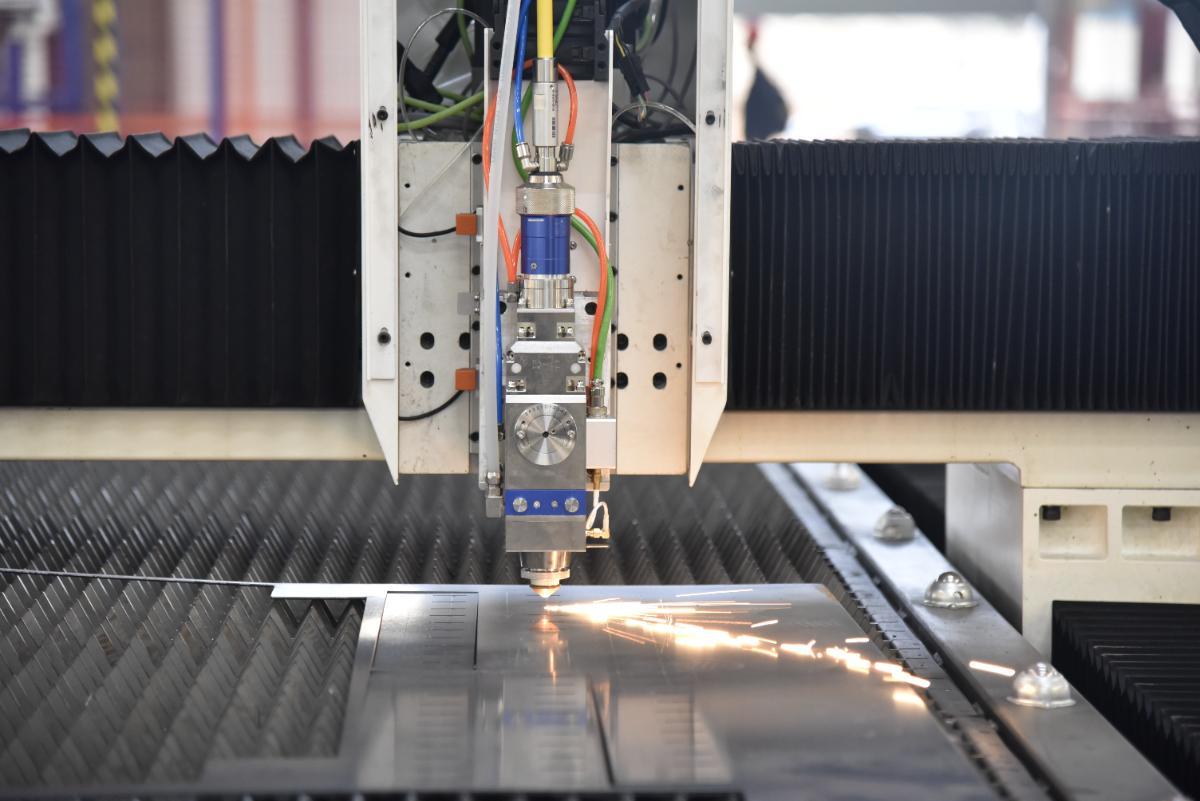
Laser power is the primary indicator of a laser cutting machine’s capability, directly determining the types of materials it can cut, the maximum thickness, and the cutting speed.
Generally, higher laser power means faster cutting speeds for the same material and the ability to cut thicker sections.
For example, here is a reference table showing the required power for processing various metal materials:
| Laser Power | Carbon Steel | Stainless Steel | Aluminum | Brass |
|---|---|---|---|---|
| 1000W | 0.8-10mm | 0.8-5mm | 0.8-3mm | 1-3mm |
| 1500W | 1-16mm | 1-6mm | 1-4mm | 1-3mm |
| 2000W | 1-20mm | 1-8mm | 1-6mm | 1-5mm |
| 3000W | 1-22mm | 1-10mm | 1-8mm | 1-6mm |
| 4000W | 1-25mm | 1-15mm | 1-10mm | 1-8mm |
| 6000W | 1-30mm | 1-20mm | 1-20mm | 1-12mm |
(2) Worktable Size
Laser cutting machines are typically identified by a combination of numbers, with common models including:
- Model 3015: Effective work area of 3000 mm (length) x 1500 mm (width), suitable for standard sheet metal applications.
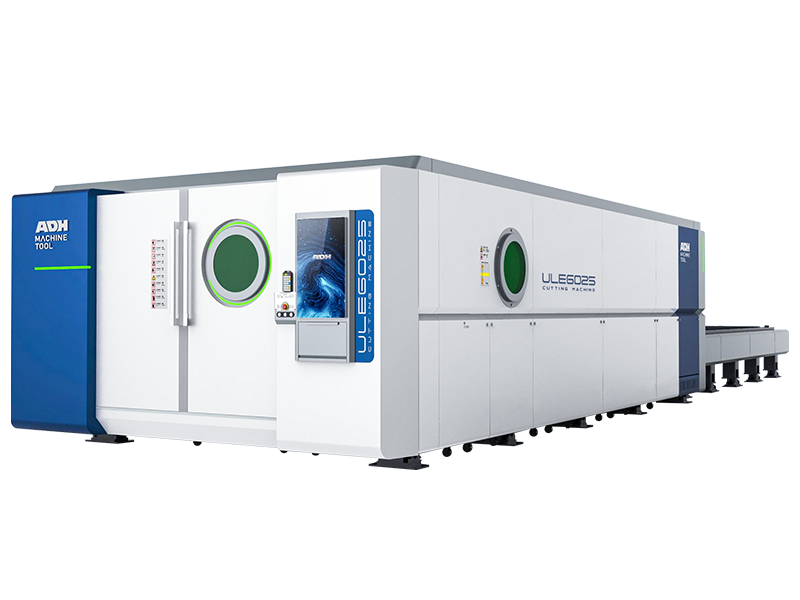
- Model 6025: Effective work area of 6000 mm x 2500 mm, ideal for larger sheets or processing more parts in a single batch.
- Other common models: 4020 (4000 mm x 2000 mm), 6020 (6000 mm x 2000 mm), and so on.
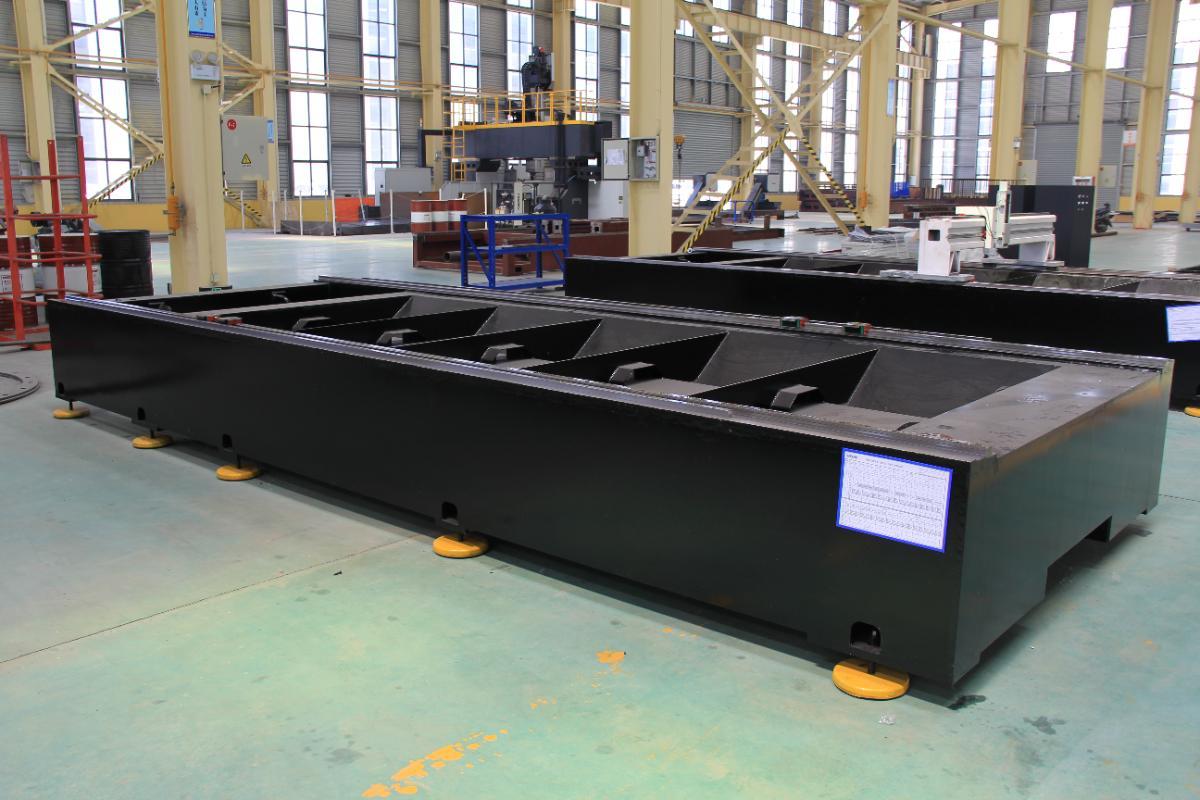
The size of the worktable impacts both processing capability and efficiency. When selecting a worktable, consider two main factors: the machine must accommodate the largest workpiece you plan to process, and there must be enough space for the equipment itself and any auxiliary devices (such as exchange tables or loading/unloading systems).
(3) Cutting Precision
Cutting precision involves both positioning accuracy and repeatability.
- Positioning Accuracy: The error between the machine’s actual position and the target position.
- Repeatability: The consistency when the machine returns to the same target position multiple times.
Laser cutting offers much higher precision compared to traditional methods. Typically, fiber laser cutting machines provide greater accuracy than CO₂ laser models, making them the go-to option for high-precision work. Refer to the table below for positioning accuracy:
| Type | Positioning Accuracy | Repeatability |
|---|---|---|
| Fiber Laser Cutting Machine | ±0.03–0.05mm | Within ±0.03mm |
| CO₂ Laser Cutting Machine | ±0.05mm | ±0.05mm |

(4) Assist Gas
The most common assist gases in laser cutting are oxygen, nitrogen, and compressed air.
- Oxygen (O₂): An active gas that heats the material through a chemical reaction, enabling fast cutting speeds for thick carbon steel, though it will oxidize the cut edge.
- Nitrogen (N₂): An inert gas that prevents oxidation, producing bright, clean edges on stainless steel and aluminum—ideal for high-quality cuts and welding applications, but more costly.
- Compressed Air: The most economical choice, with results that fall between oxygen and nitrogen; there may be slight oxidation on the cut edge, making it suitable for applications where edge quality is less critical.
The general rule is: the thicker the material, the higher the required gas pressure.
| Material Type | Assist Gas | Recommended Pressure Range | Main Function |
|---|---|---|---|
| Carbon Steel | Oxygen | 0.3–1.2 MPa | Assists combustion, increases speed, suitable for thick plates |
| Stainless Steel | Nitrogen | 1.0–2.0 MPa and above | Prevents oxidation, maintains a clean cut |
| Aluminum and Alloys | Nitrogen/Air | 1.0–2.0 MPa | Prevents oxidation; air is cost-effective for thin plates |
| Non-metallic Materials | Air | 0.6–1.0 MPa | Low cost, suitable for acrylic, wood, etc. |
For a more comprehensive understanding of assist gases, visit Laser Cutting Machine Gas Consumption.
(5) Degree of Automation
Automation in laser cutting machines refers to the integration of technologies such as automatic loading and unloading, intelligent control, and robotic collaboration, enabling unmanned, highly efficient, and low-intervention production processes. The degree of automation varies among different grades of laser machines, but mainstream automated laser cutting systems are mainly composed of the following:

1) Automatic Loading and Unloading Systems
These systems enable automated material handling, precise positioning, sorting, and conveying, significantly reducing manual labor.
2) CNC Control Systems
Modern laser cutting machines are typically equipped with CNC systems that automatically control the X, Y, and Z axis movements of the cutting head, ensuring high precision and repeatability in cutting paths.
CNC systems also allow for automatic adjustment of laser power, cutting speed, gas flow, and other parameters, enabling full-process automation.
3) Material Library and Production Line Integration
Automated laser cutting systems can be integrated with raw material warehouses, finished goods storage, and conveyor lines, achieving end-to-end automation from raw material input to finished product output.
This level of automation reduces labor costs, delivers excellent repeatability, and minimizes waste.
For users with sufficient budgets, highly automated laser cutting machines can effectively lower labor expenses and boost production efficiency.
Ⅳ. Buyer Profile Assessment
1. Buyer type
(1)Hobbyists:
Typically have a budget under $2,000.
Key user considerations:
| Dimension | Core Requirement | Typical Configuration |
|---|---|---|
| Safety | Physical enclosure + automatic shut-off | Standard safety lock + smoke alarm |
| Space Adaptability | Desktop design | Foldable body + vertical exhaust |
| Ease of Use | Mobile app control + pre-set templates | Library of 10 material presets |
| Creative Support | Multi-material compatibility (wood/leather/acrylic) | 40W CO₂ laser head |
(2)Semi-Professionals/Small Businesses:
Budgets for this group typically range from $2,000 to $15,000.
Key user considerations:
| Dimension | Core Requirement | Typical Configuration |
|---|---|---|
| ROI Cycle (Time from investment to profitability) | ≤12-month payback period | 80-150W fiber laser |
| Process Efficiency | Seamless CAD/AI integration | Dedicated plugins + batch processing |
| Labor Optimization | Single-operator supervision | Auto-focus + sheet recognition |
| Expandability | Modular upgrade interfaces | Supports future rotary axis addition |
| Suitable Choices | More powerful/versatile YAG lasers, multi-functional CO2 lasers, or entry-level fiber lasers | — |
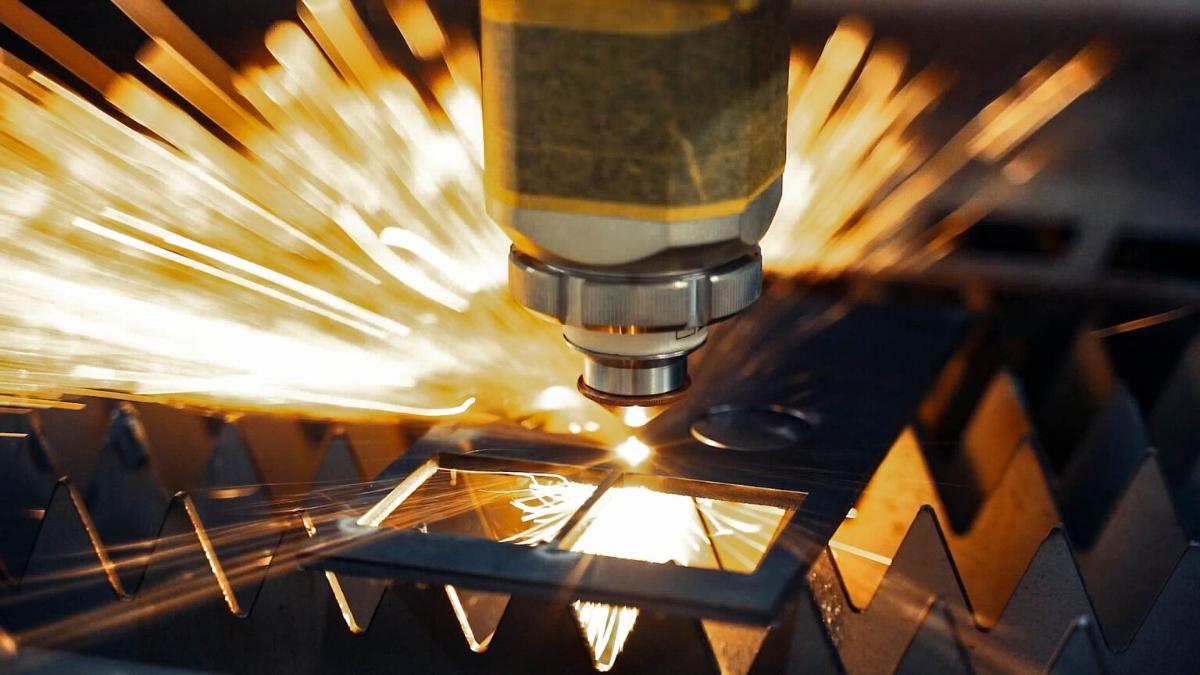
(3)Professionals/Industrial Users:
Investments typically start at $15,000 and can reach six figures or more.
Key user considerations:
| Dimension | Core Requirement | Typical Configuration |
|---|---|---|
| Continuous Production | 24/7 operation | Dual chiller redundancy + laser rotation |
| System Integration | MES/ERP connectivity | OPC UA protocol + direct SQL database link |
| Compliance | Mandatory industry certifications | CE/PED + ISO 9001 |
| Precision Control | ±0.02mm tolerance | CCD visual alignment + temperature compensation |
This segment includes high-power CO2 lasers for large-format cutting and engraving, as well as high-power fiber laser systems for metal fabrication (usually 10,000W and above, with some models exceeding 30,000W).
2. Comprehensive Consideration of Budget and Total Cost of Ownership (TCO)
Calculating Total Cost of Ownership (TCO)
When evaluating total costs, it's not enough to focus solely on the initial purchase price. A comprehensive TCO perspective should be adopted, encompassing:
- Initial Investment: Equipment price, shipping, installation, and commissioning fees.
- Operating Costs: Electricity, auxiliary gas, consumables (nozzles, protective lenses).
- Maintenance Costs: Routine servicing and potential repair expenses.
Total Cost of Ownership (TCO) is a financial model for evaluating all direct and indirect costs over the equipment's entire lifecycle, with the basic formula:
TCO = Initial Cost + Operating Expenses + Additional Cost – Resale Value
For equipment pricing and calculation details, refer to Laser cutting machine Pricing Guide.
An initially more expensive machine that operates efficiently, with low failure rates and long-lasting key components, may have a lower TCO than a cheaper unit with high ongoing costs.
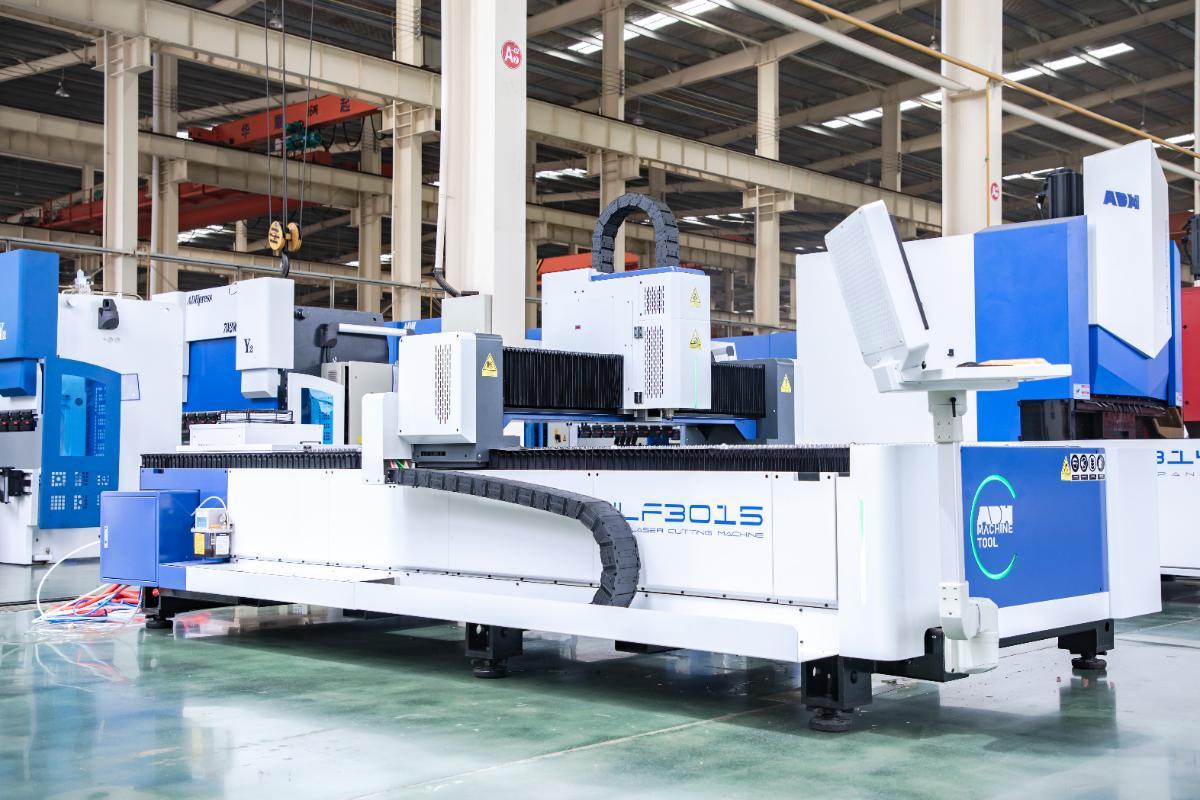
Ⅴ. Purchasing Process and Final Recommendations
1. Clarify Core Requirements
Before purchasing a laser cutting machine, it is important to understand the parameters and clearly define your core requirements:
| Demand Category | Description | Importance/Function |
|---|---|---|
| Material Type and Thickness | Main processed material types (such as carbon steel, stainless steel, aluminum alloy, etc.) and their maximum/minimum thickness | Determines the type and power selection of the laser |
| Processing Size and Format | Maximum workpiece size, common sheet specifications | Choose the appropriate worktable size to avoid waste of resources |
| Processing Accuracy and Cutting Quality | Specific requirements for accuracy, edge finish, perpendicularity, etc. | Meet product quality standards |
| Production Capacity and Efficiency | Expected production volume, daily/shift output, required cutting speed and stability | Ensure production efficiency and timely delivery |
| Automation and Special Processes | Whether automatic loading and unloading, production line integration, drilling, engraving, marking and other functions are required | Meet diverse production needs |
| Budget Range | Budget range for equipment procurement | Determines equipment grade and brand selection |
| Site and Supporting Facilities | Installation area, height, power supply, gas, ventilation, etc. | Ensure the equipment can be installed and operated normally |
| Operation and Maintenance | Whether an easy-to-use operating interface, remote monitoring, intelligent diagnosis, maintenance convenience, consumable replacement frequency and cost are required | Reduce operating difficulty and maintenance costs |
2. Brand Selection
International and domestic brands each have their advantages.
Foreign laser cutting machines feature mature technology, high precision, leading automation and intelligence, and stable operation. They are ideal for large-scale, high-precision, and complex processes, offering easy maintenance and long service life.
However, they come at a higher price, with significant initial and maintenance costs, and require substantial capital.
Domestic machines offer high cost performance, relatively affordable pricing, and are suitable for SMEs or batch production needs. They provide a wide product range, large processing formats, compatibility with various metals, fast after-sales service, and low maintenance costs.
However, there may be gaps in high-end technologies, extreme applications, and some core components compared to top international models. Their experience in ultra-high power, precision, or automation integration is somewhat limited, with slightly lower stability in some cases.

Selection advice:
- For scenarios demanding high precision and automation, international equipment is preferable—budget permitting.
- For those prioritizing cost-effectiveness, routine batch processing, or custom production, domestic machines are more suitable.
3. Supplier Evaluation Criteria
When choosing a laser cutting machine supplier, it is recommended to conduct a thorough evaluation based on four major aspects: technical capability, production capacity, after-sales service, and brand reputation:
| Evaluation Dimension | Key Indicators | Details |
| Technical Capability | R&D Capacity | Possesses a professional R&D team, develops core technologies in-house, continually introduces new products, and keeps pace with industry trends. |
| Technological Innovation | Holds patented technologies, unique automation designs, and adopts advanced intelligent, automated, and IoT solutions. | |
| Ongoing Upgradability | Continuously optimizes product structure, improves performance, rapidly responds to market and user needs, maintaining a leading position. | |
| Production Capacity | Production Scale | Equipped with standardized workshops and advanced machinery, capable of mass production and timely order fulfillment. |
| Delivery Lead Time | Well-managed production flow and inventory, able to deliver as scheduled to avoid disruptions to business plans. | |
| Quality Control | Implements rigorous inspection systems, with comprehensive testing of every machine before leaving the factory to ensure reliability. | |
| After-Sales Service | Full-cycle Technical Support | Provides installation, commissioning, training, and maintenance services to ensure long-term stable operation. |
| Response Speed | Well-established after-sales network, able to respond quickly to equipment issues, minimizing downtime and losses. | |
| Spare Parts Supply | Reliable, timely provision of original spare parts, facilitating maintenance and upgrades. | |
| Training & Upgrades | Regular training for operation and maintenance, and support for equipment upgrades as technology advances. | |
| Brand Reputation | Market Reputation | Strong industry reputation, high customer ratings, and low procurement risk. |
| Market Share | Large market share, stable customer base, and products proven by long-term market use for quality and service assurance. | |
| Customer Cases & Recognition | Extensive successful case studies, industry awards, and certifications further validate strength and credibility. |
ADH Machine Tool, as a professional team in China, can help you gain an in-depth understanding of the working principles and performance of different laser cutting machines.
4. Testing and Validation Process
(1) Insist on On-Site Sample Cutting
On-site sample cutting is the test of a laser cutting machine’s true processing capabilities. Relying solely on the “perfect” samples sent by the manufacturer is insufficient, as these are typically produced under ideal, optimized conditions using the best possible materials. It is essential for you to be present and conduct tests using the actual materials you use in your daily production.
Reasons:
1) Material Variability: Different suppliers and even different batches of the same metal can have subtle differences in chemical composition, surface condition (such as oil, rust, or oxidation), and internal stresses. These variations can directly affect the laser’s absorption rate and cutting performance, often requiring parameter adjustments.
2) Process Window Validation: By testing with your own materials, you can assess the equipment’s ability to adapt to material variations—effectively, the width of its “process window.” A high-quality machine should maintain stable cutting quality through simple adjustments, even when material properties fluctuate slightly.
3) Simulating Real Production Conditions: The testing process should closely replicate your actual production scenarios, including continuous cutting of plates with varying thicknesses, to evaluate the machine’s stability and consistency under real-world loads.
Key Indicators:
| Inspection Item | Specific Requirements |
|---|---|
| Cutting Quality | Inspect the perpendicularity (taper) of the cut section, surface roughness, and slag formation. High-quality cuts should be smooth, burr-free, with minimal and easily removable slag. |
| Cutting Precision | Use precise measuring tools to verify conformity between actual processed dimensions and drawing specifications, with special attention to hole diameters, hole distances, and profile dimensional tolerances. |
| Heat-Affected Zone (HAZ) | Observe the width of the metallurgical transformation zone along the cutting edge caused by heat. For parts requiring secondary welding or coating, a narrower HAZ is preferred. |
| Efficiency and Speed | Record the maximum cutting speed achievable while maintaining quality, particularly for specific materials and thicknesses. This directly impacts production efficiency and cost. |
| Piercing Capability | For thick plate processing, evaluate the time required for piercing, the stability of the process, and the extent of damage to the material. |
(2) Optimize the Demonstration Process
A device demonstration should be more than passive observation; it’s an invaluable opportunity to actively gather crucial data and gain a deeper understanding of the machine’s performance limits. Shift your role from that of a “spectator” to a “test engineer.”
Before the demonstration, clearly communicate your specific testing requirements to the manufacturer. Request that the operators program and cut using your own drawings and materials, rather than simply running their pre-set, flawless demo routines. During the demonstration, engage proactively with the on-site engineers and voice any questions you may have.
Checklist for Key Data Collection:
| Evaluation Item | Observation & Recording Points | Importance |
|---|---|---|
| Gas Consumption | Record the actual pressure and flow rate of assist gases (e.g., oxygen, nitrogen) when cutting different materials/thicknesses. | Gas is one of the primary operating costs and directly impacts per-piece production cost. |
| Power Stability | Observe whether cutting quality remains consistent during prolonged continuous cutting or when processing an entire sheet. | Reflects the stability of the laser source and the overall machine system, crucial for mass production. |
| CNC System & Software | Evaluate the user interface's intuitiveness, ease of programming, and total time from task setup to cutting start. | Software usability determines operator training costs and production preparation efficiency. |
| Dynamic Performance | Focus on machine responsiveness when cutting high-speed small circles or sharp corners; check for vibrations or speed drops. | Indicates the mechanical rigidity of the machine, servo system responsiveness, and control algorithm quality. |
| Maintenance Convenience | Inquire about and observe daily maintenance points, such as the ease and time required to replace nozzles, protective lenses, etc. | Simplified maintenance maximizes the machine's effective uptime. |
Ⅵ. Conclusion
Investing in a laser cutting machine is a pivotal decision that can greatly impact the efficiency, quality, and profitability of your operations. As outlined in this guide, selecting the right laser cutter is a multifaceted process that requires a systematic evaluation of technical specifications, application needs, financial considerations, and supplier reliability.
Deciding between CO₂, fiber, and diode lasers, as well as assessing factors such as machine power, precision, and auxiliary systems, must align with your specific operational goals and projected growth. Equally important is conducting due diligence when evaluating suppliers, taking into account their reputation, after-sales support, and ability to deliver long-term value through training, maintenance, and technological upgrades.
For companies that demand high-precision cutting, selecting an efficient Precision Laser Cutting Machine is especially critical, as it meets diverse processing needs while guaranteeing product quality.
The right laser cutting system is more than just an equipment purchase—it is a strategic investment in your organization’s capabilities and competitive edge. By leveraging the insights and frameworks provided, you can navigate the complexity of this decision with confidence, laying the groundwork for sustainable growth, operational excellence, and market differentiation for your business.
If you’re considering investing in a laser cutting machine for your company, don’t hesitate to contact us to Get Free Quote.












 English
  العربية
  বাংলা
বাংলা  Български
  Čeština
  Dansk
Dansk  Nederlands
  Deutsch
  Suomi
Suomi  Français
  Ελληνικά
  עִבְרִית
  हिन्दी
  Magyar
  Bahasa Indonesia
  Italiano
  日本語
日本語  Қазақ тілі
  한국어
한국어  Bahasa Melayu
  Norsk bokmål
  فارسی
فارسی  Polski
  Português
  Português do Brasil
  Română
  Русский
  Српски језик
  Slovenčina
  Español de México
  Español
  Svenska
  Kiswahili
  தமிழ்
தமிழ்  Türkçe
  ไทย
ไทย  Tagalog
  Українська
  Tiếng Việt
  اردو
اردو  简体中文
简体中文  香港中文
香港中文  繁體中文
繁體中文