
I. Introduction
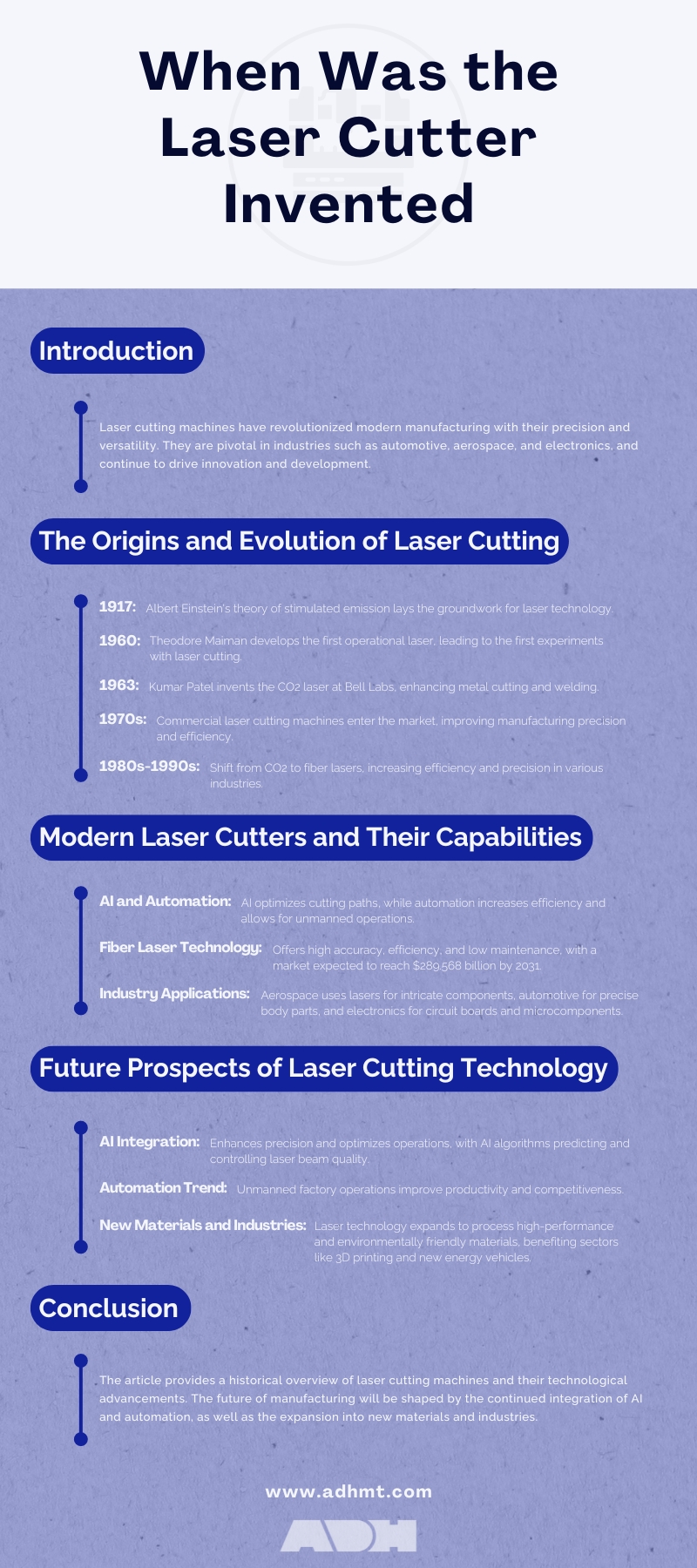
Laser cutting technology, which utilizes a high-energy-density laser beam to melt and vaporize materials without direct contact, has become an indispensable pillar of modern precision manufacturing. From aerospace and automotive production to advanced sectors like microelectronics, the widespread adoption of laser cutting powerfully demonstrates its revolutionary impact on both processing accuracy and production efficiency.
Yet, the ability of this groundbreaking technology to be applied on an industrial scale is the result of major breakthroughs in fundamental physics, coupled with relentless engineering innovation. What, then, are the theoretical foundations underlying the core technologies of laser cutting? Who are the key figures responsible for transforming lasers from laboratory curiosities into practical tools capable of efficiently processing industrial materials? And, as laser cutting evolved from its earliest prototypes to today’s highly automated and intelligent systems, what critical technological milestones shaped its journey?
This article systematically traces the technological development of laser cutting machines, offering an in-depth analysis of the entire process—from the inception of the concept to its full industrial application. Through this exploration, readers will gain a comprehensive understanding of the origins and evolution of this cutting-edge manufacturing technology.
II. The Invention of the Laser Cutting Machine
1. Theoretical Foundations
The theoretical foundation of the laser cutting machine dates back to Albert Einstein’s 1917 concept of “stimulated emission.”
In his paper “On the Quantum Theory of Radiation,” Einstein introduced the idea of stimulated emission: when an atom in an excited state absorbs a photon matching its transition frequency, it emits two photons with identical frequency, phase, polarization, and propagation direction.
In 1928, Ladenburg was the first to observe stimulated emission, which later became one of the core technologies behind the principle of lasers.
In 1939, Fabrikant proposed the concept of using stimulated emission to achieve light amplification, laying the theoretical foundation for the development of lasers.
Building on these theories, scientists gradually developed the physical model for lasers. In 1953, American physicists Charles Townes and Arthur Schawlow proposed the concept of “microwave amplification by stimulated emission,” laying the groundwork for the laser.
In 1957, Gordon Gould coined the term “laser,” further advancing laser theory.
2. Time of Invention
In 1960, American physicist Theodore Maiman invented the world’s first ruby laser, marking the birth of laser technology.
By 1963, Bell Labs used a laser to drill holes in diamonds, demonstrating the potential of lasers for material processing.
In 1965, Western Electric in the United States developed the first industrial laser cutting device, utilizing a pulsed CO₂ laser. This marked the debut of laser cutting machines in industrial production—not for cutting large metal plates as today, but for drilling highly precise holes in diamond dies.

III. Development History
1. First-Generation Technology and Limitations (1960s–1980s)
The first generation of laser technology emerged in the 1960s, initially confined to laboratory research. As the technology matured, its applications expanded. In 1965, Western Electric pioneered the use of laser cutting machines in industry by drilling holes in diamond dies—ushering in the era of industrial laser cutting.
However, these early laser cutting machines had low power and slow cutting speeds, resulting in less-than-ideal cutting quality. Substantial progress was not achieved until the 1970s, with the advent of high-power pulsed lasers.
Despite these advances, early laser cutting machines still faced limitations in terms of speed, accuracy, and stability, such as slow cutting speeds, wide kerf widths, and poor surface quality.

Key features of first-generation laser cutting machines included:
| Feature Category | Specific Description |
| Core Laser Type | Primarily uses CO₂ gas lasers, outputting continuous wave lasers. |
| System Composition | Bulky: Generators, cooling systems, etc., often require separate rooms for installation. Complex beam transmission: Light is guided through multiple sets of mirrors, resulting in poor optical path stability. |
| Processing Capability | Low power: Generally in the hundreds of watts (<1kW), with limited energy density. Weak material adaptability: Mainly used for cutting non-metals (cloth, wood, acrylic, etc.). Difficult to cut metals: Almost ineffective on highly reflective metals (copper, aluminum), inefficient and rough cuts on steel. Poor cutting quality: Wide kerf, large heat-affected zone, edges prone to carbonization or slag. - Low precision (errors often reach ±0.5mm or more), rough surface. |
| Efficiency and Operation | Slow cutting speed: Limited by power, processing is time-consuming. Highly dependent on manual labor: Requires manual adjustment of the optical path and parameter setting based on experience, with very low automation. Cumbersome maintenance: Mirrors need to be cleaned and calibrated regularly, and the cooling system has a high failure rate. |
2. Mid-Stage Breakthroughs and Development (1980s–1990s)
The 1980s marked a period of rapid advancement for laser cutting technology.
(1) High-Power CO₂ Lasers Maturing
CO₂ laser power increased significantly in the 1980s, reaching several kilowatts. This enabled much greater cutting thicknesses. For example, by the late 1980s, CO₂ lasers could reliably cut 10mm stainless steel, driving widespread adoption in industries such as automotive, aerospace, and electronics.
(2) Integration with CNC and Automation
During the 1980s, the integration of CNC technology with laser cutting machines dramatically improved cutting accuracy, the ability to process complex shapes, and overall production efficiency.
By the 1990s, automated material handling systems (such as pallet changers and automatic loading/unloading) and advanced path optimization software (like nesting algorithms) became common, further reducing manual intervention and boosting automation across production lines.

(3) Emergence of Fiber Lasers
Although fiber laser cutting machines did not become commercially widespread until the early 2000s, foundational work on this technology began in the late 1980s and 1990s, paving the way for later development of high-efficiency, low-maintenance laser cutting.
3. Modern Laser Cutting Technology (2000–Present)
(1) Power and Performance
Since 2000, laser cutting machines have seen a dramatic increase in power.
Early machines primarily used CO₂ lasers in the hundreds- to thousands-watt range.
In 2007, Italy’s Salvagnini and IPG Photonics jointly developed the first commercial fiber laser cutting machine, releasing the L1Xe model in 2008, which cut thin sheets twice as fast as CO₂ lasers.
With the rise of fiber lasers after 2010, machine power has steadily climbed to over 10kW, with some systems exceeding 60kW.
Today’s laser cutting machines deliver the high precision and speed required for modern manufacturing.
The cutting capabilities of fiber laser machines are illustrated in the table below:
| Parameter | Fiber 3000 | Fiber 4000 | Fiber 6000 | Fiber 8000 |
|---|---|---|---|---|
| Output Power | 3,000 W | 4,000 W | 6,000 W | 8,000 W |
| Mild Steel (Max Cutting Thickness) | 20 mm | 20 mm | 25 mm | 25 mm |
| Stainless Steel (Max Cutting Thickness) | 12 mm | 15 mm | 30 mm | 30 mm |
| Aluminum (Max Cutting Thickness) | 12 mm | 20 mm | 30 mm | 30 mm |
| Brass (Max Cutting Thickness) | 6 mm | 8 mm | 15 mm | 15 mm |
| Copper (Max Cutting Thickness) | 6 mm | 8 mm | 12 mm | 12 mm |
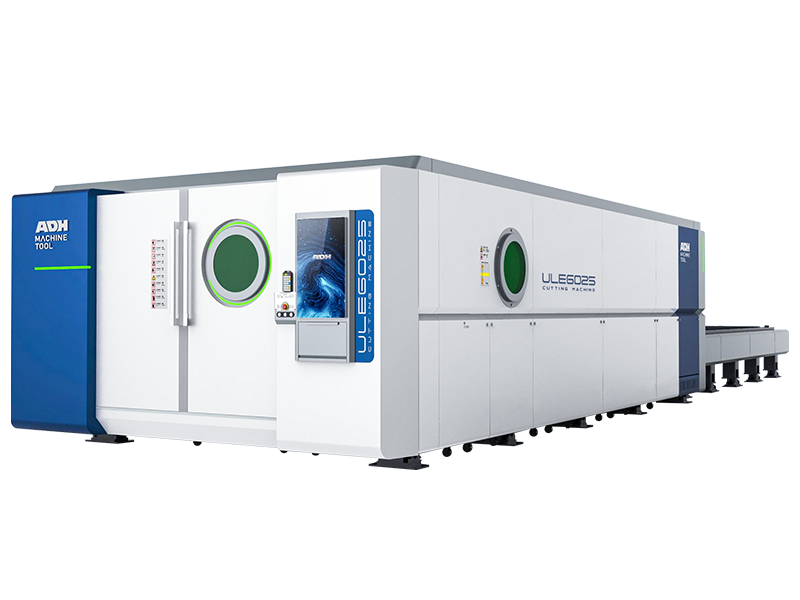
Interested in fiber laser machines? Explore the Single Laser Cutting Machine.
(2) Intelligence and Automation
Modern laser cutting machines have made significant strides in intelligence and automation.
They are now equipped with user-friendly interfaces, smart control systems, automatic focusing, nozzle changers, and capacitive height tracking.
These intelligent features not only boost productivity but also simplify operation, reduce human error, and enhance product quality.
For more technical data, visit our Brochures.
Ⅳ. Lateral Comparison
1. Comparison with Plasma Cutting
Plasma cutting is also a thermal processing technique, but it works by using a stream of high-velocity ionized gas (plasma) to melt and blow away the material.
(1) Advantages of Laser Cutting
Laser cutting offers exceptional precision, finer kerf widths, and a much smaller heat-affected zone (HAZ). This greatly reduces the chances of thermal deformation, making it ideal for processing intricate designs, applications requiring tight tolerances, and high-precision cutting of thin sheets.
(2) Advantages of Plasma Cutting
For medium to thick metal plates (typically thicker than 6 millimeters or 1/4 inch), plasma cutting usually provides faster cutting speeds and lower cost per meter. Additionally, the initial investment for plasma cutting equipment is generally less than that required for industrial laser cutting machines.
2. Comparison with Waterjet Cutting
Waterjet cutting operates on a completely different principle: it uses a stream of ultra-high-pressure water for mechanical erosion, often enhanced with abrasives like garnet to improve cutting performance.
(1) Advantages of Laser Cutting
When cutting most metals, especially thin sheets, laser cutting is significantly faster than waterjet cutting. This not only increases production efficiency but also effectively reduces the manufacturing cost per piece.
(2) Advantages of Waterjet Cutting
The standout feature of waterjet cutting is its “cold cutting” process. Since no heat is generated, there are no heat-affected zones, thermal stress, material hardening, or deformation risks. This unique capability gives waterjet cutting outstanding material compatibility, enabling it to process heat-sensitive alloys, composites, plastics, glass, stone, and highly reflective metals like copper—materials that are challenging or even impossible for lasers to handle.
Ⅴ. Types and Major Applications of Modern Laser Cutting Machines
1. Classification
| Category | Type | Description |
| By Laser Type | Fiber Laser Cutting Machine | Uses fiber doped with rare earth elements (e.g., Ytterbium) as the gain medium, generating laser via semiconductor pumping. |
| CO2 Laser Cutting Machine | Uses a carbon dioxide gas mixture as the working medium, generating laser through gas discharge. | |
| YAG/Disk Laser | Utilizes Nd:YAG crystal or disk as the medium, generating laser via lamp pumping or semiconductor pumping. | |
| UV/Green Laser Cutting Machine | Generates short-wavelength ultraviolet light (355nm) or green light (532nm) via crystal frequency doubling. | |
| By Processing Material | Metal Laser Cutting Machine | Mainly uses fiber lasers, suitable for various metal sheets/pipes. |
| Non-Metal Laser Cutting Machine | Commonly uses CO₂ lasers, suitable for cutting wood, acrylic, fabrics, etc. | |
| Composite Material Laser Cutting Machine | Requires special wavelengths (e.g., UV) to process carbon fiber, ceramic-based composites, etc. | |
| By Mechanical Structure | Gantry Laser Cutting Machine | Features a moving beam and fixed worktable, offering high rigidity for processing large-format sheets. |
| Cantilever Laser Cutting Machine | Laser head is suspended on a single arm, occupying less space, suitable for pipes or small-sized workpieces. | |
| Robotic Arm Laser Cutting Machine | Equipped with a six-axis mechanical arm carrying the laser head, offering flexible processing of 3D surfaces, such as automotive parts. |
2. Common Applications
(1) Automotive Manufacturing
Employed for high-precision cutting of body panels, interiors, engine components, exhaust, and suspension systems—meeting complex design and safety standards, and replacing traditional stamping.
(2) Construction and Structural Fabrication
Laser cutting is used to manufacture large structural parts for bridges, tunnels, connectors, and bases, ensuring both accuracy and efficiency for steel and wood materials.

(3) Electronics Industry
Applied to cutting circuit boards, electronic component housings, connectors, and heat sinks, laser cutting ensures micron-level precision and the ability to create complex patterns. It is also used for marking and engraving electronic products.
(4) Medical Industry
Used in the manufacture of medical devices and implants (such as heart stents and orthopedic implants), as well as surgical instruments. Laser cutting delivers micron-level accuracy with minimal thermal impact, ensuring biocompatibility and product quality.
(5) Shipbuilding and Heavy Machinery
Laser cutting enables precise cutting of ship steel plates and heavy equipment tubing, ensuring high-quality edges and reducing the need for secondary processing.
(6) Textile and Fashion Industry
Used for intricate design cutting and customization of garment fabrics—ideal for high-end fashion and functional apparel production.
(7) Advertising and Decoration
Laser cutting is used to engrave and cut fine patterns, enhancing product appearance and customization.
For more on industry applications, visit Laser Cutting Machine Uses.
Ⅵ. Future Trends in Laser Cutting Machines
1. Artificial Intelligence and Automation
1. Cutting-Edge Technological Advancements
(1) Artificial Intelligence and Automation
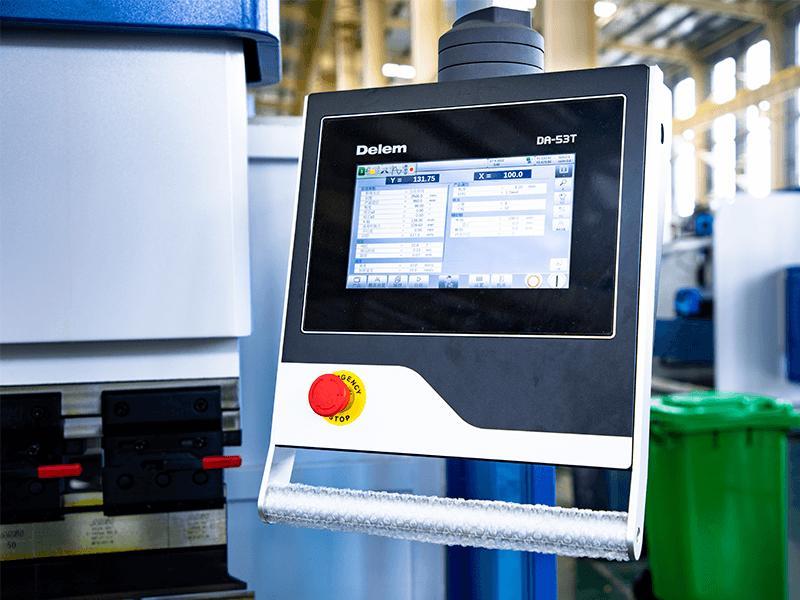
The future of laser cutting equipment lies in becoming intelligent systems equipped with both "eyes" and a "brain." The deep integration of artificial intelligence (AI) and machine vision is set to fundamentally transform operational workflows and process stability:
1) Intelligent Sensing and Automation
Utilizing high-precision cameras, these systems can automatically detect edges and recognize sheet contours, eliminating the need for manual alignment and dramatically increasing setup efficiency after loading. Advanced systems can even identify surface defects and automatically avoid them during nesting.
2) Smart Nesting and Path Optimization
AI-powered nesting algorithms go beyond simple geometric optimization; they holistically consider cutting paths, thermal effects, and piercing strategies. This approach maximizes material utilization and reduces the risk of part rejection due to thermal deformation.
3) Real-Time Monitoring and Adaptive Adjustment
Sensors and machine vision continuously monitor key parameters during the cutting process, such as melt pool temperature, plasma state, and nozzle wear. If any anomalies are detected—like dross or burnt edges—the AI control system can instantly and autonomously adjust process parameters, including power, gas pressure, and cutting speed. This transforms the “process window” from a static setting into a dynamically optimized state, ensuring stable cutting quality.
(2) Performance Expansion
1) The Race for Ultra-High Power and Deepening Applications
Laser sources with tens of kilowatts, and even higher power, have become mainstream in the market. The next phase of competition will shift from mere increases in power toward the efficient and stable utilization of that power. For example, optimizing beam profiles and nozzle designs enables faster cutting speeds, reduced taper, and mirror-like finishes comparable to plasma cutting—especially in thick plate nitrogen cutting.
2) Widespread Adoption of Advanced Processing Capabilities
Bevel cutting and 3D five-axis machining will no longer be exclusive to a handful of high-end machines. As costs drop and control systems mature, these features will become standard, allowing laser cutting machines to handle tasks like weld bevel preparation and complex contour trimming in a single operation. This “one-stop processing” approach significantly shortens the manufacturing chain.
(3) Next-Generation Laser Systems
| Technology Type | Features | Application Areas |
|---|---|---|
| Ultrafast Laser | Represented by picosecond and femtosecond lasers, characterized by "cold processing" with minimal heat-affected zone (HAZ), enabling precise cutting. | 1. Heat-sensitive and brittle material processing (e.g., ceramics, glass). 2. High-precision fields (e.g., medical devices, semiconductor wafers). |
| Hybrid Laser Systems | Integration of different types or wavelengths of lasers (e.g., fiber laser and CO₂ laser, or fiber lasers with different wavelengths), allowing intelligent switching to the optimal light source based on material properties and processing requirements. | 1. Multi-material processing (metals, non-metals, composites). 2. Efficient handling of complex materials. |
2. Intelligence and Sustainable Development
(1) Integration into the Industry 4.0 Ecosystem
1) Industrial Internet and Data-Driven Operations
By connecting with Industrial Internet of Things (IIoT) platforms, equipment can upload real-time data on operational status, energy consumption, and production efficiency to the cloud. Seamless integration with MES (Manufacturing Execution Systems) and ERP (Enterprise Resource Planning) systems enables automated task distribution, intelligent resource allocation, and precise cost accounting.
2) Digital Twin Technology
High-fidelity virtual models are created for physical equipment, allowing for comprehensive simulation of the cutting process. In a digital twin environment, offline programming, process optimization, collision detection, and even predictive maintenance—providing early warnings before failures occur—can be performed, thus maximizing equipment utilization and minimizing downtime.
(2) Energy Efficiency and Environmental Friendliness
1) High-Efficiency Lasers
Fiber lasers, with their significantly higher electro-optical conversion efficiency compared to CO₂ lasers, have made substantial progress in energy conservation. Future R&D will focus on further improving conversion efficiency and optimizing cooling systems to reduce the unit energy consumption of equipment operations.
2) Green Processes and Emissions Reduction
Intelligent gas control systems can precisely deliver auxiliary gases according to cutting requirements, eliminating waste. At the same time, the development of more efficient dust collection and exhaust treatment solutions will significantly reduce dust and harmful emissions produced during processing, ensuring compliance with increasingly stringent environmental regulations.
3. Emerging Application Fields
(1) The Rise of Desktop-Scale Systems
Laser cutting technology is experiencing a wave of popularization. Compact, affordable, and user-friendly desktop laser cutting/engraving machines are rapidly entering small studios, educational institutions, and even the homes of hobbyists. This trend is not only fueling personalized customization services but also significantly boosting grassroots innovation.
(2) Microfabrication and Multi-Material Processing
The precision and material range of laser cutting applications continue to expand.
1) Microfabrication
With the aid of advanced technologies such as ultrafast lasers, laser cutting is advancing into the realm of micron and even sub-micron precision. Its high accuracy and non-contact advantages are being fully utilized in fields such as electronics, medical devices, and aerospace micro-components.
2) Multi-Material Processing
In the future, laser cutting will become a true all-rounder. Beyond traditional metals, its applications in cutting advanced composites, engineering plastics, ceramic matrix composites, and laminated materials will become increasingly sophisticated, meeting the demands of cutting-edge industries like new energy vehicles and aerospace for lightweight and high-performance materials.
Ⅶ. Conclusion
Tracing the origins of the laser cutting machine is not simply a matter of pinpointing a single year; instead, it is a gradual evolution shaped by breakthroughs in theory, engineering advancements, and industrial applications.
If we look back to the very roots, Einstein’s introduction of the theory of stimulated emission in 1917 laid the scientific groundwork. In 1960, Theodore Maiman’s successful creation of the world’s first laser marked a milestone in physics, making the concept of “cutting with light” a tangible possibility. However, from the perspective of industrial manufacturing, the truly transformative moment arrived in the mid-1960s with the advent of the CO₂ laser. This innovation overcame the critical challenge of delivering high-power, continuous output required for industrial use.
This journey of progress not only highlights the difficult transition from fundamental science to applied technology but also fundamentally reshaped the landscape of modern precision manufacturing. Through ongoing innovation, this technology continues to inject powerful momentum into the advancement of global industry, with modern solutions like the Single Table Fiber Laser Cutting Machine leading the way. To learn more about how these advancements can help your business, we invite you to contact us.












 English
  العربية
  বাংলা
বাংলা  Български
  Čeština
  Dansk
Dansk  Nederlands
  Deutsch
  Suomi
Suomi  Français
  Ελληνικά
  עִבְרִית
  हिन्दी
  Magyar
  Bahasa Indonesia
  Italiano
  日本語
日本語  Қазақ тілі
  한국어
한국어  Bahasa Melayu
  Norsk bokmål
  فارسی
فارسی  Polski
  Português
  Português do Brasil
  Română
  Русский
  Српски језик
  Slovenčina
  Español de México
  Español
  Svenska
  Kiswahili
  தமிழ்
தமிழ்  Türkçe
  ไทย
ไทย  Tagalog
  Українська
  Tiếng Việt
  اردو
اردو  简体中文
简体中文  香港中文
香港中文  繁體中文
繁體中文