
I. Introduction
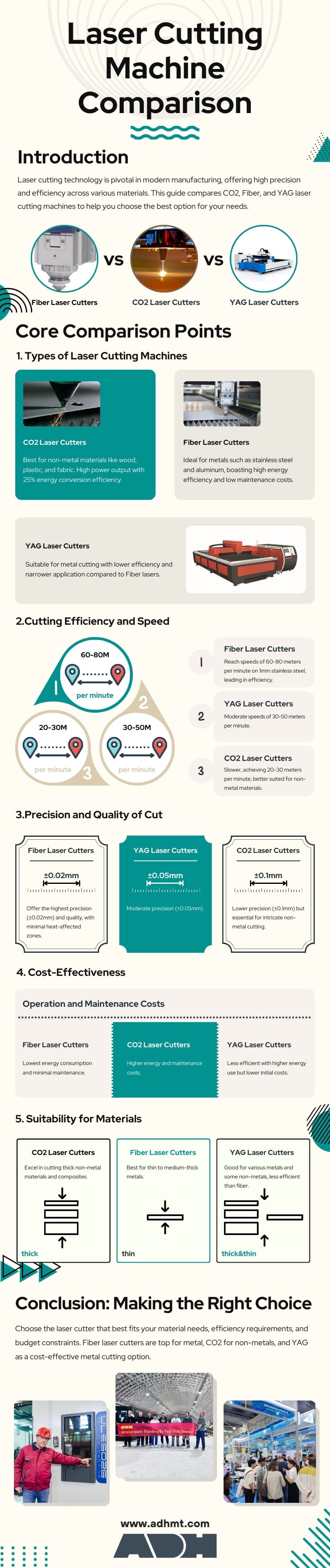
In today’s world of precision manufacturing, laser cutting technology stands as a key driver in enhancing machining accuracy, optimizing production efficiency, and enabling the formation of intricate structures. As the technology continues to evolve—ranging from choices between fiber and CO₂ lasers to a diverse array of power levels from entry-level models to high-powered multi-kilowatt systems—companies are often confronted with a labyrinth of technical specifications, making it challenging to strike the right balance.
This guide aims to provide you with a clear and systematic decision-making framework. We will thoroughly explain the core principles behind various types of laser cutting equipment, carefully evaluate their key performance indicators (KPIs), and offer in-depth insights into their adaptability for processing different metals, non-metals, and composite materials. If you are already at the stage of narrowing down options for your facility, this framework can also serve as a practical reference to Choose the Right Laser Cutting Machine for Your Workshop.
Our goal is to help you move beyond surface-level marketing claims and, from a strategic perspective—focusing on total cost of ownership (TCO), return on investment (ROI), and application suitability—make informed capital decisions that ensure your technological investments translate into lasting core competencies in manufacturing.
II. Fundamentals of Laser Cutting Machines
1. Operating Principle of Laser Cutting Machines
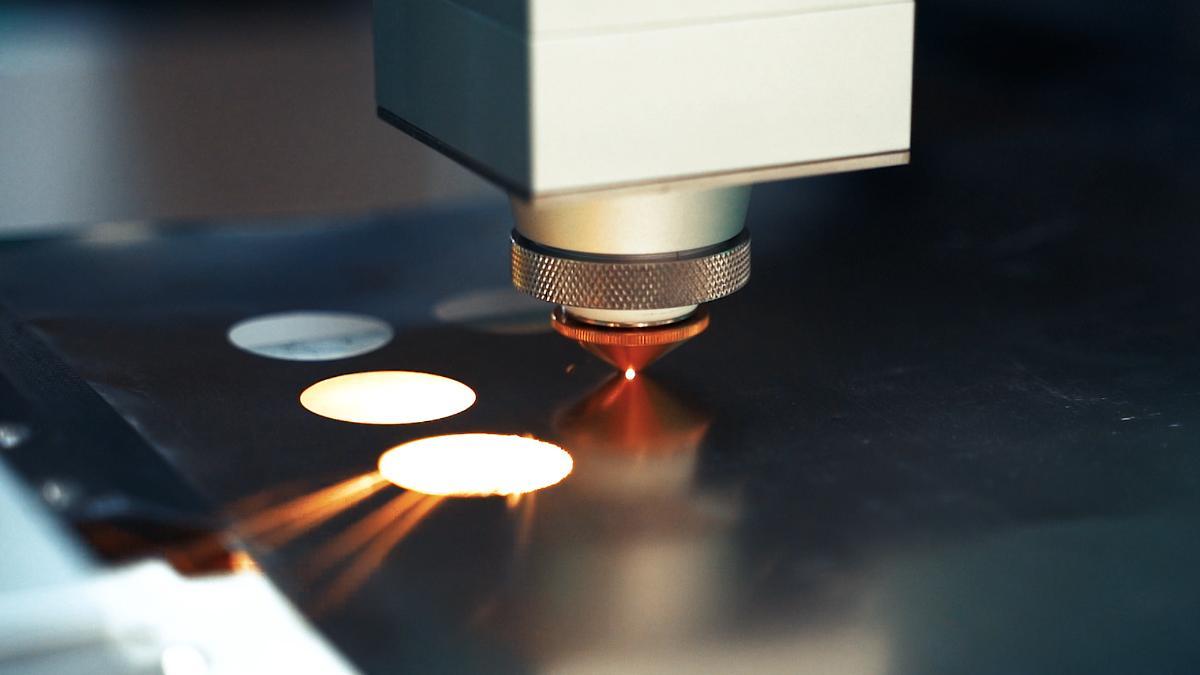
Laser cutting machine uses a high-power-density laser beam to cut materials. Its operation involves generating a high-energy laser beam through a laser source, focusing it onto the surface of the workpiece, causing the material to melt, vaporize, or ablate rapidly. Simultaneously, a coaxial high-speed gas flow blows away the molten material, thus achieving precise cuts. The laser cutting process typically includes the following steps:
(1) Laser Generation: The laser source emits a high-energy laser beam.
(2) Laser Focusing: Lenses or mirrors focus the laser beam into a tiny spot to maximize energy density.
(3) Material Heating: The focused laser heats the material locally to its melting or boiling point, enabling melting or vaporization.
(4) Cutting Completion: High-pressure gas removes the molten or vaporized material, forming a clean cut.

2. Types and Comparison of Laser Cutting Machines
(1) Categorized by Laser Source
1)CO2 Laser Cutting Machines
These operate by using a carbon dioxide gas mixture as the lasing medium. The gas is electrically excited to produce a laser, which is then focused into a high-energy spot to melt or vaporize the material, with auxiliary gas assisting in slag removal. The typical wavelength is 10.6μm, which is better absorbed by non-metallic materials.
CO2 machines generally have a lower initial cost than fiber lasers, but with an optical-electric conversion efficiency of 10%-15%. They require periodic replacement of laser gas and maintenance of mirrors, resulting in higher operating and upkeep costs.
2)Fiber Laser Cutting Machines
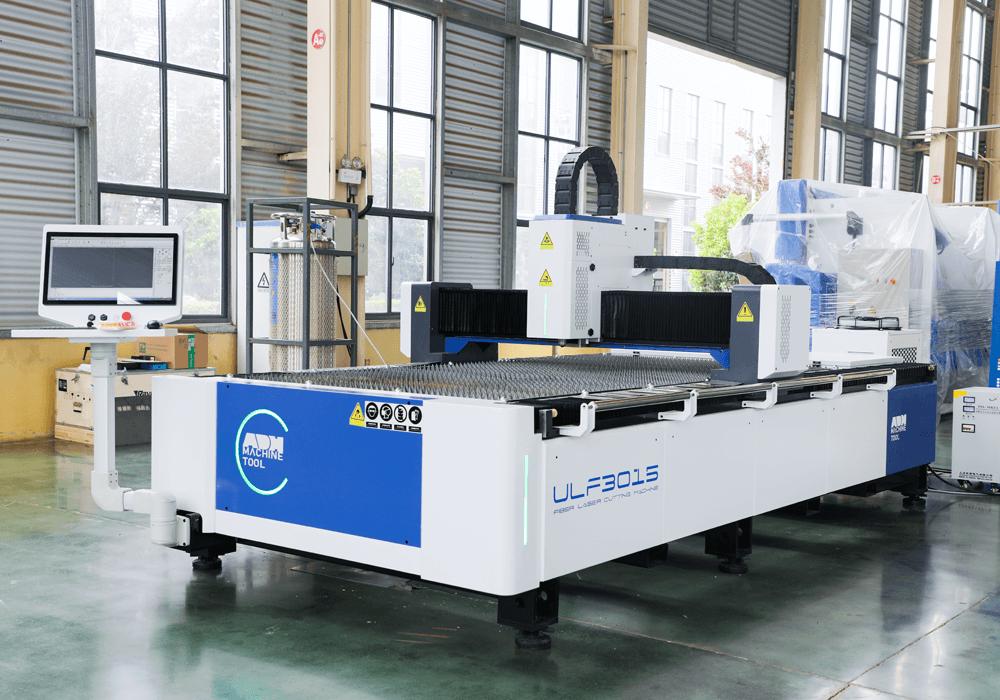
These use fiber doped with rare earth elements such as ytterbium as the gain medium. The laser is generated by semiconductor pumping, focused into an ultra-high energy density spot to instantly melt metal, with high-pressure gas blowing away molten material for precise cuts. The typical wavelength is 1.06μm, which metals absorb efficiently.
Fiber lasers have a higher initial cost but offer an optical-electric conversion efficiency above 30%, even up to 50%. They require no laser gas, are virtually maintenance-free, and consume less power, making long-term operating costs lower.
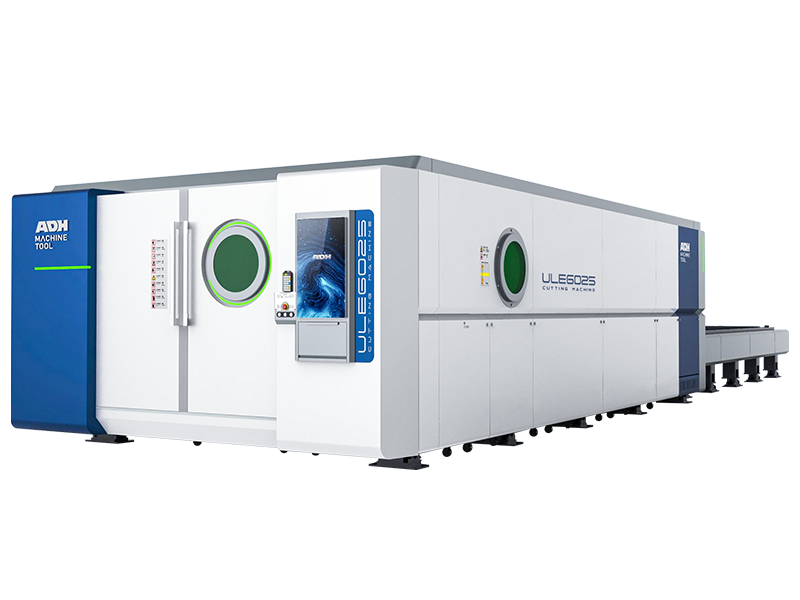
If you need a fiber laser cutting machine for metalworking, consider the Single Table Fiber Laser Cutting Machine.
3)Nd: YAG Laser Cutting Machines
These early solid-state lasers use neodymium-doped yttrium aluminum garnet crystal as the gain medium, with a wavelength of 1.064μm. Previously common for metal marking and thin-sheet cutting, they have largely been replaced by modern fiber lasers due to lower efficiency, beam quality, and reliability.
| Type | Working Principle | Applicable Materials | Advantages | Limitations |
|---|---|---|---|---|
| CO₂ Laser Cutting Machine | Gas laser (CO₂ mixed gas discharge) | Metal sheets, non-metals (wood/acrylic) | Excellent for cutting non-metals, lower cost | Low photoelectric conversion rate (10%), complex maintenance |
| Fiber Laser Cutting Machine | Fiber amplification semiconductor laser | Metals (especially reflective materials like copper/aluminum) | High photoelectric efficiency (30–50%), fast speed, maintenance-free | Weak cutting capability for non-metals |
| Nd: YAG Laser Cutting Machine | Nd: YAG crystal excitation laser | Metals, ceramics | High peak power, suitable for precision machining | Relatively low efficiency |
(2) Categorized by Structural Design
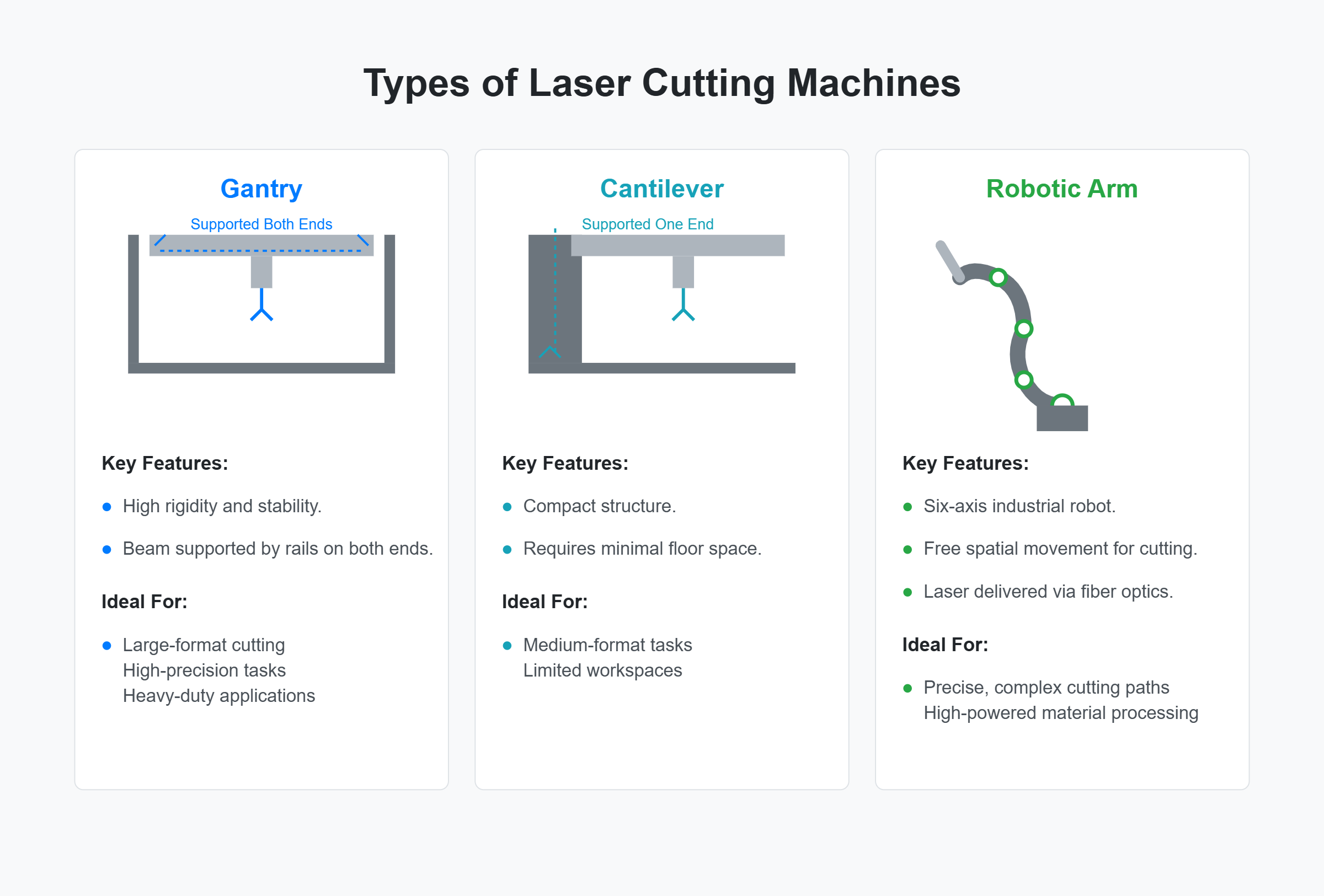
1)Gantry Laser Cutting Machines
With both ends of the beam supported by rails, these machines offer high rigidity and are ideal for large-format, high-precision, and heavy-duty cutting tasks.
2)Cantilever Laser Cutting Machines
Supported at only one end, these machines feature a compact structure and require minimal floor space, making them suitable for medium-format tasks and limited workspaces.
3)Robotic Arm Laser Cutting Machines
Combining a six-axis industrial robot and a laser cutting system, the robotic arm provides free spatial movement, ensuring precise cutting paths. The laser is delivered to the cutting head via fiber optics, enabling high-powered material processing.
This combination not only improves accuracy and efficiency but also reduces manual intervention and labor intensity.
| Laser Cutting Machine Type | Applicable Scenarios | Structural Features | Production Characteristics |
|---|---|---|---|
| Gantry Laser Cutting Machine | Cutting large plates | Stable structure | Suitable for mass production |
| Cantilever Laser Cutting Machine | Cutting medium and small plates | Compact structure | Suitable for small batch production |
| Robotic Arm Laser Cutting Machine | Cutting complex shapes | Equipped with robotic arm | Enables automated cutting, suitable for processing complex shapes |
3. Beam Quality
(1) Quantifying Beam Quality
1) Beam Parameter Product (BPP): Defined as the product of the laser beam waist radius and the far-field divergence angle. The smaller the BPP value, the less the beam diverges during propagation and the better its focusability, which indicates higher beam quality.
2) M² Factor: This is a dimensionless parameter that compares the BPP of an actual laser beam to that of an ideal Gaussian beam of the same wavelength. A perfect, theoretical Gaussian beam has an M² value of 1. Therefore, the closer a real laser beam’s M² value is to 1, the higher its beam quality and the closer its performance to the theoretical limit.

The measurement of these parameters follows strict international standards, specifically ISO 11146. This standard outlines a standardized process in which high-resolution cameras capture beam profiles at multiple positions before and after the focal point. Data processing and hyperbolic fitting are then used to accurately determine the beam waist, divergence angle, and ultimately calculate the standardized M² factor.
(2) Impact of Beam Quality
1) Cutting Precision and Kerf Width
A high-quality beam (low M² value) can be focused to an exceptionally small spot. This tiny focal point means energy is highly concentrated, allowing for extremely efficient vaporization or melting of materials. As a result, it produces narrower, more precise cuts and enables high-precision cutting of intricate contours.
2) Heat-Affected Zone (HAZ)
The HAZ refers to the area along the cut edge where the material’s properties have been altered due to heat exposure.
A high-quality beam, thanks to its extremely high power density, removes material almost instantaneously, leaving little time for heat to diffuse to the surrounding area. This results in a very small heat-affected zone, which is crucial for preserving the original properties of the material and minimizing thermal distortion.
Conversely, a low-quality beam requires a longer interaction time, causing more heat to spread and resulting in a wider HAZ.
(3) Core Factors Affecting Beam Quality
1) Type of Laser Source
| Laser Type | Beam Quality Characteristics |
|---|---|
| Fiber Laser | Exhibits the highest beam quality, with single-mode fiber lasers achieving an M² value close to 1, nearly perfect beam quality due to the mode selection function of the waveguide structure. |
| Solid-State Laser | Offers good beam quality, although generally lower than fiber lasers, limited by the thermal lensing effect of the gain medium, especially at high power levels. |
| CO₂ Laser | Relatively lower beam quality (larger M² value), with longer wavelengths resulting in a theoretically larger minimum focal spot, but uniquely advantageous for non-metal material processing. |
2) Laser Resonator Design
This is the fundamental factor that determines the "inherent" quality of the laser beam. By optimizing the cavity geometry, employing a stable resonator design, and introducing mode-selecting apertures within the cavity to suppress higher-order modes, it is possible to ensure the generation of a high-quality fundamental mode beam right from the source.
3) Thermal Lens Effect
In high-power lasers, the pump source unevenly heats the gain medium, causing a higher refractive index at the center compared to the edges. This creates an effective positive lens, known as a thermal lens, which distorts the beam's wavefront and is one of the primary physical factors leading to the degradation of beam quality.
4) Beam Delivery System
The entire optical path from the laser output to the workpiece surface—including mirrors, lenses, and optical fibers—can potentially degrade beam quality. Any imperfections, contamination, or misalignment in optical components, as well as mode coupling in multimode fibers, can introduce wavefront distortions and result in a higher M² value.
III. Performance and Specification Comparison
1. Laser Power
Laser power is the primary indicator of a laser cutter’s processing capability, directly affecting the materials it can handle, the maximum thickness, and the cutting speed.
Generally, higher laser power enables faster cutting of the same material and the ability to process thicker materials.
| Laser Power Range | Applicable Material Types | Cutting Material Thickness Range |
|---|---|---|
| 10W – 100W | Thin materials such as paper, cardboard, thin plastic | Thin materials |
| 100W – 500W | Thicker materials such as wood, acrylic, and metal | Thickness up to 1/4 inch |
| 500W – 2000W | Thick materials such as metal | Thickness up to 1 inch |
| 2000W – 6000W + | Ultra-thick materials such as metals and industrial materials | Thickness over 1 inch |
(1) CO2 Laser Cutter Power
- Low Power: 10W–1000W
- Medium Power: 1000W–1500W
- High Power: Above 1500W
Low power models are typically for paper cutting, woodworking, and light home use; medium power is suitable for engraving metal and non-metal parts; high power is reserved for deep or highly precise cuts.
(2) Fiber Laser Cutter Power
- Low Power: Below 2000W
- Medium Power: 2000W–4000W
- High Power: Above 4000W
Laser power is a major factor influencing the price of a laser cutter. Currently, 2000W fiber lasers are in high demand and meet most cutting requirements. Machines above 4000W offer even greater speed but come at a higher cost.
(3) Nd: YAG Laser Cutter Power
Mainstream output power is generally below 800W.
With lower output, these are mainly used for micro-cutting, drilling, and scribing of ceramic substrates and electronic components.
2. Cutting Precision
The machining precision of a laser cutting machine is a key metric for evaluating machine tool quality in industry.
Fiber laser cutters typically offer high precision, usually within ±0.03mm.
CO2 laser cutters generally provide accuracy within ±0.05mm to ±0.1mm.
YAG laser cutters offer precision between that of fiber and CO2 models, generally within ±0.05mm.
Laser cutting precision far exceeds that of traditional cutting methods. Fiber laser machines, in particular, are the preferred choice for tasks demanding the highest accuracy.
3. Worktable Size
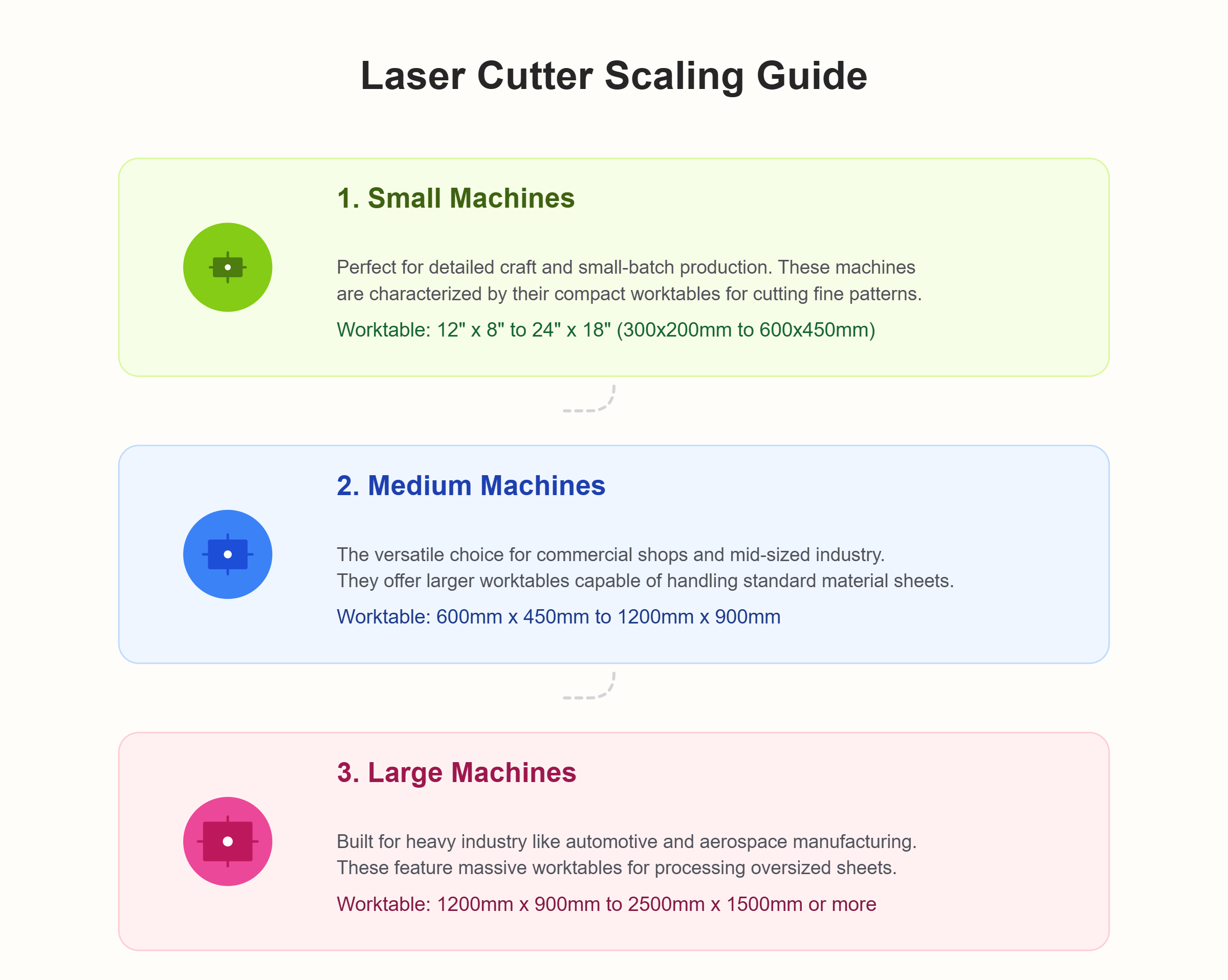
(1) Small Laser Cutting Machines
Designed for fine work and small-scale production, these machines have compact worktables suitable for cutting small parts or intricate patterns.
Typical worktable sizes range from 12" x 8" to 24" x 18" (300mm x 200mm to 600mm x 450mm).
(2) Medium Laser Cutting Machines
Ideal for mid-sized industrial and commercial applications, these machines offer larger worktables that can handle standard sheet sizes.
Typical sizes are 600mm x 450mm to 1200mm x 900mm.
(3) Large Laser Cutting Machines
Used for heavy-duty industrial applications such as aerospace and automotive manufacturing, these machines feature very large worktables for processing oversized sheets.
Worktable sizes generally range from 1200mm x 900mm to 2500mm x 1500mm or even larger.
The size of the worktable directly affects both processing capability and efficiency. When choosing, ensure the machine can handle your largest workpiece and that there’s sufficient space for the equipment and necessary peripherals (such as exchange tables and loading/unloading systems). Refer to the table below for guidance:
| Type | Main Application Areas | Main Advantages | Main Disadvantages |
|---|---|---|---|
| Small | Education, crafts, advertising, DIY | Low cost, small footprint, high precision, easy to operate | Small processing area, limited thick plate capability, low efficiency |
| Medium | Small-medium manufacturing, decoration, parts processing | Wide range of applications, high efficiency, good automation | Higher investment than small type, high space requirements, limited thick plate capability |
| Large | Automotive, shipbuilding, engineering machinery, steel structures | Capable of cutting large-format thick plates, high efficiency, strong automation | Large footprint, high investment, requires professional maintenance, high energy consumption |
4. Material Compatibility
| Material Type | CO2 Laser (10.6 µm) | Fiber Laser (1.06 µm) | Nd: YAG Laser (1.06 µm) |
|---|---|---|---|
| Metals | Engraving only, slow cutting of thin metals | Excellent (Carbon steel, stainless steel, aluminum, copper, brass, titanium, nickel) | Excellent (High-reflective metals like copper/aluminum), precision micro-machining, thick steel |
| Non-Metals | Excellent (Wood, acrylic, plastics, leather, paper, textiles, glass, ceramics, stone, rubber, foam) | Limited compatibility | Plastics, ceramics, transparent materials (subsurface marking) |
In most cases, fiber laser cutting machines are the top choice for metalworking, offering broad compatibility with metals and excelling at thick and reflective materials.
CO2 lasers are best for non-metals like wood, acrylic, plastics, paper, and leather, producing smooth, precise edges. Their performance on highly reflective metals like aluminum and copper is limited.
For more detailed technical parameters, refer to our Brochures.

5. Motion Systems
(1) Gantry Motion System
This is the most common and mature design found in medium-to-high power and large-format laser cutting machines, featuring a structure similar to an overhead gantry crane. The cutting head (Z-axis) is mounted on a crossbeam (X-axis) that moves along the Y-axis, while the crossbeam itself is driven by synchronized systems on both sides, traveling along the machine rails (Y-axis).
The core advantages of this system lie in its high rigidity and stability. The dual-sided drive and closed-frame structure effectively suppress vibration and crossbeam deformation that can occur during high-speed movement and rapid acceleration or deceleration. These features directly translate into two key performance benefits:
1) High Precision
The robust structure enables extremely high positioning and repeat positioning accuracy, maintaining geometric precision of the cutting contours even when processing large-format or heavy plates.
2) High Speed
Outstanding rigidity allows the system to withstand higher acceleration (up to 2G or more) and travel speeds, meeting the demands of efficient, high-output mass production. As a result, the gantry system guarantees top-tier performance, making it particularly suitable for medium-to-thick plate processing, large-format cutting (such as over 3 meters x 1.5 meters), and continuous production in industries like automotive, aerospace, and heavy machinery where precision and productivity are critical.
(2) Cantilever Motion System
This system features an X-axis beam fixed at only one end to the Y-axis slider on the machine frame, with the other end suspended in the air. The cutting head moves along this cantilever in the X direction, while the entire beam travels along the Y-axis.
The most notable advantage is its three-sided open work area, significantly simplifying loading and unloading of materials.
However, there are clear trade-offs in performance, with limited precision being the main drawback. Because one end of the beam is unsupported, its rigidity is much lower than that of the gantry design. This makes it prone to vibration and deflection, particularly at the far end of the cantilever during high-speed movement or when the cutting head reaches the beam’s tip, resulting in reduced cutting accuracy, especially at the edges of the work area. Speed is also restricted, as vibration control and precision requirements typically limit both acceleration and maximum speed, making high-dynamic motion challenging.
Thanks to its simple structure, lower cost, and compact footprint, the cantilever system is commonly used for small-format, thin-sheet, or non-metal material cutting. It is well-suited for personal studios, advertising production, educational purposes, and light industrial processing where ultra-high precision is not essential.
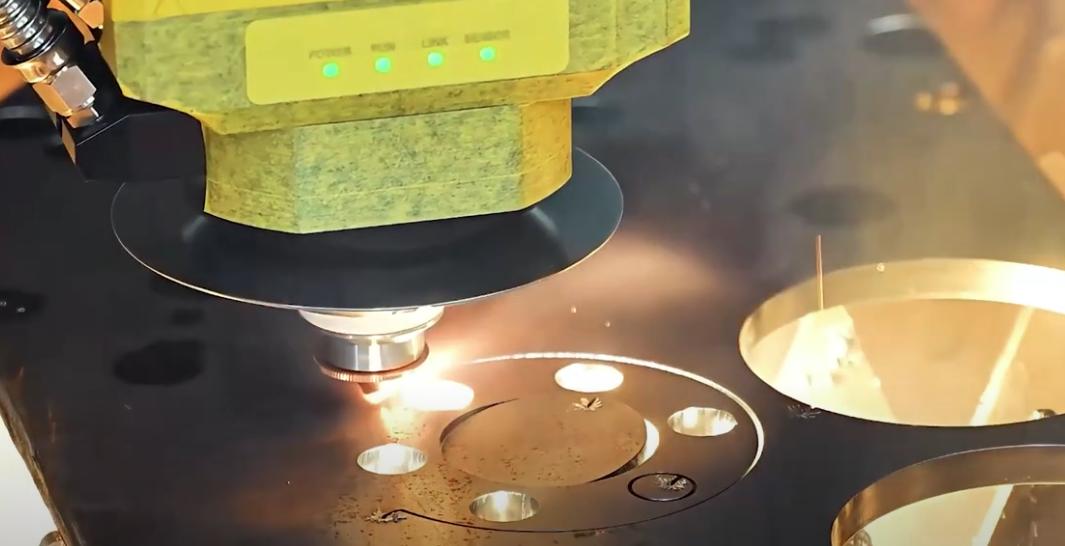
(3) Flying Optics Motion System
This is a specialized variation of the gantry structure, with its core concept centered on keeping the workpiece completely stationary. The laser cutting head “flies” at high speed along both the X and Y axes via a lightweight gantry system, tracing the entire cutting path.
The key advantage is its exceptionally low moving mass, as the system only needs to drive the lightweight cutting head and crossbeam, rather than the often heavy workpiece. This delivers two outstanding performance benefits:
1) Ultra-high Precision
The extremely low inertia allows for precise control, especially when cutting intricate or sharp contours. Overshoot and vibration are minimized, ensuring exceptional contour fidelity.
2) Ultra-high Speed
Thanks to its low moving mass, the system achieves remarkable acceleration and rapid traverse speeds. Thus, the flying optics system is the ideal choice for high-speed, high-precision processing of thin materials, and is widely used in industries such as electronics, precision instruments, medical devices, or any field requiring quick, precise cutting of large quantities of complex, small patterns.
IV. Cost Analysis
1. Cost Comparison
(1) Initial Investment Cost
1)Fiber Laser Cutting Machine: Fiber lasers have the highest upfront cost, depending on the machine's power and additional features. Despite the higher initial investment, their high photoelectric conversion efficiency and low operational costs make them more cost-effective over time.
2)CO2 Laser Cutting Machine: These machines have a relatively lower initial cost, but with a photoelectric conversion efficiency of just 10%–15%, their operational costs tend to be higher.
3)YAG Laser Cutting Machine: YAG lasers have the lowest initial cost and are suitable for high-reflective materials. However, their lower power and cutting efficiency, coupled with the growing popularity of fiber lasers, have diminished their advantages.
(2) Operating and Maintenance Costs
1)Fiber Laser Cutting Machine: Fiber lasers have the lowest operating costs, with conversion efficiency exceeding 30% and energy consumption just 20–30% of a CO2 laser of the same power. They also require minimal maintenance, as there are no optical components to replace, and they are highly resistant to dust, impacts, humidity, and temperature changes.
2)CO2 Laser Cutting Machine: With lower conversion efficiency (10%–15%) and high consumption of gases like helium and nitrogen, CO2 lasers have higher operating costs. Maintenance is also more intensive, requiring regular calibration, optical system cleaning, and cooling system servicing due to their complex structure.
3)YAG Laser Cutting Machine: YAG lasers have high operating costs due to a conversion efficiency of only 3% and frequent maintenance requirements. Although inexpensive, their advantages are fading as fiber lasers become more widespread.

| Project/Type | Fiber Laser Cutting Machine | CO₂ Laser Cutting Machine | YAG Laser Cutting Machine |
|---|---|---|---|
| Initial Purchase Cost | High | Medium | Low to Medium |
| Cutting Speed | High | Medium | Low |
| Maintenance Cost | Low | High | Medium to High |
| Energy Consumption | Low | High | High |
| Service Life | Long | Average | Average |
For specific pricing on laser cutting machines, you can contact the ADH Machine Tool team directly to get a free quote.
(4) Comprehensive Cost Analysis
Fiber laser cutting machines offer the highest cost-performance ratio, making them ideal for businesses focusing on efficiency and long-term cost control.
CO2 lasers are suitable for non-metal and thick sheet processing, with low initial investment but higher long-term operating costs.
YAG lasers are appropriate for occasional cutting of highly reflective metals, but are not suited for heavy, continuous production.
2. Core Factors Affecting Price
Beyond machine type, several factors influence the price of a laser cutting machine:
(1) Power
Higher power increases both cutting capability and efficiency, but also raises the purchase price. When selecting power, balance your processing needs, material thickness, and budget to maximize your investment returns.
(2) Configuration and Accessories
Laser heads, CNC systems, software, and machine precision all directly impact cost and cutting performance. Generally, higher levels of automation mean higher prices.
(3) Brand and After-sales Service
Brand is a key price factor. Premium brands command higher prices but lead in automation and precision, making them suitable for high-end manufacturing and companies with ample budgets.
Mainstream domestic brands offer high cost-effectiveness and comprehensive after-sales support, making them ideal for small and medium-sized or growing businesses.
For a comparison of leading brands, see Top 10 Laser Cutting Machine.
2. Budget Analysis
Different users require different types of laser cutting machines. If you're considering a purchase, refer to the chart below:
| User Type | Budget | Main Machine Type | Applicable Materials/Scenes | Main Focus |
|---|---|---|---|---|
| Individual/Small Studio | Low | Low-power CO₂ Laser | Non-metal materials, crafts | Cost, ease of use |
| Small to Medium Businesses | Medium | Medium-high power CO₂/Fiber Laser | Thin metal, non-metal batch processing | Cost-effectiveness, efficiency, service |
| Large Manufacturing | High | High-power Fiber/YAG Laser | Thick metal, precision components | Performance, automation, brand |
3. Key Considerations
(1) Material Type and Thickness
This is the most decisive factor when selecting a machine. The type and thickness of material directly determine the appropriate machine.
(2) Output and Speed Requirements
For large-scale metal part production, fiber lasers offer superior quality and precision, making them the best choice.
For lower-volume production or complex work on non-metals, CO2 lasers are often sufficient.
(3) Budget
Beyond the initial purchase price, it's critical to evaluate the total cost of ownership (TCO), including long-term operating costs such as energy, auxiliary gases, consumables, and maintenance.
While fiber lasers may cost more upfront, their outstanding efficiency usually results in a lower TCO over the machine’s lifetime.
(4) Automation Requirements
Laser cutting machines can be seamlessly integrated with CNC systems for automated operation. Higher levels of automation require greater upfront investment but can save on labor and improve efficiency and quality in the long run. Assess your needs carefully before deciding.
(5) Space and Infrastructure Requirements
Large industrial machines require ample physical space, robust electrical connections, and effective ventilation to ensure safe and efficient operation.
For a step-by-step guide to choosing a laser cutting machine, refer to What Laser Cutting Machine to Buy.
V. Conclusion
In summary, selecting the right laser cutting machine is a multifaceted strategic decision that hinges on aligning technology, performance, and economic returns.
Our analysis indicates that the choice of laser source technology serves as the primary dividing line in this decision-making process: fiber lasers, with their high energy efficiency and low maintenance costs, have become the industry standard for metal processing; CO₂ lasers offer distinct advantages for precise cutting of non-metal materials; while diode lasers present an affordable and efficient option for beginners and the education sector. For industrial applications focused on metal, a Single Table Fiber Laser Cutting Machine is often a prime example of this efficiency and power.
Beyond that, key performance metrics such as power, cutting speed, and precision directly impact production efficiency and the quality of finished products. However, a wise investment decision should go beyond focusing solely on the machine’s initial purchase price. It requires a thorough evaluation of the total cost of ownership, including electricity, auxiliary gases, consumables, and maintenance over the machine’s lifecycle.
The optimal solution is not simply to pursue the highest power or the lowest price. Instead, it lies in finding a system that seamlessly integrates material compatibility, production capacity, precision standards, and long-term financial planning within your specific application—whether for personal creation, small to medium-sized business production, or large-scale industrial manufacturing. If you need help navigating these factors to identify the perfect machine for your needs, please contact us for a personalized consultation.








 English
  العربية
  বাংলা
বাংলা  Български
  Čeština
  Dansk
Dansk  Nederlands
  Deutsch
  Suomi
Suomi  Français
  Ελληνικά
  עִבְרִית
  हिन्दी
  Magyar
  Bahasa Indonesia
  Italiano
  日本語
日本語  Қазақ тілі
  한국어
한국어  Bahasa Melayu
  Norsk bokmål
  فارسی
فارسی  Polski
  Português
  Português do Brasil
  Română
  Русский
  Српски језик
  Slovenčina
  Español de México
  Español
  Svenska
  Kiswahili
  தமிழ்
தமிழ்  Türkçe
  ไทย
ไทย  Tagalog
  Українська
  Tiếng Việt
  اردو
اردو  简体中文
简体中文  香港中文
香港中文  繁體中文
繁體中文