
In the high-precision world of industrial manufacturing, laser cutting stands out. But while the laser beam does the cutting, it's the often-overlooked assist gas used in laser cutting that truly dictates quality, speed, and crucially, operating cost.
According to statistics, the cost of auxiliary gas can account for as much as 15-25% of the total operating expenditure of laser cutting, making it the second-largest operating expense after electricity consumption.
Are you grappling with how much gas your laser cutter actually consumes? Need to accurately estimate expenses or find effective ways to reduce usage without sacrificing performance? You're not alone.
This guide dives deep into laser cutting machine gas consumption, exploring the technical parameters, cost factors, and actionable optimization strategies. Let's unlock efficiency and cut down on unnecessary costs.
I. Technical Parameters of Laser Cutting Machine Gas Consumption
1. Gas Consumption Standards for Different Power Equipment
- Gas Consumption per Unit Time
- 2000W Equipment: Typically used for cutting thinner materials, with gas consumption around 40-50 liters/hour, depending on material type and thickness.
- 3000W to 6000W Equipment: Suitable for medium-thickness materials, with gas consumption ranging from 50 to 120 liters/hour. Higher power increases efficiency but also raises gas usage.
- Ultra-High Power Equipment (e.g., 12000W and above): Designed for cutting materials thicker than 25mm, with gas consumption exceeding 200 liters/hour. However, these systems achieve lower gas consumption per unit cutting area due to higher efficiency.
- Energy Efficiency of Ultra-High Power Equipment
- Ultra-high power systems (e.g., 30000W or 60000W) optimize laser energy utilization and employ advanced nozzle designs, reducing gas consumption per unit area while significantly boosting productivity.
- Compared to medium-power systems, ultra-high power equipment demonstrates lower overall energy consumption when processing thick materials, especially in large-scale production scenarios.
2. Impact of Material Type and Thickness on Laser Cutting Machine Gas Consumption
- Specific Gas Consumption by Material
- Carbon Steel: Typically cut with oxygen. For 1mm-thick plates, oxygen consumption is approximately 40 liters/hour; for 6mm plates, it exceeds 90 liters/hour. The exothermic reaction enhances cutting speed but increases oxygen demand.
- Stainless Steel: Cut using nitrogen for oxidation-free edges. For thicknesses between 1mm and 8mm, nitrogen consumption ranges from 40 to 60 liters/hour under high pressure (10-25 bar), suitable for precision applications.
- Aluminum Alloy: Often cut with nitrogen or compressed air. Gas consumption is similar to stainless steel but requires higher pressure to ensure edge quality.
- Effect of Thickness on Pressure and Flow Requirements
- As material thickness increases, deeper laser penetration requires higher gas pressure and flow rates:
- For carbon steel, oxygen pressure rises from 2 bar (for thin plates) to over 6 bar (for thick plates), significantly increasing flow rates.
- For stainless steel and aluminum alloy, high-pressure nitrogen (20-30 bar) is essential to maintain edge quality while clearing molten material efficiently.
- As material thickness increases, deeper laser penetration requires higher gas pressure and flow rates:
3. Types of Assist Gases
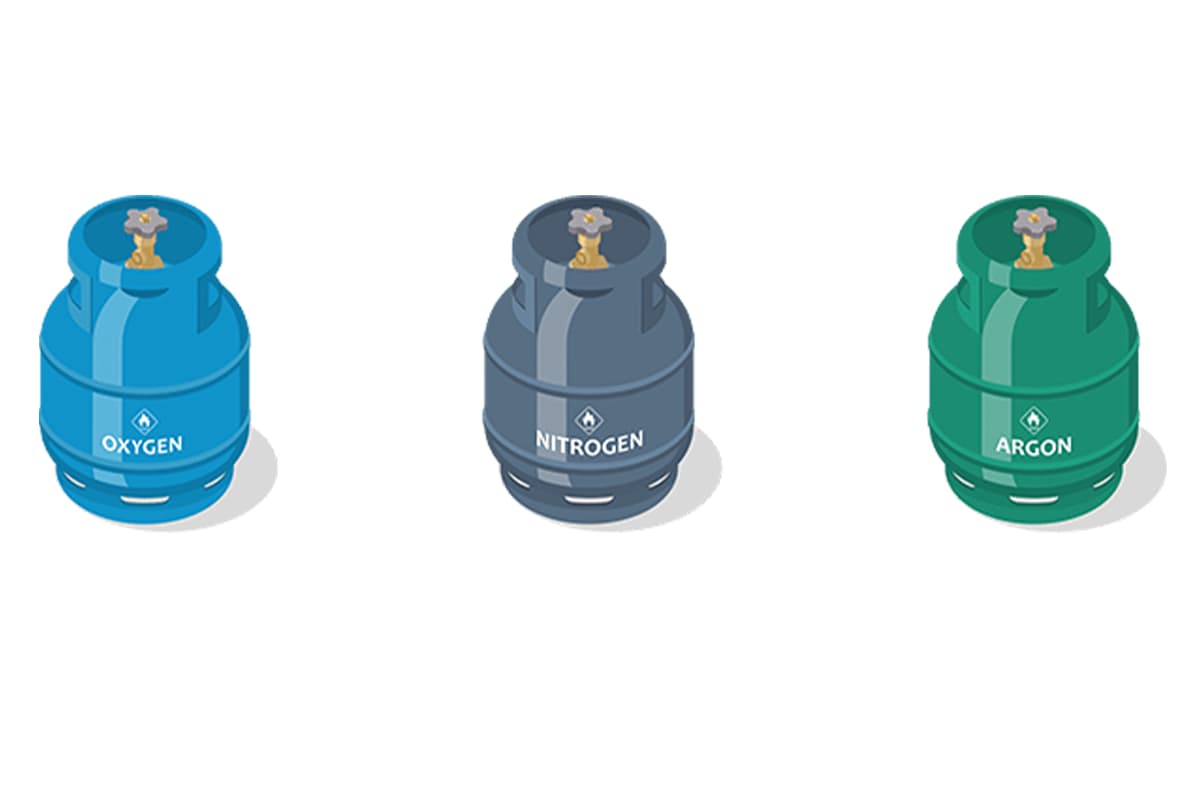
(1) Oxygen
Description and Chemical Interaction: Oxygen is a highly reactive gas that, when used in laser cutting, facilitates an exothermic reaction with the material being cut. This reaction generates additional heat, significantly increasing the cutting speed and efficiency. The process involves the oxygen oxidizing the molten metal, creating an oxide layer that is more easily vaporized by the laser beam.
Applications: Oxygen is primarily used for cutting mild steel, carbon steel, and low alloy steel. Its reactivity helps in achieving clean and fast cuts, especially in thicker materials (up to 25mm or more). It's particularly effective for structural steel fabrication, heavy equipment manufacturing, and shipbuilding industries.
Pros and Cons:
- Pros:
- Allows for cutting speeds up to 30% faster than nitrogen for certain materials.
- Can cut thicker materials more effectively due to the additional heat generated, reducing the required laser power.
- Lower operational costs due to reduced gas consumption compared to nitrogen.
- Cons:
- The oxidation reaction can lead to a rougher cut edge with a heat-affected zone (HAZ), which may require post-processing in some high-precision applications.
- Not suitable for materials where oxidation is unacceptable, such as stainless steel or aluminum, due to potential corrosion and reduced material properties.
- Can cause edge hardening in some steels, affecting subsequent welding or forming processes.
(2) Nitrogen
Description and Mechanical Interaction: Nitrogen gas, an inert gas, does not react with the material being cut. Instead, it acts mechanically by blowing away the molten material from the cutting kerf at high pressure (up to 25 bar or more), resulting in a clean cut without oxidation. The nitrogen also provides cooling to the cut edge, minimizing the heat-affected zone.
Applications: Nitrogen is widely used for cutting materials such as stainless steel, aluminum, and other non-ferrous metals where a clean, oxidation-free edge is essential. It's particularly valuable in industries like aerospace, medical device manufacturing, and food processing equipment production, where material integrity and surface quality are critical.
Pros and Cons:
- Pros:
- Produces clean, oxidation-free cuts with minimal heat-affected zone, often eliminating the need for post-processing.
- Ideal for cutting non-ferrous metals and highly reflective materials like aluminum and copper.
- Maintains material properties at the cut edge, crucial for subsequent welding or surface treatment processes.
- Cons:
- Requires higher pressure (often 10-25 bar) for effective cutting, which can increase operational costs and equipment requirements.
- Generally slower cutting speeds compared to oxygen when cutting mild steel, especially for thicknesses above 3mm.
- Higher initial investment in high-pressure delivery systems and more powerful laser sources to compensate for the lack of exothermic reaction.
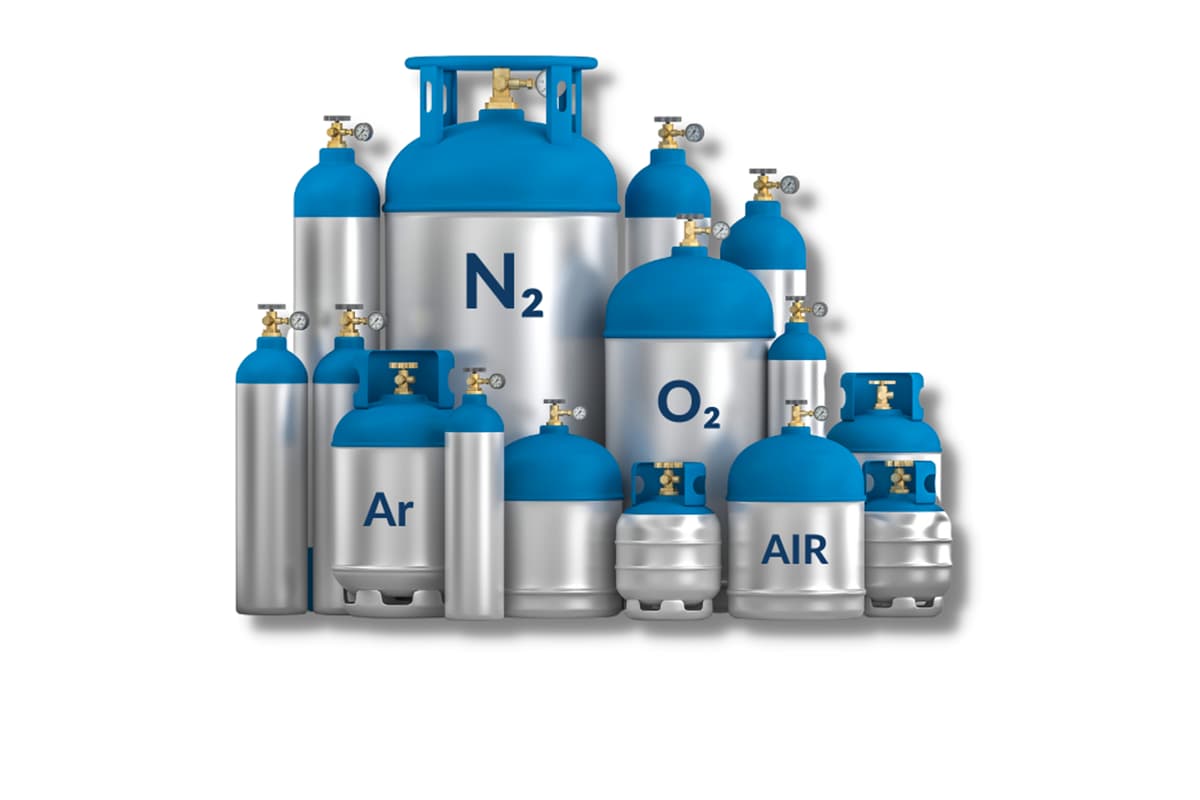
(3) Compressed Air
Characteristics: Lowest cost (if produced internally), main components are nitrogen and oxygen. Cutting causes slight oxidation and nitridation, with edge quality between oxygen and nitrogen cutting. Extremely high requirements for air quality (dry, oil-free, dust-free).
Applicable scenarios: Carbon steel, stainless steel, aluminum alloy thin sheets with low requirements for cutting edge quality, or as a cost-prioritized solution.
Consumption characteristics: Typically requires high pressure similar to nitrogen, with a relatively large volume consumption. Although the cost of the gas itself is low, the preparation of high-quality compressed air (air compressors, dryers, filters) requires initial investment and ongoing maintenance costs.
Selecting an assist gas should never be a decision based purely on habit or routine—it must be a strategic choice balancing cost, quality, and efficiency. The three mainstream options—oxygen, nitrogen, and high‑quality compressed air—each represent a distinct value proposition.
Cost vs. Quality Matrix:
| Assist Gas | Input Cost (per unit) | Output Quality (cut edge) | Core Value Proposition |
|---|---|---|---|
| Compressed Air | Very low (approx. ¥0.15/m³) | Moderate (slight oxidation; suited for thin sheets) | Cost‑driven choice: Achieve ultra‑low operating costs where moderate quality is acceptable. |
| Oxygen (O₂) | Medium (approx. ¥2.50/m³) | High in specific scenarios (oxidation heat boosts carbon steel cutting speed) | Efficiency‑driven choice: For carbon steel, maximize throughput and minimize cost per labor hour. |
| Nitrogen (N₂) | High (liquid nitrogen approx. ¥0.80/m³) | Very high (clean, oxidation‑free surfaces with no post‑processing needed) | Quality‑driven choice: Essential for high‑spec applications in stainless steel, aluminum alloys, etc., to preserve end‑product value. |
Unit prices can vary greatly depending on supply method (liquid storage tanks, on‑site generation, or cylinder purchase) and regional factors; figures above are for reference only.
4. Quick Decision Guide
(1) If working with carbon steel and aiming for maximum cutting speed and throughput → choose Oxygen
Its exothermic reaction can increase cutting speed by up to 30%, trading time for cost savings and maximizing overall efficiency.
(2) If cutting stainless steel, aluminum alloys, or brass, and demanding exceptional surface finish and corrosion resistance → Nitrogen is a must
As an inert shielding gas, nitrogen preserves the material’s properties while eliminating costly secondary processing—making it the only viable choice for high‑value products.
(3) If processing thin sheets (carbon steel or stainless steel), cost is extremely sensitive, and slight oxidation is acceptable → consider high‑quality compressed air
This is the most disruptive cost‑cutting option, reducing gas expenses by over 80%. The trade‑off: you must invest in a high‑grade compressor and post‑treatment system (drying, filtering), as oil, moisture, or particulates can cause severe—often irreparable—damage to the laser.
An expert insight: many companies blindly chase ultra‑high‑purity nitrogen at 99.999%, whereas in most laser cutting applications, 99.9% is more than sufficient. Producing nitrogen on‑site and matching purity to “just enough” rather than “excess” can cut overall costs by nearly 40%. This is lean thinking applied to gas management at its finest.
5. Gas Efficiency Index (GEI)
As management guru Peter Drucker said, “What gets measured gets managed.” To systematically tackle the challenge of gas consumption, we need a central, dashboard‑style metric—the Gas Efficiency Index (GEI).
GEI: Moving from “How much did we spend?” to “How well did we use it?”
The GEI is a quantitative metric that measures how far actual gas consumption for a specific production task deviates from the optimal benchmark.
The core calculation formula is:
(1) Unit of Measure
Can be defined flexibly as “per meter of cut length,” “per hour of operation,” or “per finished part.”
(2) Standard Consumption
The benchmark value—derived from OEM recommendations, industry best practices, or your own historical best‑case data.
(3) Index Interpretation
- GEI = 100: At the benchmark level.
- GEI > 100: Below‑standard efficiency, indicating waste. For example, a GEI of 120 means you used 20% more gas than the benchmark to do the same job.
- GEI < 100: Above‑benchmark efficiency, signifying outstanding performance.

Self‑Diagnosis: How to use GEI to quickly pinpoint efficiency gaps
GEI isn’t just a number—it’s a precision tool for diagnosing root causes of waste:
(1) Establish benchmarks to uncover problems
First, calculate the GEI for different machines, shifts, and key products in your facility. You might discover that while one machine has a GEI of 95, another is at 130 for the same material—instantly revealing where the problem lies.
(2) Compare horizontally to locate weaknesses
By equipment: Large disparities may point to aging machinery, leaks, or parameter misconfigurations. By shift/operator: Variations reflect differences in skill and diligence. By product: A persistently high GEI for a specific product suggests its cutting process has never been truly optimized.
(3) Track over time to quantify improvements
The true power of GEI is making improvement results visible. After implementing an optimization—repairing leaks, installing high‑efficiency nozzles, or training operators on optimal parameters—recalculate the GEI. If it drops from 130 to 105, you have hard evidence of a ~19% efficiency gain. This transforms optimization from guesswork into a data‑driven, continuous improvement process.
By adopting the GEI, you shift gas management from a passive cost center into a proactive, measurable efficiency initiative. Every drop in the index translates directly into real profit—turning the “mountain of gas cost” into a “fortress of profit.”
II. Key Factors Affecting Gas Consumption
1. Equipment-Related Factors
(1)Laser Type (Fiber vs. CO2) and Its Impact
Modern laser cutting systems mainly use two types of laser sources, fiber (Fiber) and CO₂, whose operating characteristics significantly affect gas consumption:
Fiber Laser (1.06μm wavelength):
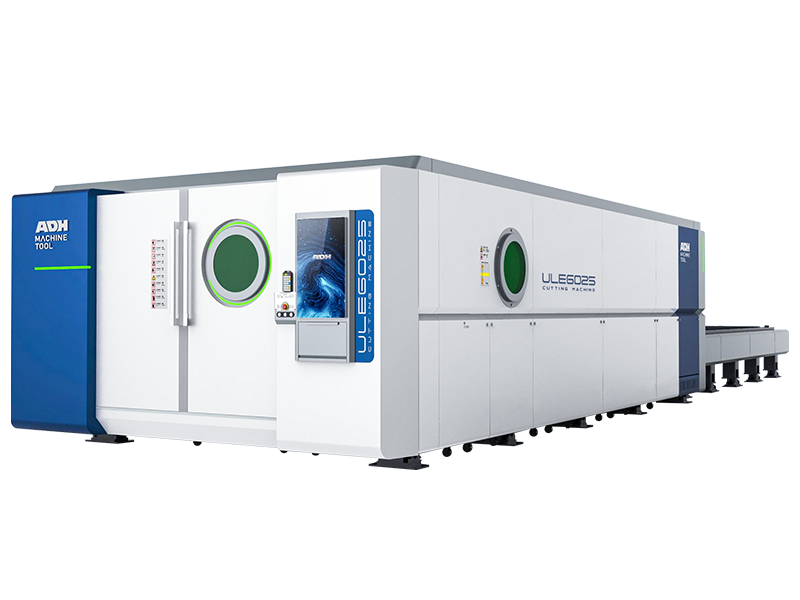
- Higher photoelectric conversion efficiency (30-50%), such as ULF Single Table Fiber Laser Cutting Machine, which offers a fiber laser source with a constant beam parameter product (BPP) across its full power range, boasting an electro-optic conversion efficiency of over 30%
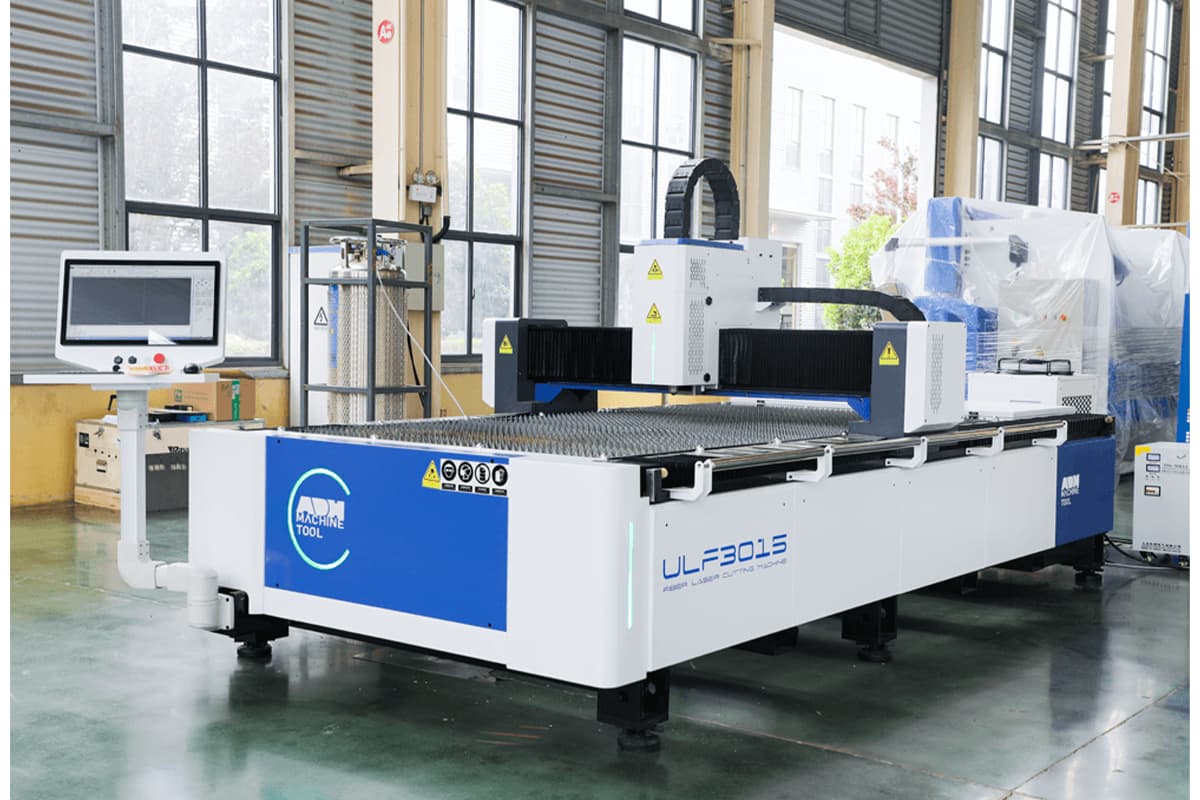
ULF Single Table Fiber Laser Cutting Machine
- 30-50% increased absorption rate for metal materials
- Typical gas consumption: approximately 1.2-1.8m³/h (nitrogen) for carbon steel cutting
- Suitable for thin sheet processing, with a 20-30% improvement in gas utilization efficiency
CO₂ Laser (10.6μm wavelength):
- Requires higher auxiliary gas pressure to maintain cutting quality
- Gas consumption for stainless steel cutting can reach 2.5-4m³/h (nitrogen)
- Larger heat-affected zone, requiring more gas for slag removal
(2) Nozzle Design (aperture, type) and Condition (wear)
The geometric parameters of the nozzle directly affect gas dynamic characteristics:
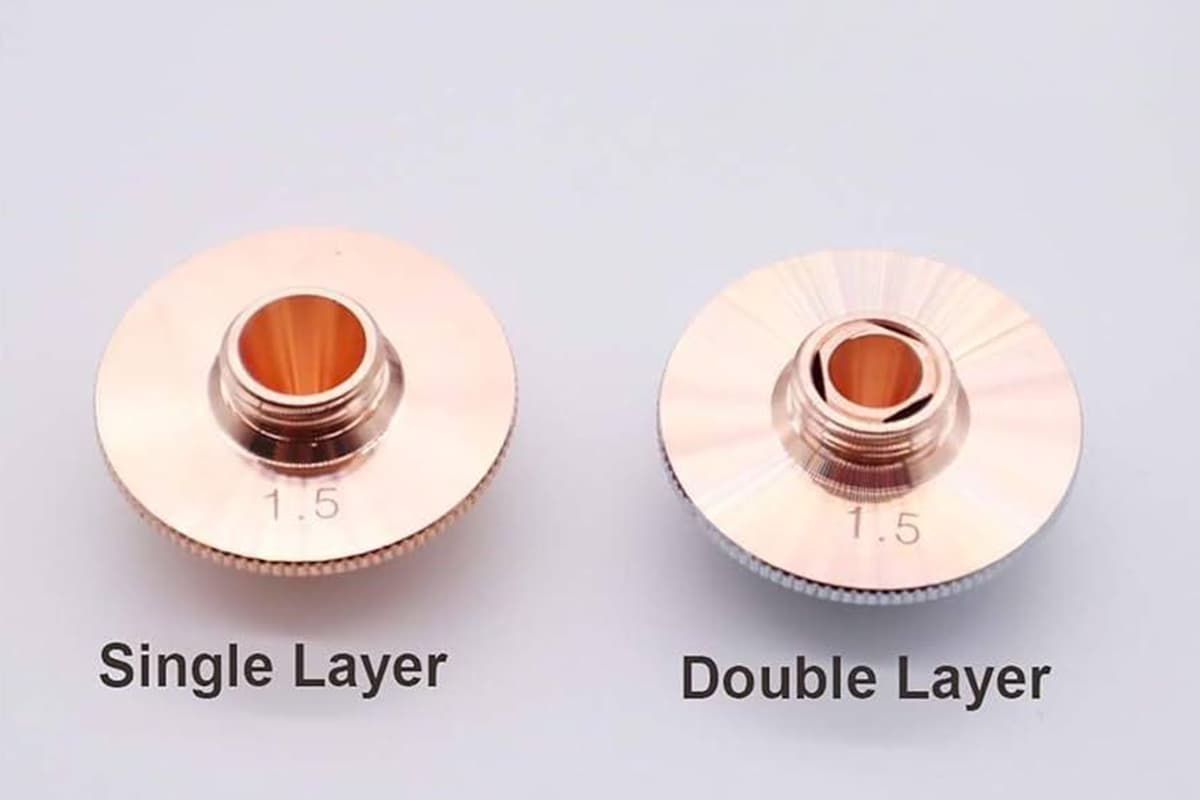
| Nozzle Type | Aperture (mm) | Applicable scenarios | Gas consumption coefficient |
| Single-layer nozzle | 1.0-2.5 | Standard cutting | Baseline value 1.0 |
| Double-layer nozzle | 1.5-3.0 | Thick plate cutting | 1.2-1.5 |
| Conical nozzle | 2.0-4.0 | High-speed cutting | 0.8-1.1 |
Wear exceeding 5% of the bore tolerance can lead to:
- Airflow turbulence increasing by 20-40%
- Effective air pressure dropping by 15-25%
- Gas wastage rate rising by more than 30%
(3)Design and Sealing of the Gas Circuit System
The advanced gas circuit system should include:
- Multi-stage filtration device (oil mist filter + micropore filter element)
- Pressure fluctuation controlled within ±0.05MPa
- Hard seal fittings with ferrule connection (leakage rate <0.5%)
- Real-time flow monitoring system (accuracy ±1.5%FS)
2. Process Parameter Related Factors
(1) Gas Pressure (Purity & Pressure): Common range (0.8-2.0MPa) and Impact
Optimal gas pressure range for different materials:
| Material Type | Thickness(mm) | Optimal Pressure (MPa) | Purity Requirements |
| Carbon steel | 1-6 | 0.8-1.2 | 99.95% O₂ |
| Stainless steel | 2-12 | 1.5-2.0 | 99.996% N₂ |
| Aluminum alloy | 1-8 | 1.8-2.5 | 99.999% Ar |
For every increase of 0.1MPa in pressure, gas consumption rises by approximately 12%, but cutting speed can be increased by 8-15%.
(2) Nonlinear Relationship Between Cutting Speed and Gas Consumption
Speed (v) and gas flow rate (Q) satisfy:
Q = k * v^0.8 (k being the material coefficient).
When the speed exceeds the critical value (usually 120% of the rated speed):
- The gas coverage time is insufficient.
- Slag removal efficiency decreases by 40%.
- A 15-20% increase in gas flow rate is required for compensation.

(3)Effect of Focal Position on Gas Utilization Efficiency
The relationship between focal offset (ΔZ) and the effective gas action area:
| ΔZ(mm) | Effective coverage area reduction rate |
| 0(Ideal position) | Baseline value |
| 0.5 | 12% |
| -0.5 | 18% |
| 1 | 35% |
(4)Cutting Mode (Continuous vs Pulsed)
Pulse cutting mode (duty cycle 30-70%):
- Gas flow rate increases by 50% during peak power
- Overall gas consumption reduced by 25-40%
- Particularly suitable for cutting thin sheets <1mm
- Pulse frequency needs to match material resonance frequency
3. Material-related Factors
(1)Material type (reflectivity, thermal conductivity)
Key material parameters affecting gas selection:
| Material | Reflectance@1μm | Thermal conductivity coefficient | Gas selection strategy |
| Copper | 95% | 401 | High-purity N₂ + auxiliary oxygen curtain |
| Titanium | 65% | 21.9 | Argon + helium mixture |
| Galvanized steel | 78% | 60.5 | Dual-layer airflow protection |
(2)Material thickness and gas parameter optimization
| Thickness range | Pressure adjustment coefficient | Flow coefficient | Nozzle height correction |
| t<3mm | 0.8-1.0x | 0.7-1.0x | +0.2-0.5mm |
| 3-8mm | 1.0-1.2x | 1.0-1.3x | Baseline value |
| 8-15mm | 1.2-1.5x | 1.3-1.8x | -0.3-0.8mm |
| >15mm | 1.5-2.0x | 2.0-3.0x | -1.0-1.5mm |
(3)Special handling requirements:
- Mirror stainless steel requires a 20% increase in gas flow to prevent reflection;
- Aluminum alloy cutting requires a 50% extension of pre-purge time;
- Composite materials require segmented pressure control.
III. Cost Calculation and Economic Analysis
1. Gas Cost Estimation for a Single Product
In laser cutting processes, gas consumption costs account for approximately 15-30% of the total processing cost per piece. Accurate gas cost calculation must be based on the following parameters:
Gas types and supply methods (Table 1):
| Parameter | Liquid nitrogen storage | Cylinder oxygen supply | Compressed air |
| Initial equipment investment | ¥200,000+ | ¥5,000 | ¥80,000 |
| Hourly Flow Rate (20kW) | 18m³/h | 15m³/h | 25m³/h |
| Unit Price (CNY/m³) | ¥0.80 | ¥2.50 | ¥0.15 |
| Purity requirements | 99.999% | 99.5% | 95% |
Economic comparison formula:
Unit hourly cost = (gas flow × unit price) + equipment depreciation cost ÷ service life hours
Calculation example: Cutting equipment using liquid nitrogen (annual operation of 2,000 hours):
(18m³/h × ¥0.8) + (¥200,000 ÷ 5 year ÷ 2,000h) = ¥14.4/h + ¥20/h = ¥34.4/h
The compressed air solution can reduce gas costs by up to 78%, but attention should be paid to its applicability: it is primarily suitable for carbon steel cutting, while high-purity nitrogen is still required for stainless steel processing.
2. Economic Analysis of Different Gas Supply Schemes
Nitrogen Generation Equipment ROI Calculation Model:
ROI (monthly) = (equipment investment - annual cost savings × discount factor) / (average monthly savings)
A Corporate Case:
- PSA Nitrogen Generator Investment: ¥480,000
- Annual Savings by Replacing Gas Cylinders: ¥320,000
- Payback Period: 18 months
Annual Benefits of Compressed Air System (Table 2):
| Project | Traditional gas supply solution | Compressed air solution | Difference |
| Equipment maintenance | ¥45,000 | ¥28,000 | -37.80% |
| Energy consumption cost | ¥180,000 | ¥95,000 | -47.20% |
| Gas consumption | ¥260,000 | ¥32,000 | -87.70% |
| Total annual cost | ¥485,000 | ¥155,000 | -68% |
3. Equipment Maintenance and Consumable Cost Optimization
The geometric parameters of the nozzle directly affect operating costs.
Converging nozzle: Gas utilization rate increases by 12%, but lifespan decreases by 30%.
Laval nozzle: Cutting quality improves, but manufacturing cost increases by 40%.
Maintenance cost model:
Total maintenance cost = (single nozzle price × annual replacement frequency) + system downtime loss
Comparison data for a certain 4kW fiber laser:
- Standard nozzle: ¥800/piece, replaced 6 times a year, downtime loss ¥15,000
- Ceramic coated nozzle: ¥2,200/piece, replaced 2 times a year, total cost reduction ¥9,200

Practical suggestions:
- Establish a real-time gas consumption monitoring system (can reduce waste by 15-20%)
- Adopt predictive maintenance strategies (reduce unexpected downtime by 37%)
- Optimize nozzle replacement cycles (based on thickness sensor data).
IV. Effective Strategies for Gas Consumption Reduction
1. Cutting Mode Optimization
(1) Pulsed Laser Cutting Technology
Pulsed laser cutting demonstrates 30-50% gas savings compared to continuous wave (CW) mode through intelligent energy delivery. By alternating between high-peak pulses (e.g., 2-5 kW) and dwell periods, this method:
- Reduces continuous gas flow requirements
- Allows precise gas synchronization with melt ejection phases
- Maintains cut quality with 20-100 μm dimensional accuracy
Recent Fraunhofer ILT studies show nitrogen consumption drops from 35 m³/h (CW) to 18 m³/h (pulsed) when processing 6mm stainless steel, while achieving comparable Ra 3.2 μm surface roughness.
2. Parameter Optimization & Gas Mixture Solutions
(1) Pressure-Quality Correlation
The 0.8-2.0 MPa working window balances cut quality and gas economy:
| Material Thickness | Optimal Pressure | Gas Type | Kerf Width |
| 8mm Carbon Steel | 1.2-1.5 MPa | O₂ | 0.15-0.25mm |
| 10mm Aluminum | 0.9-1.1 MPa | N₂ | 0.18-0.30mm |
Critical findings:
- Oxygen-assisted carbon steel cutting achieves 15% faster speeds at 1.3 MPa vs 2.0 MPa
- Nitrogen pressure exceeding 1.8 MPa causes turbulent flow in 8mm cuts, increasing consumption 22% without quality improvement
(2)Thickness-Specific Solutions
For 8mm carbon steel:
- Triple-phase optimization protocol:
- Preheat phase: 0.8 MPa (90s)
- Cutting phase: 1.4 MPa with 70% duty cycle
- Post-purge: 0.5 MPa (15s)
- Achieves 28% gas reduction vs conventional constant-pressure methods
3. Energy-Efficient Equipment Innovations
(1)High-Speed Nozzle Design
Next-generation nozzles reduce gas consumption 40% through:
- Convergent-divergent (CD) flow channels
- 0.8mm throat diameter (vs standard 1.2mm)
- Surface coatings (e.g., CrAlN) reducing adhesion by 65%
Field tests show 1.8mm stainless steel cuts now require only 12 m³/h N₂ at 120m/min feed rate.
(2) Hybrid Gas Technology
The N₂/Ar mixture (7:3 ratio) demonstrates:
- 25% lower consumption vs pure nitrogen
- Improved plasma suppression in copper cutting
- 15% wider process window for titanium alloys
Gas recovery systems integrated with mixing units can achieve 70% reuse efficiency in closed-loop configurations.
V. Equipment Selection Reference
1. New Technology Selection
Fiber Lasers vs. CO₂ Lasers:
| Parameter | Fiber Laser (6kW) | CO₂ Laser (4kW) |
| Power Efficiency | 35–40% | 10–15% |
| Gas Type | N₂ (low-purity) | O₂ (high-purity) |
| Gas Flow Rate | 15–20 m³/h | 25–35 m³/h |
| Cutting Speed | 12 m/min (3mm SS) | 5 m/min (3mm SS) |
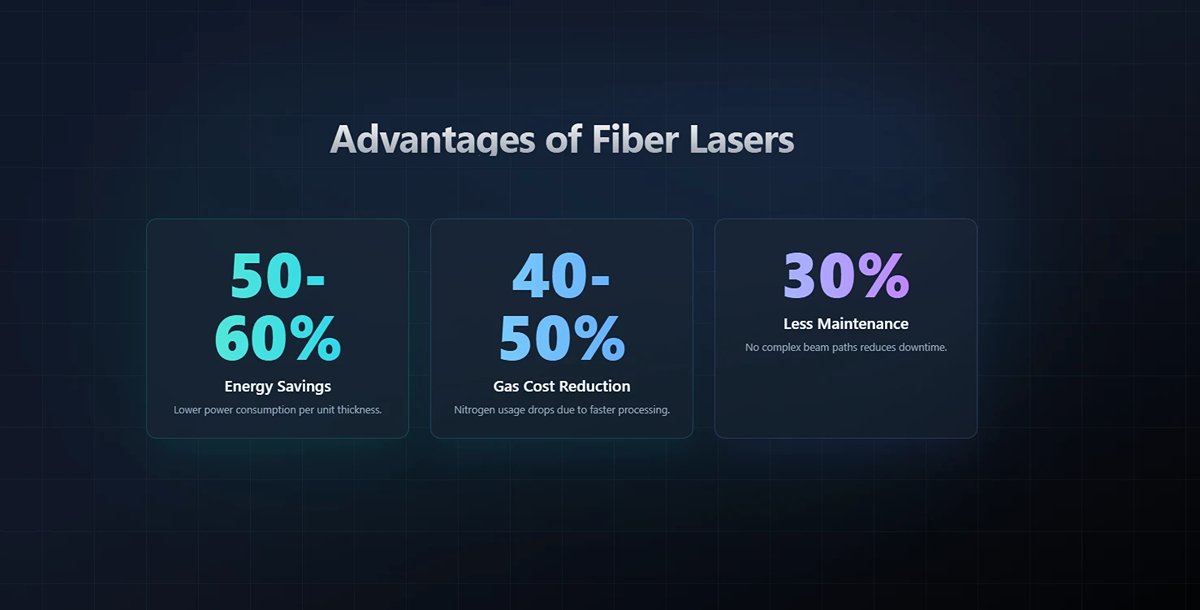
Advantages of Fiber Lasers:
- Energy Savings: 50–60% lower power consumption per unit thickness.
- Gas Cost Reduction: Nitrogen usage drops by 40–50% due to faster processing and lower purity requirements.
- Maintenance: No gas mirrors or complex beam paths, reducing downtime by 30%.
2. Equipment Upgrade Strategies
High-Power Laser Applications:
- Thick-Plate Cutting:
- A 12kW fiber laser cuts 20mm stainless steel at 1.2 m/min, using 18 m³/h nitrogen (vs. 30 m³/h for 6kW systems).
- Savings: 40% less gas consumption and 25% lower energy costs per ton of processed material.
Retrofitting Solutions:
- Hybrid Gas Systems: Upgrade older CO₂ lasers with fiber modules (e.g., IPG Photonics’ LightWELD) to cut gas costs by 35%.
- Predictive Gas Control: Install IoT sensors (e.g., Siemens MindSphere) to optimize gas flow in real-time, reducing waste by 20–25%.
ROI Analysis:
- A 15kW laser upgrade pays back in 18–24 months through gas/energy savings (avg. $12,000/month savings for 2-shift operations).
VI. FAQs
1. What is the main difference between oxygen and nitrogen in laser cutting?
Oxygen is used for steel cutting, involving a chemical reaction that produces oxidation, while nitrogen provides a clean cut without chemical interaction and can be used on various materials.
2. How does gas purity affect laser cutting efficiency?
Higher purity oxygen improves productivity, especially for thin steel sheets, while standard nitrogen purity is usually sufficient, with concerns more on impurities like hydrocarbons and moisture.
3. What are the benefits of using mini-tanks for gas storage?
Mini-tanks offer a manageable solution for average gas consumers, reducing the need for frequent refills and allowing for easier handling and storage.
4. Why is network installation crucial for gas supply in laser cutting?
A well-designed network prevents gas pollution and ensures consistent gas flow, protecting the laser machine’s head and maintaining production quality.
VII. Conclusion
Choosing the right assist gas and managing its consumption efficiently is critical for optimizing laser cutting operations. Each type of gas—oxygen and nitrogen—has specific benefits and drawbacks, which must be weighed against the operational requirements and costs.
As a professional sheet metal manufacturer with over 20 years of experience in producing laser cutting machines, we at ADH Machine Tool deeply understand the importance of gas consumption to our customers.
Over the years, we have been dedicated to researching, developing, and manufacturing high-performance, low-gas-consumption laser cutting equipment to help our clients achieve efficient and economical production. If you have any questions or requirements regarding gas consumption in laser cutting, please feel free to contact us at any time.













 English
  العربية
  বাংলা
বাংলা  Български
  Čeština
  Dansk
Dansk  Nederlands
  Deutsch
  Suomi
Suomi  Français
  Ελληνικά
  עִבְרִית
  हिन्दी
  Magyar
  Bahasa Indonesia
  Italiano
  日本語
日本語  Қазақ тілі
  한국어
한국어  Bahasa Melayu
  Norsk bokmål
  فارسی
فارسی  Polski
  Português
  Português do Brasil
  Română
  Русский
  Српски језик
  Slovenčina
  Español de México
  Español
  Svenska
  Kiswahili
  தமிழ்
தமிழ்  Türkçe
  ไทย
ไทย  Tagalog
  Українська
  Tiếng Việt
  اردو
اردو  简体中文
简体中文  香港中文
香港中文  繁體中文
繁體中文