I. Introduction
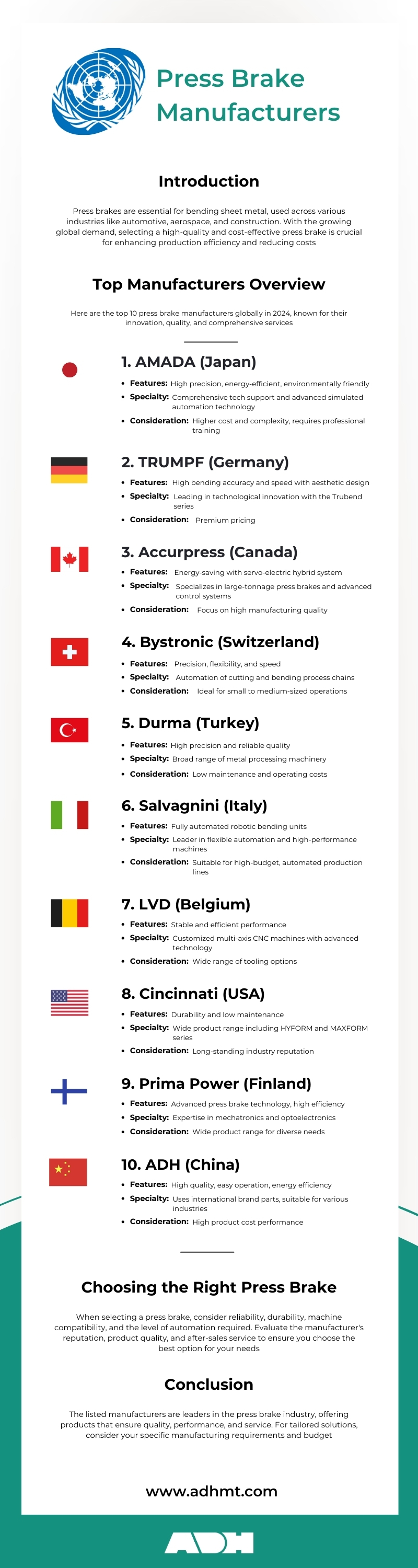
A press brake is a machine used for sheet metal bending. It works with two main parts: the upper die (or punch) and the lower die (or V-die) and is mainly used in industries such as metal stamping, construction, automobile, aerospace, and others. With the continuous growth of global demand for metal products, the manufacturing of press brakes is also booming.
The demand for efficient, reliable, and advanced press brakes in high-end manufacturing is constantly increasing. Numerous manufacturers and procurement agents within the relevant standard industrial sectors aim to acquire the ideal press brake machine. For an example of cutting-edge innovation, you can explore The World’s Largest Press Brake, which showcases the limits of modern engineering and design.
The qualifications of press brake manufacturers vary in terms of product quality, price, and services. This requires you to compare different brands and choose the most cost-effective press brake according to your own needs.
This article introduces the top 10 press brake manufacturers in 2025 all over the world.
Ⅱ. Breaking Boundaries in 2025: Creating a New Paradigm for Press Brake Evaluation
1. Market Transformation: Why Traditional Selection Criteria Can No Longer Meet the Challenges of Smart Manufacturing
In the manufacturing landscape of 2025, purchasing a press brake is no longer a simple asset acquisition—it’s a strategic investment that will shape your company’s competitiveness for the next five to ten years. Yet most decision-makers are still relying on a framework inherited from the last century: tonnage, length, and price. This outdated “triple measure” is fast becoming obsolete, as it fails to capture the true value a machine brings in the age of intelligent manufacturing.
The limitations of these old metrics have become critical bottlenecks for business growth:
(1) Operational efficiency blind spot
Traditional evaluations overlook key factors that determine actual factory output—such as tool change time, programming efficiency, first-piece acceptance rate, and downtime for maintenance. In today’s era of multi-variant, small-batch, rapid delivery production, a machine that takes hours to program and set up—no matter how fast its bending speed—cannot deliver true efficiency.
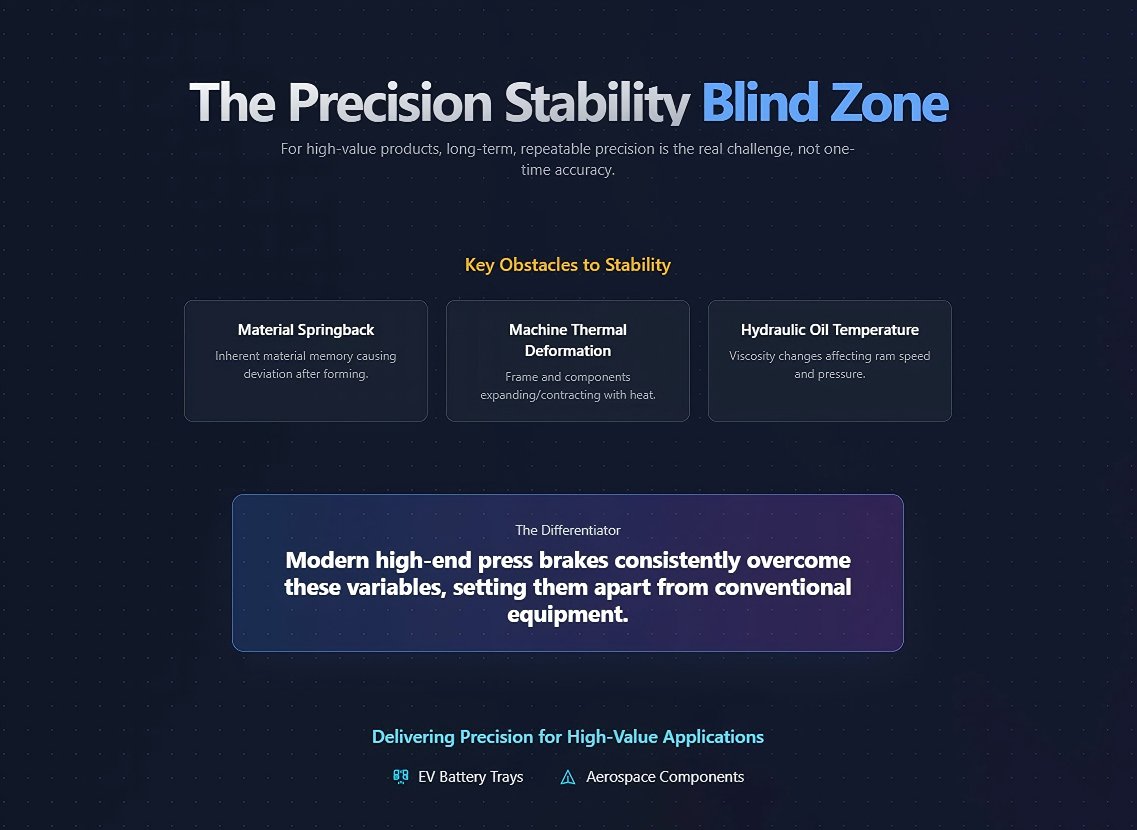
(2) Precision stability blind zone
For high-value products such as EV battery trays or aerospace components, achieving accuracy once is meaningless; long-term, repeatable precision stability is the real threshold for entry. Variables like material springback, thermal deformation of the machine, and fluctuations in hydraulic oil temperature are persistent challenges for conventional equipment—but overcoming them consistently is what separates modern high-end press brakes from the rest.
(3) Data silo dilemma
Smart factories demand every machine seamlessly connect to MES (Manufacturing Execution Systems) and ERP (Enterprise Resource Planning) systems, enabling real-time production tracking, quality traceability, and predictive maintenance. A press brake that cannot connect to networks or export standardized data essentially becomes an isolated information island—crippling a company’s digital transformation and turning grand Industry 4.0 visions into empty talk.
(4) The TCO illusion
Focusing only on purchase price is like seeing just the tip of the iceberg. High energy consumption (traditional hydraulic systems consume over 50% more energy than fully electric servo models), recurring hydraulic oil replacement and disposal costs, and the looming risk of obsolescence under increasingly stringent environmental regulations all greatly reduce the relevance of the initial price tag.
Clearly, a fresh, multi-dimensional evaluation model is urgently needed. This means shifting the mindset from “buying a machine” to “building an efficient, intelligent, value-generating manufacturing unit,” and redefining the manufacturer from a mere equipment supplier into a strategic partner capable of delivering holistic solutions.
2. The Foundations of Decision-Making: The Five Core Pillars for Evaluating World-Class Press Brake Manufacturers
Forget those outdated specification sheets. These five pillars form the new standard for evaluating world-class press brake manufacturers in 2025. Together, they determine whether your investment will stand the test of time and continue to create value for years to come.
(1) Pillar One: Technical Leadership & Innovation
Leadership is about more than just hardware—it encompasses software, algorithms, and forward-thinking strategies. True industry leaders harness technology to resolve the sector’s most pressing challenges.
1)AI Adaptive Compensation:
The ultimate solution for handling variations in material batches, thicknesses, and inconsistent springback. For example, some top-tier flagship models feature laser angle measurement systems that detect deviations in real time during bending and instantly adjust force via AI algorithms—ensuring every part matches the intended angle precisely. This can reduce scrap rates by over 80%, a game-changer for industries working with expensive specialty alloys.
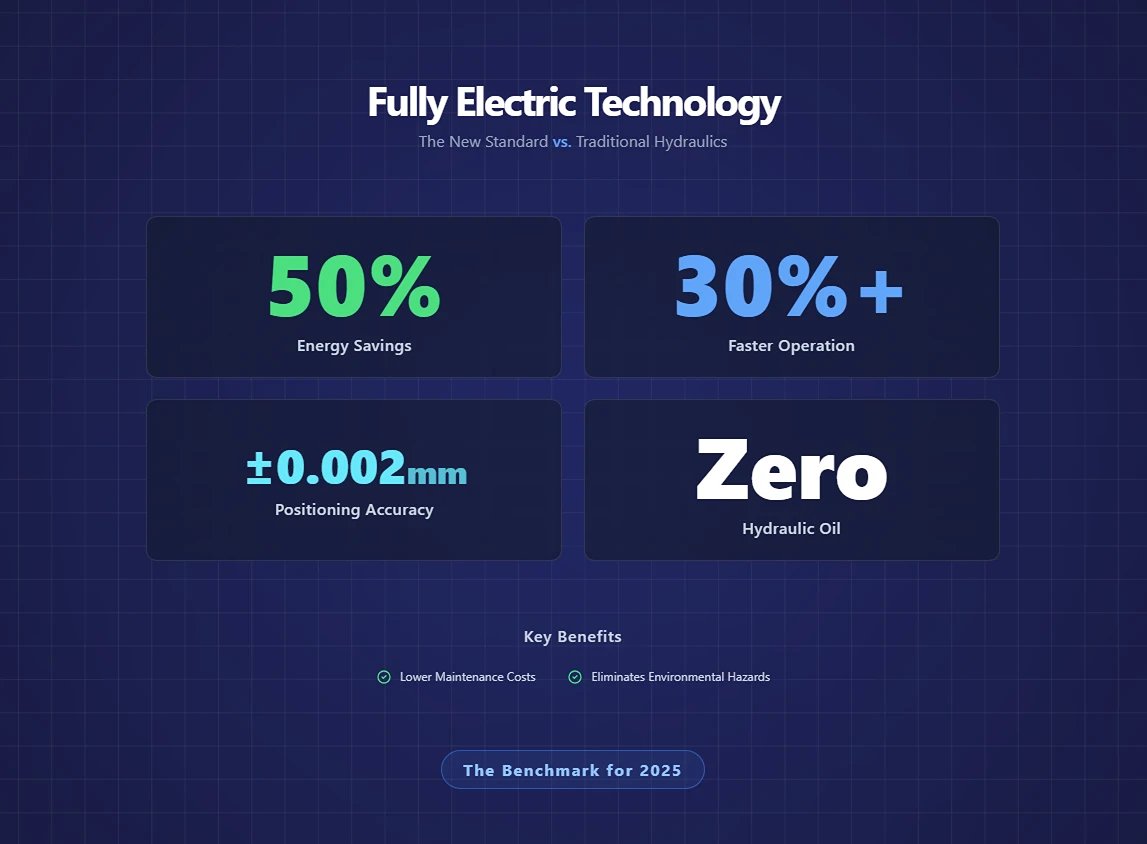
2)Fully Electric (Servo-Electric) Technology:
Once a trend, now the market standard. Compared to traditional hydraulics, the advantages are overwhelming: more than 50% energy savings, at least 30% faster operation, repeat positioning accuracy up to ±0.002mm, and no hydraulic oil—cutting maintenance costs and eliminating environmental hazards. By 2025, fully electric technology has become a baseline for judging whether a manufacturer is keeping pace with the times.
3)Industry 4.0 Integration:
World-class manufacturers no longer deliver stand-alone machines, but ready-to-integrate intelligent manufacturing modules. They must offer open interfaces compatible with robotics, automated storage systems, and MES/ERP solutions—creating a fully digital workflow from CAD drawings to finished products. Control systems should allow remote diagnostics and cloud-based software upgrades to ensure functionality remains cutting-edge.
(2) Pillar Two: Performance Stability & Reliability
A supposedly “advanced” machine that frequently breaks down is the biggest liability on any production line.
1)Mean Time Between Failures (MTBF) in Real-World Use:
While few manufacturers disclose this information outright, it can be indirectly verified through warranty commitments, flagship client cases, and market reputation. Some elite Japanese and German brands confidently guarantee uptime rates exceeding 99%, supported by meticulous material selection for core components—such as servo motors, ball screws, and linear scales—and exceptional assembly craftsmanship.
2)Long-Term Precision Retention:
Machine rigidity and resistance to deformation are critical. Heavy welded frames optimized through finite element analysis and stress-relieved over time provide the foundation for maintaining original precision even after a decade of full-load operation. Checking whether a manufacturer offers extended warranties on their machine frames is a strong indicator of their confidence in durability.
3)Core Component Independence & Origin:
Assess the brand and quality of servo motors, CNC systems, and hydraulic valve assemblies (for hybrid models). Manufacturers who design and produce these critical components in-house typically achieve better hardware-software synergy and provide more reliable long-term support.
(3) Pillar Three: Total Cost of Ownership (TCO)
The TCO mindset urges buyers to shift from focusing on purchase cost to evaluating full lifecycle expenses. A machine that seems expensive upfront may have a five-year TCO far lower than a budget alternative.
| Cost Component | World-Class Equipment (typically fully electric/hybrid) | Standard Equipment (typically traditional hydraulic) | Decision Insight |
|---|---|---|---|
| Initial Investment | Higher | Lower | The price gap is narrowing, but the value gap remains significant |
| Energy Costs | Very low, consumes power only during pressing | Constantly high, pump must run continuously | Savings can reach tens of thousands annually |
| Maintenance Costs | Low, no hydraulic system upkeep | High, requires regular hydraulic oil, filters, seals replacement | Substantial hidden costs, plus leakage risk |
| Software/Function Upgrades | Flexible, new features via software updates | Difficult or impossible, fixed functionality | Determines long-term viability of equipment |
| Labor & Training Costs | Low, with graphical programming and robust error prevention | High, heavily reliant on veteran operators | Smart systems reduce skill dependency on operators |
A fact worth noting: A high-quality fully electric press brake can typically recover any initial price difference compared to a standard hydraulic model within three to five years—purely through savings on energy and maintenance.
(4) Pillar Four: Global Service & Localized Support
Delivery is only the beginning of the service journey. When your production line grinds to a halt due to equipment failure, the speed at which the manufacturer responds will directly determine the scale of your losses.
1)Service Network Density & Response Time:
Evaluate how many service centers the manufacturer has in your country or region, the size of their team of certified engineers, and whether they commit to rapid, hour-level response times.
2)Spare Parts Availability:
Local stock of critical components—such as drives and control boards—is a clear indicator of service commitment. Waiting weeks for cross-border shipment of replacement parts is simply unacceptable.
3)Technical Training & Knowledge Transfer:
Leading manufacturers offer comprehensive training that goes far beyond basic operations, covering advanced programming, preventive maintenance, process optimization, and more. The aim is to equip customers with in-depth know‑how, helping them maximize the value of their investment.
(5) Pillar Five: Solution & Customization Capability
Your requirements may extend well beyond standard machine models. A manufacturer’s ability to deliver fully integrated solutions and tailored services is the ultimate reflection of its technical depth and real-world experience.
1)From Standalone Machines to Automated Production Lines:
Top-tier providers can deliver fully automated bending systems incorporating robotic loading/unloading, automatic tool change, and smart material storage integration—and even flexible manufacturing systems (FMS) that seamlessly connect to laser cutting operations.
2)Special Processes & Industry-Specific Applications:
Can they supply certified processes for specialized industries like aerospace and medical device manufacturing? Do they have tailored bending strategies for challenging materials such as titanium alloys or high-strength steel? This showcases the manufacturer’s accumulated know‑how.
3. Parameter Decoding: How Tonnage, Length, and Axes Truly Shape Your ROI
Under this new evaluation framework, it’s time to re‑examine traditional parameters through the lens of their direct impact on profitability.
(1) Tonnage
Traditional View: Capacity to bend thicker plates.
ROI View: Defines your business scope and profit potential. Having sufficient tonnage reserves allows you to take on high‑value orders involving high‑strength steel or thick plates—such as those in construction machinery, wind power equipment, or specialized vehicles—opening doors to high‑margin blue‑ocean markets. When calculating tonnage, allocate at least a 25% margin for future materials and product developments. This is the hallmark of a forward‑thinking investment.
(2) Length
Traditional View: The maximum plate length that can be bent.
ROI View: Directly impacts efficiency and versatility. A longer machine can process large workpieces—such as architectural facades or side panels—without the need for repositioning, reducing cumulative errors. With multiple segmented tooling setups, you can produce several different smaller parts in a single cycle, multiplying productivity. Choose a length that matches your main product sizes, with modest extra capacity, to balance investment and efficiency.
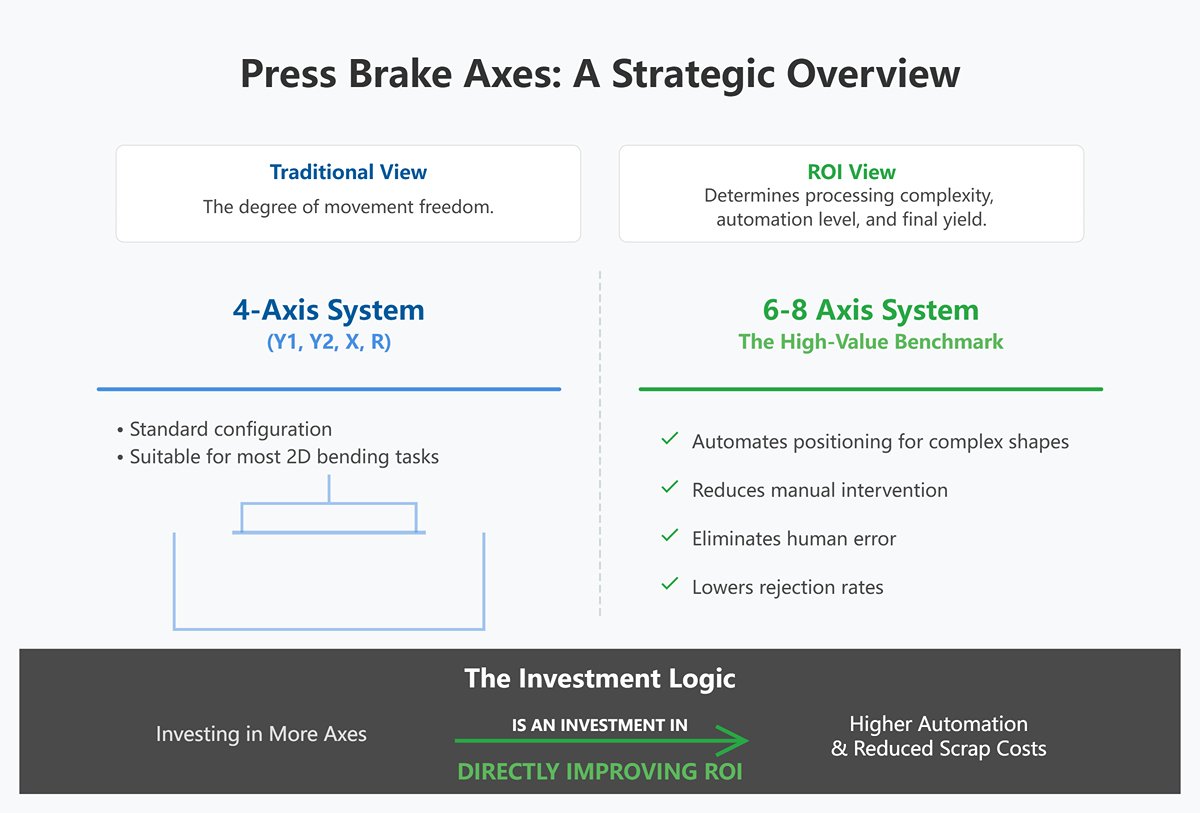
(3) Axes
Traditional View: The degree of movement freedom in the backgauge.
ROI View: Determines processing complexity, automation level, and final yield.
4 Axes (Y1, Y2, X, R): Standard configuration, suitable for most two‑dimensional bending tasks.
6–8 Axes (including Z1, Z2, X‑prime, etc.): The benchmark for mainstream and high‑value applications. Multi‑axis control can automatically position complex shapes such as asymmetric or tapered workpieces, significantly reducing manual intervention and virtually eliminating human error. For intricate components, multi‑axis systems are key to achieving first‑time success, lowering rejection rates, and thus directly improving ROI. Investing in more axes is essentially investing in higher automation and reduced scrap costs.
Ultimately, smart decision‑making in 2025 means choosing a partner capable of delivering not just outstanding hardware, but also innovation, dependable service, and deep collaboration—growing alongside you and weathering economic cycles together. In the following chapters, this guide will examine the world’s top manufacturers through the lens of these five pillars, helping you make a truly future‑proof choice.
Ⅲ. Top 10 Press Brake Manufacturers
1. AMADA
Country: Japan
Address: 200, Ishida, Isehara-shi, Kanagawa 259-1196, Japan 0463-96-1111
Products: plate punching, bending, shearing machine, laser cutting machine, and other sheet metal processing machine, as well as corresponding toolings, spare parts, and cutting products.
About the company:
Amada is a global manufacturer of metal processing machinery with a long history. It was founded in Japan in 1946 and mainly provides sheet metal machinery, cutting machines, grinding machines, stamping presses, and precision welding machines.
In addition to these main products, Amada also provides software, tooling, and other supporting products and services. Amada constantly develops new technologies and provides customers with solutions according to their needs and market changes.
Amada's products have a comprehensive and reasonable mechanical structure, providing users with the best quality guarantee. They are also characterized by efficient and environmentally-friendly operation.
Its advanced simulated automation technology provides users with perfect and simplified processing guarantees.
ADH Review:
Amada's press brake has the characteristics of high precision, fast, low energy consumption, and environmental friendliness. It can be said that Amada's product quality has always been impeccable.
Moreover, Amada also provides a full set of technical support such as pre-sales training and after-sales service. However, its price is higher, and the press brake operation is more complex, requiring professional training to operate the machine better.
2. Trumpf

Country: Germany
Address: Johann-Maus-Str. 271254 Ditzingen Germany
Products:
Machines & Systems, Lasers, VCSEL solutions photodiodes, Power electronics, Power tools Software Services
About the company:
The TRUMPF Group was founded in Germany in 1923. TRUMPF Inc. is the North American subsidiary of TRUMPF GmbH + Co.KG. The group has two departments: machine tool/power tool and laser technology/power supply.
It is one of the best manufacturers of sheet metal fabrication machinery, industrial lasers, and various industrial applications electronic products in the world.
TRUMPF is guiding the technological development trend with continuous innovation, establishing new technical standards, and is committed to developing and updating more products for the majority of users.
ADH Review:
TRUMPF's press brakes are available in a range of configurations and sizes to suit all applications. They are the Trubend series, which has advanced bending technology and a beautiful appearance. It has high bending accuracy and speed, but the price is too high.
3. Accurpress
Country: Canada
Address: 17400 56th Ave Surrey, British Columbia V3S 1C3, Canada
Products:
Press Brakes, Shears, Turret Punch Press, Tooling, Automation
About the company:
Accupress is a professional manufacturer of CNC machine tools, established in Canada in 1973. It mainly manufactures press brakes, shearing machines, tooling, and other peripheral products.
Accupress specializes in a large-tonnage, tandem press brake, and robot automation. Accupress is known for its high manufacturing quality and advanced technology. The newly developed visual control program can automatically adjust the bending process.
ADH Review:
Accupress's press brake uses a servo-electric hybrid hydraulic driving system, which is energy-saving and environmentally friendly. It also has an efficient control system that can improve bending accuracy and productivity.
4. Bystronic
Country: Switzerland
Address: 2200 West Central Road Hoffman Estates, IL 60192
Products:
Laser Cutting Systems, Tube Processing, Press Brakes, Automation Laser, Automation Bending, Software
About the company:
Bystronic is a world-famous provider of sheet metal processing solutions, established in Switzerland in 1964. The company focuses on the automation of the complete material and data flow of the cutting and bending process chain.
Bystronic mainly provides laser cutting machines, press brakes, automation systems, and related software.
ADH Review:
Bystronic excels at small and medium-sized press brakes, which are highly precise, flexible, and fast.
5. Durma
Country: Turkey
Address: Durmazlar Machinery Headquarter OSB 75.Yil Bulvani No:416140 Nilufer/Bursa
Products:
Laser cutting machines, Press brakes, Guillotine shears, Punch press, Plasma cutting machines, Cylinder bending machines, Combined shears, Corner notching machines, Loading unloading system
About the company:
Durmazlar Machinery was established by Ali Durmaz in 1956. Durma is a world-renowned manufacturer of metal processing machinery.
Durma's products include CNC press brakes, turret presses, punching machines, all-solid-state fiber lasers, shears, ironworkers, plate rolls, angle rolls, and saws.
ADH Review:
Durma's products have high precision, reliable quality, and low maintenance and operating costs.
6. Salvagnini
Country: Italy
Address: Via Guido Salvagnini 51 Sarego (VI) 36040 Italy
Products:
Punching machines, Panel benders, Press brakes, Fiber laser cutting machines, FMS lines, Automatic store-towers, Software.
About the company:
In 1963, in Milan, Guido Salvagnini established the company in Italy. The Salvagnini Group is a world leader in the field of flexible automation and sheet metal processing machinery. Salvagnini provides users with the latest flexible high-performance machines and systems.
Its products and services include panel benders, integrated punch shearing systems, mechatronic punching machine convertible in laser-combi, FMS production line, fiber laser cutting machine, and the ROBOformER robotic bending cells, among others.
ADH Review:
Salvagnini has developed a fully automatic robot bending unit operated by a single controller and program. The CNC press brake of Salvagnini is suitable for factories with a sufficient budget and inclined to an automatic production line.
7. LVD
Country: Belgium
Address: Nijverheidslaan 2 • 8560 GULLEGEM • Belgium
Products:
Laser cutting machines, Punch presses, Press brakes, Shearing machines
About the company:
Founded in Belgium in the 1950s, LVD is a leading enterprise in laser, punching, and bending technology. It is a world-famous manufacturer of metal forming equipment, with the most comprehensive press brake production line.
LVD offers customized multi-axis CNC plate bending machines with Easy-Form® laser angle measurement technology.
ADH Review:
The performance of the press brake is stable and efficient. LVD's CNC press brake uses a wide range of tooling and is equipped with automatic tooling change and a tooling library.
8. Cincinnati

Country: United States
Address: 7420 Kilby Road Harrison, OH 45030
Products:
Lasers, Press brakes, Shears, Automation, Powered metal presses, Software
About the company:
Cincinnati Incorporated was founded in the United States in the late 19th century and is a manufacturer of metal manufacturing equipment with a long history. It has a wide range of press brakes, shearing machines, laser cutting machines, and more.
ADH Review:
Cincinnati's machines are very durable with low maintenance costs. The main bending machine series include HYFORM, MAXFORM, AUTOFORM, PROFORM, and BASEFORM.
9. Prima Power
Country: Finland
Address: Via Torino-Pianezza, 36 - 10093 Collegno (TO) ITALIA
Products:
2D and 3D laser machines, Punching and combined punch, Laser and punch, Shear machines, Press brakes, Panel benders, Flexible Manufacturing Systems, Automation
About the company:
Founded in Finland in 1969, Prima Industrie is a leader in laser and sheet metal fabrication machines. In 1969, Finn Power was established in Finland. Prima Industrie Group acquired Finn Power Group in 2008.
Prima Power is an expert in mechatronics, optoelectronics, automation, and software, and provides customers with professional servo-electric solutions for punching, bending, and integrated processes.
ADH Review:
Prima Power has a wide range of products, with advanced and mature press brake technology, high efficiency, and environmental friendliness.
10. ADH
Country: China
Address: China Ma'anshan Bowang Special Economic Zone Industrial Park
Products:
Press brake
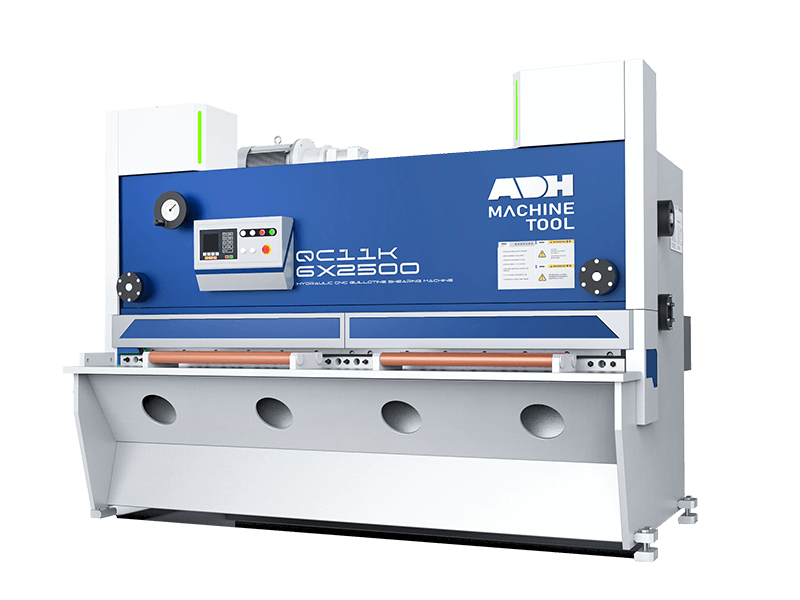
Shearing machine
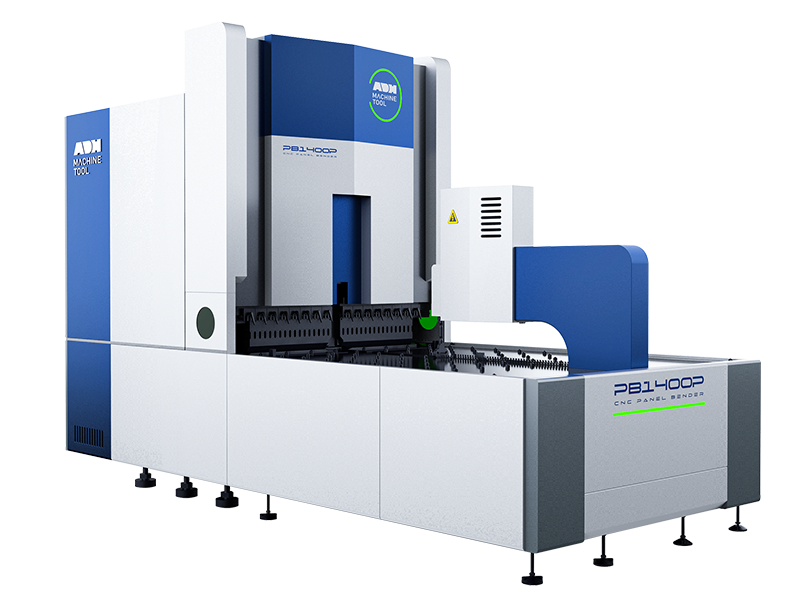
Panel bender
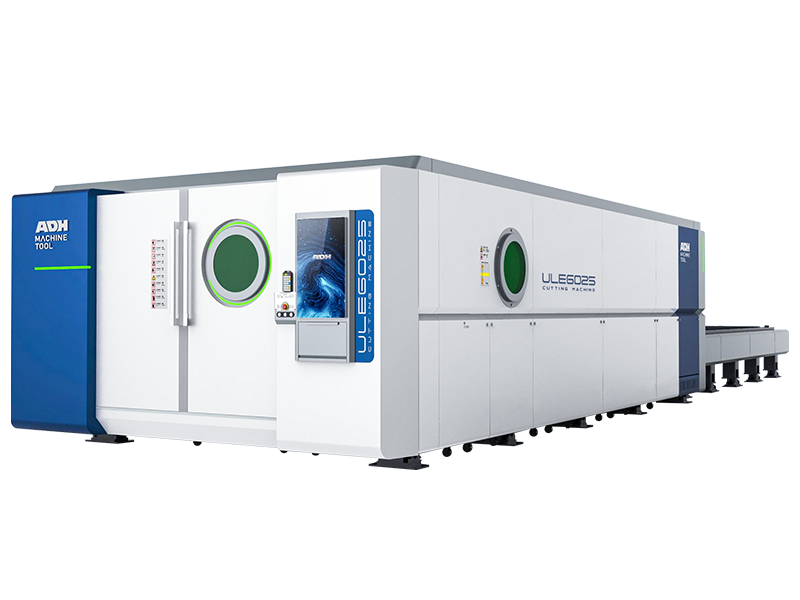
Laser cutting machine
Laser cutting flexible system
About the company:
ADH was founded in 2001 in Ma'anshan, China by Sun Mianyu, and is a professional provider of sheet metal manufacturing machines. The company's products include press brakes, laser cutting machines, shearing machines, panel benders, and more.
ADH continuously introduces foreign advanced technology to promote product upgrading and has established a third production park with the expansion of business and production. ADH's products have a large market share in China and are constantly exploring the international market.
ADH Review:
ADH's press brake technology is in line with international standards and uses international brand parts. Leading press brakes are of high quality, easy to operate, energy-saving, and efficient, with high product cost performance.
Ⅳ. Detailed Comparative Table of Press Brake Manufacturing
| Ranking | Manufacturer | Country | Product features and characteristics | Third-party evaluation and user experience |
| 1 | AMADA | Japan | High-precision and high-efficiency press brakes, providing a complete set of technical support, including pre-sales training and after-sales service | Users rated its user-friendly interface and low maintenance costs |
| 2 | TRUMPF | Germany | Innovative high-performance press brakes with high-precision and environmentally friendly operation characteristics | Rated as excellent in operability and ergonomics |
| 3 | Bystronic | Switzerland | Efficient bending solution, emphasizing precision and energy efficiency | The user reported that their machine has good stability and high accuracy |
| 4 | LVD | Belgium | Provide laser cutting machines, punching machines press brakes, and programming software, etc | Renowned for user friendliness and technical support |
| 5 | ACCURPRESS | Canada | Renowned for high-quality CNC machine tools, specializing in press brakes and shearing machines | High quality and reliability make it leading in the North American market |
| 6 | Durma | Turkey | Focusing on providing high-performance press brakes and other sheet metal processing equipment | Considered a manufacturer with stable performance and advanced technology |
| 7 | Salvagnini | Italy | Automated press brakes, emphasizing innovation and flexibility | Industry leading position in automation solutions |
| 8 | PrimaPower | Italy | High tech press brakes, focusing on high efficiency and precise control | The European market is highly praised, especially in terms of precise control technology |
| 9 | Cincinnati | United States | Lasers,press brakes and shears, durable with low maintenance costs | |
| 10 | ADH | China | Press brake, shearing machine, panel bender, laser cutting,V grooving machine, ironworker machine | The user is very satisfied with the overall user experience of the ADH press brake. For details, please click here to learn about users’ experience |
Ⅴ. Factors to Consider When Choosing A Press Brake Brand
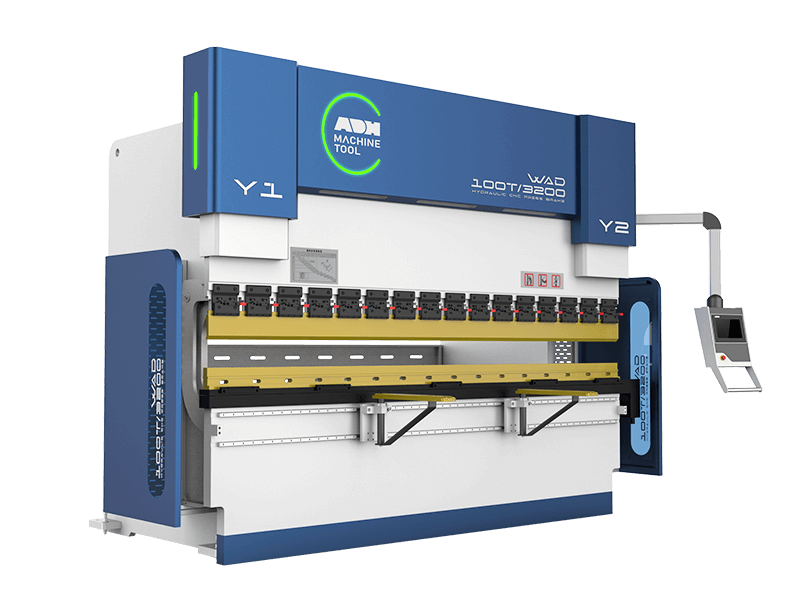
1. Maximum Material Length
The maximum length of the material is crucial as it determines the bending length needed. Ensure the press brake accommodates the longest pieces for seamless operations.
2. Complexity of Bends
The complexity of the bends influences the type of press brake you should choose. Simple bends may be handled by a basic CNC 2-Axis machine, while complex bends require advanced machines with multiple axes. Understanding your bending needs helps you select a suitable machine.
3. Accuracy of Bend
Accuracy in bending depends on material properties and the machine's ability to handle deviations. Top manufacturers like Amada and Trumpf Inc are known for their precise machines, which help maintain high levels of accuracy in your production processes.
4. Production Volume and Efficiency
Consider daily part industrial needs and machine efficiency. Automation boosts productivity by reducing setup times and increasing throughput. Evaluating production volume ensures you choose a machine meeting efficiency needs.
5. Tooling Changeouts
Efficient tool handling systems, such as automatic tool changers, are essential for efficient press brakes to save time and reduce downtime, especially for manufacturers frequently switching parts and tooling.
6. Operator Skill Level
Advanced machines with automated controls may need less skilled operators, but some require higher skills. Aligning machine features with workforce skills ensures smooth operation and maximizes productivity.
7. Cost and Maintenance
Consider the press brake's cost, including purchase, maintenance, repairs, and accessories. Top manufacturers may have higher initial costs but offer long-term reliability and features that reduce expenses. Balancing upfront costs with long-term benefits is crucial for a sound investment.
8. Ease of Use and Ergonomics
User-friendly controls and ergonomic design reduce fatigue and improve productivity. A user-focused machine enhances performance and minimizes errors, leading to more efficient production.
9. Tonnage Capacity and Bending Mechanism
Choose a press brake based on tonnage capacity and bending mechanism (hydraulic, electric, or hybrid). Hydraulic machines provide greater force, electric machines ensure control, and hybrid machines offer energy efficiency and precision. Selecting the right mechanism ensures optimal performance.
Ⅵ. Avoiding “Procurement Aftermath”: The 5 Most Common Decision-Making Mistakes and How to Dodge Them
Completing technical selection and business negotiations is only half the battle. Countless real-world cases show that many companies only discover months after commissioning that their initial decision buried hidden pitfalls—resulting in massive investments that fail to deliver the expected efficiency, sometimes even becoming a production burden.
This is what we call the “procurement aftermath.” What follows are five fundamental mistakes distilled from countless painful lessons, along with practical strategies to prevent them right from the outset.
1. Mistake #1: Worshipping Specs—Over-configuring or Under-configuring
(1) What goes wrong
Decision-making becomes hostage to the most visible numbers—tonnage and length. In one extreme, the “more is better” mindset prevails: to handle a thick-plate job that may appear only once or twice a year, you buy a 300-ton machine, even though 95% of your work barely needs 100 tons—wasting huge capital upfront and burning extra energy daily.
On the other extreme, aiming to save on initial costs, you choose a machine that just meets current needs, only to lose a lucrative high-strength steel or complex structural job three months later because of a tiny shortfall in tonnage, throat depth, or open height.
(2) How to avoid it
Apply the 80/20 Rule: Base core machine specifications on 80% of your regular workload. Don’t buy a giant for that 20% of extreme jobs—it’s simply not worth it.
1)Reassess the power of “secondary parameters”:
Once base tonnage and length are met, shift your attention to throat depth, stroke, and open height. These often-overlooked figures have far greater influence on flexibility, processing scope, and your ability to win higher-margin jobs in the future.
2)Build an outsourcing cost model:
For that 20% of non-core, extreme jobs, calculate the annual cost of subcontracting to specialists. Compare that to the extra investment required to cover them in-house—make decisions based on hard numbers, not gut feelings.

3)Insider tip:
Don’t let the supplier impress you only with showroom-perfect standard materials. Bring along your most challenging stock—say, a high-strength steel plate with internal stress and uneven thickness—and test on-site. You may find that the machine’s showroom precision falters quickly when faced with “devil materials” of real-world production.
2. Mistake #2: Underestimating Software—Missing its Multiplier Effect on Productivity
(1) What goes wrong
The CNC system and offline programming tools are treated as “add-ons,” easily trimmed from the budget. Deep down, decision-makers see the massive metal hardware as the true asset, with software just a cosmetic extra.
The outcome? A muscular machine with a sluggish brain—forcing skilled operators to waste precious hours at the console testing and tweaking programs, instead of performing accurate, efficient offline programming from the office. Actual OEE may struggle to reach 60%.
(2) How to avoid it:
1)Treat software as core productivity infrastructure:
A powerful offline programming suite can cut machine programming time by up to 90%, boosting OEE by more than 20%. Over the machine’s life cycle, that value may far exceed its purchase price—evaluate it as seriously as you do the hardware.
2)Run “digital twin” stress tests:
Demand a live demo during evaluation. Can the software precisely simulate the entire bending process? Can it detect every potential collision between workpiece, tooling, and frame before they occur? This reveals its intelligence and error-prevention capabilities.
3)Openness is survival:
Confirm with your IT team that the software can seamlessly import multiple mainstream 3D file formats (STEP, IGES) and offers open APIs for integration with existing ERP/MES systems. A closed architecture will become a roadblock in future smart manufacturing upgrades.
4)Insider tip:
The real value of a top-tier software ecosystem lies not just in programming efficiency, but in the process database built from tens of thousands of user contributions. Input a new material, and it can instantly propose a near-optimal bend compensation factor (K-factor) based on cloud-driven big data—knowledge ordinary software can’t compete with.
3. Mistake #3: Neglecting Service—Planting Hidden Risks Where You Can’t See
(1) What goes wrong
Seduced by an attractive price, you rush into signing a contract with vague service terms (SLA). When the machine stalls at peak production, you realize “48-hour response” meant answering your call within 48 hours—not arriving on-site. An engineer might take three days to travel from another city, while a critical part takes a week to arrive from Europe. By then, the loss from missed deadlines and client claims far outweighs the savings you made.

(2) How to avoid it
1)Quantify your downtime costs:
Before negotiations, have finance calculate exactly how much value and profit is lost for every hour your line stops. Seeing that hard number will make you appreciate the real worth of a strong service commitment.
2)Make service promises granular:
Define every vague commitment in the contract appendix. Specify terms like “remote diagnostics access within ≤ 2 hours,” “local warehouse dispatch of spare parts ≤ 4 hours,” and “certified engineer arrival ≤ 24 hours.” Each must have concrete timeframes and responsibilities.
3)Test local service strength:
Don’t just take sales claims at face value. Ask directly: “Within 200 km of my plant, how many factory-certified service engineers are on staff? Where’s the nearest critical-spares depot, and what’s its inventory value?” This cuts through marketing fluff and reveals genuine local backup.
4)Insider tip:
World-class service has moved beyond “fix it after it breaks” into predictive maintenance. For example, advanced systems from TRUMPF or Bystronic can analyze your machine’s live operational data. AI algorithms then predict that a hydraulic valve will reach its performance threshold in three months, prompting proactive alerts and even advance shipment of replacement parts—eliminating failures before they happen.
4. Mistake #4: Overlooking Compatibility—Turning New Equipment into a Production Island
(1) Mistake in Practice
Making purchasing decisions in complete isolation from your existing production system, without considering how new equipment will integrate. The result can be disastrous: your newly acquired German-made machine may be incompatible with the large stock of Japanese-standard tooling in your shop, forcing you to repurchase everything. Or, its closed-control software may be unable to communicate with your factory’s MES system, turning it into an unmanageable “production island.” Operators end up recording all production data manually on paper—your intended “digital upgrade” reduced to an empty slogan.
(2) Avoidance Guide
1)Conduct a Pre-Audit of the Tooling System:
At the earliest stage of equipment selection, identify exactly which tooling interface standards your new machine will require (e.g., AMADA universal, TRUMPF/WILA types). Ensure maximum compatibility with your current tooling inventory. If compatibility isn’t possible, the full cost of purchasing a new complete set must be explicitly factored into the project budget.
2)Hold a Cross-Department Review Meeting:
Before making a final decision, convene a joint review with representatives from Production, Equipment, Process, and IT departments. Have IT specialists evaluate the new machine’s digital interfaces and integration challenges—this is just as critical as assessing its mechanical performance.
3)Invest in a “Universal Language”:
If your workshop is already a “United Nations” of multi-brand equipment, seriously consider purchasing third‑party universal software that can perform unified offline programming for different brands. Its long-term value may exceed that of any single machine, breaking down brand silos and allowing seamless movement of personnel and programs.
4)Insider Tip (wink):
The highest level of compatibility isn’t just technical—it’s process compatibility. If your senior operators are accustomed to a certain workflow logic or parameter‑setting style, a CNC control system capable of mimicking or supporting those habits (for example, allowing custom macro programs) can dramatically shorten the learning curve, reduce veteran resistance, and accelerate the full production potential of the new equipment.
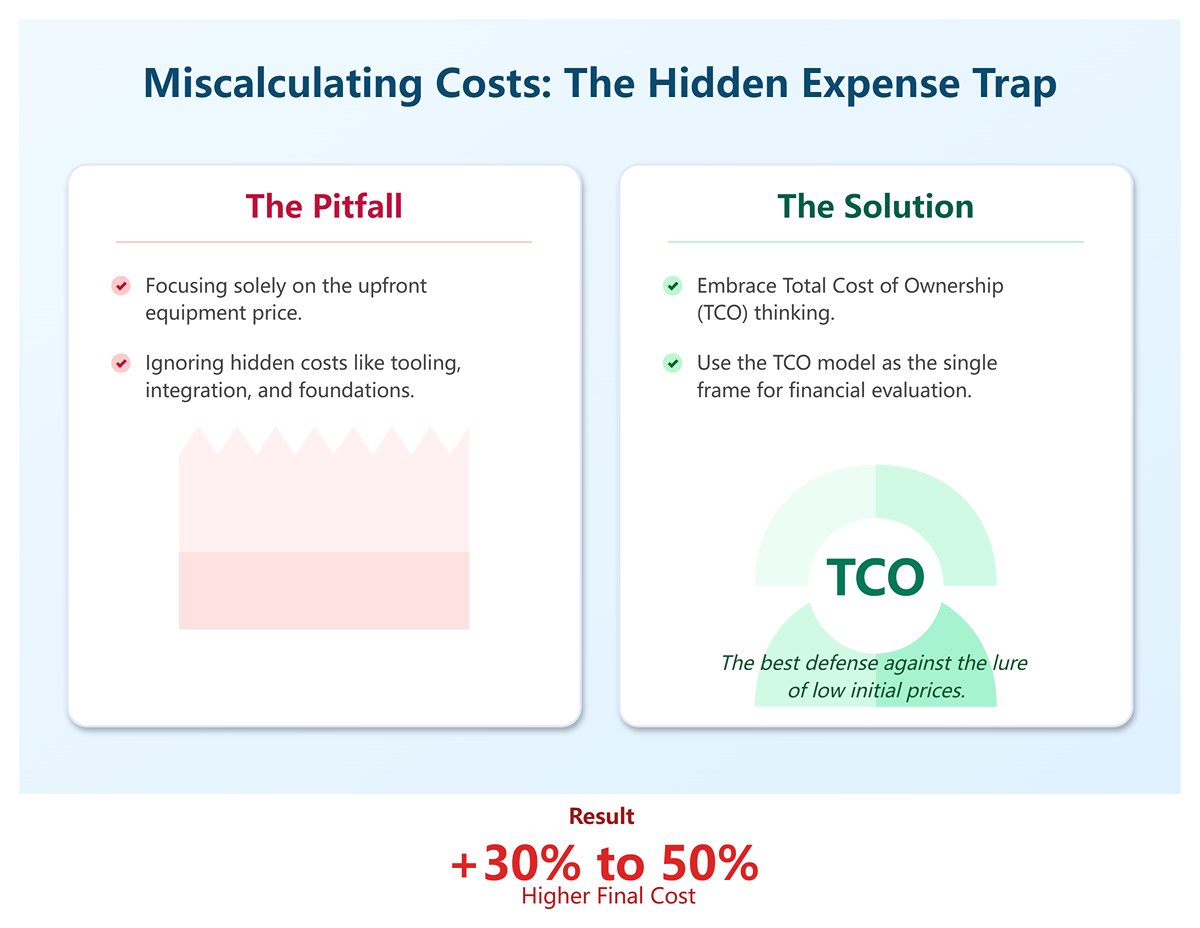
5. Mistake Five: Miscalculating costs—crushed by hidden expenses (tooling, integration, foundations)
(1) Mistake in Practice
Decision-makers fixate solely on the price quoted for the equipment, naively assuming that’s the total project investment. Ultimately, they’re blindsided by a wave of “hidden costs,” and by the time the project concludes, the total spend may be 30%–50% higher than the original quote—throwing the company’s financial planning into disarray.
(2) Avoidance Guide
Fully Embrace TCO (Total Cost of Ownership) Thinking: Use the TCO model we defined in Part Three as your single financial frame of reference for evaluating all options. It’s the most powerful, rational defense against the lure of low upfront prices.
Create a Total Investment Checklist: Before signing any contract, list out and estimate—item by item—all unavoidable expenses:
1)Foundation Reinforcement:
Machines over 160 tons usually require a dedicated reinforced foundation, which can cost tens or even hundreds of thousands.
2)Facility Infrastructure:
Does your plant’s power supply need upgrading? Will compressed air lines require rerouting? Do you need an independent ventilation or dust extraction system for the new equipment?
3)Tooling:
The tooling provided with the machine is often basic or entry‑level. Outfitting your product line with a complete set of high-performance, durable tooling typically costs 15%–25% of the machine price.
4)Software & Integration:
License fees for offline programming software, plus the cost of custom development or services to integrate the machine into your MES system.
5)Transport & Installation:
Safely and precisely positioning a multi‑ton piece of equipment isn’t cheap.
6)Negotiate a “Turnkey” All‑Inclusive Price:
In the final stage of supplier negotiations, try securing a price that covers transport, insurance, lifting, installation, commissioning, and basic training—minimizing the risk of hidden post‑contract surprises.
7)Insider Tip:
Among all hidden costs, the most expensive—and most often overlooked—is opportunity cost. Choosing a machine that’s mediocre or rigidly limited in function means losing future high‑margin, complex jobs you can’t handle.
Worse, it caps your workers’ skill growth for the next five years, as they’ll be constrained by the machine’s capabilities. This is a subtle yet profound erosion of your company’s core competitiveness.
V. FAQs
1. Who are the top press brake manufacturers?
The top press brake manufacturers include AMADA, Trumpf, Bystronic, Durma, LVD, Salvagnini, Cincinnati, and ADH. These companies are known for innovation, quality, and customer service in sheet metal processing. Each offers sheet metal working machinery with features enhancing precision, efficiency, and productivity.
2. Is the press brake operator a hard job?
Fulfilling the responsibilities and duties of a press brake operator requires mechanical skills, attention to detail, physical stamina, math skills to measure materials, and the ability to maintain and repair machines in a time-sensitive environment.
3. Where are Cincinnati press brakes made?
Cincinnati Inc. Press Brake Manufacturers | Harrison, OH.
4. Are AMADA press brakes good?
You cannot really go wrong with an Amada press brake because they are simply impeccable. Amada is a Japanese company founded in 1946 with a long history of metal processing. The powerful press brakes by Amada are known to have a high speed with precision.
5. What are the advantages and disadvantages of hydraulic, electric, and hybrid press brakes?
Hydraulic press brakes offer versatility and high precision, making them ideal for handling a variety of metals and large parts requiring significant power. They are equipped with safety features but can be energy-intensive, noisy, and require regular maintenance.
Electric press brakes are energy-efficient, quieter, and easier to maintain, offering superior precision and simpler operation. However, they are limited in tonnage and may have higher initial costs, making them less suitable for heavy-duty tasks.
Hybrid press brakes that combine hydraulic and electric benefits, providing versatile tonnage and energy efficiency, but they can be complex and costly. The choice depends on specific needs, such as production volume and required tonnage.
6. What are the cost and maintenance requirements for different press brake models?
The cost and maintenance of press brakes vary by type and specifications. Hydraulic models range from $5,000 to over $200,000, NC models from $8,500 to $35,700, and CNC models from $16,500 to $95,000. Eco-friendly CNC systems options start at $20,500. For a detailed breakdown of models and their specific features, you can download our brochures.
Maintenance includes daily cleaning, checking parts, and ensuring safety features work. Weekly tasks involve lubrication and hydraulic inspection. Follow manufacturer guidelines for periodic checks to ensure efficiency. Manufacturers like Amada, Trumpf, and Bystronic offer features that affect cost and maintenance, focusing on automation, precision, user-friendliness, or durability.
VI. Conclusion
In a nutshell, the above are the global top 10 press brake manufacturers that I have introduced. They are all well-known for their guaranteed product quality, performance, and service and play a pivotal role in the press brake industry.
Before purchasing a press brake, the buyer needs to evaluate their purpose and budget, as well as the seller's machine quality, technical support, and after-sales service.
As an over 40-year-experienced press brake manufacturer, we, ADH Machine Tool, are dedicated to providing customers with premium quality, stable performance press brake products, overall technical support, and after-sales service. If you have any questions or need a personalized quote, please feel free to contact us.







 English
  العربية
  বাংলা
বাংলা  Български
  Čeština
  Dansk
Dansk  Nederlands
  Deutsch
  Suomi
Suomi  Français
  Ελληνικά
  עִבְרִית
  हिन्दी
  Magyar
  Bahasa Indonesia
  Italiano
  日本語
日本語  Қазақ тілі
  한국어
한국어  Bahasa Melayu
  Norsk bokmål
  فارسی
فارسی  Polski
  Português
  Português do Brasil
  Română
  Русский
  Српски језик
  Slovenčina
  Español de México
  Español
  Svenska
  Kiswahili
  தமிழ்
தமிழ்  Türkçe
  ไทย
ไทย  Tagalog
  Українська
  Tiếng Việt
  اردو
اردو  简体中文
简体中文  香港中文
香港中文  繁體中文
繁體中文