
Imagine the precision of a laser cutting machine capable of transforming materials into intricate designs. Ensuring operator and bystander safety is crucial. This guide covers key safety precautions, from managing fumes and fire risks to protecting eyes and skin. Whether you're a professional or a DIY enthusiast, understanding and mitigating these hazards is essential. Ready to master laser cutting machine safety? Let's dive in.
I. Introduction
1. Brief Overview of Laser Cutting Technology
A laser cutting machine is a device which utilizes a high-energy laser beam to cut and process the material. Its working principle is to generate a high-intensity laser beam via the laser.
After being focused by the optical system, the laser beam will be irradiated onto the material surface, making the material melt, vaporize, or reach the ignition point. Meanwhile, the high-pressure gas will blow away the molten material.
The laser cutting machine features high precision, high speed, narrow gap, small heated zone, high flexibility, etc. This makes it widely used in many spheres like metal fabrication, electronics manufacturing, the automotive industry, and aerospace.
The laser cutting machine is mainly divided into three types, namely CO2, fiber, and YAG. The CO2 laser cutting machine is suitable for cutting non-metal materials such as wood, plastics, and acrylic.
Fiber laser fits for metal cutting owing to its advantages of high efficiency and low maintenance cost. YAG laser cutting machine is suitable for marking and fine processing.
2. Importance of Laser Cutting Machine Safety
Laser-cutting machine safety plays a significant role in metal fabrication due to its high energy level and potential risks. If treated improperly, it will lead to severe safety accidents and health hazards.
Today, we will mainly talk about the common hazards and their corresponding measurements, emergency procedures as well as safety features of the laser cutting machine. Firstly, let’s recognize the safety devices on the machine.
II. Safety Features of Laser Cutting Machines
In order to avoid unnecessary accidents and risks, the modern laser cutting machine itself has made some endeavors. Here are the equipped safety devices in detail:
1. Interlocking Device
The laser cutting machine is equipped with interlocking devices. These devices can stop the machine to protect the operator under specific conditions. Never defeat laser interlocks built into the cutter. This could allow the beam to escape from the laser cutter.
2. Emergency Stop Button
There is an emergency stop button installed in the laser cutting machine. It is usually installed in the obvious place to facilitate pressing immediately when an emergency occurs.
Once the button is pressed, the machine will stop. The laser and power supply will also stop. This function can prevent the incidents from exaggeration, ensuring the operators’ safety.
3. Protective Cover and Shield
The laser cutting machine adopts a protective cover and shield to prevent laser radiation. These protective devices can not only protect the operators from laser harm, but also can prevent splashing metal parts and smoking from hurting the human body.
The modern laser cutting machine’s cover is usually made of transparent materials. This can help the operator observe the cutting process clearly while maintaining security.
4. Safety Warning Label
Some eye-catching safety warning labels are pasted on the laser cutting machine to remind the operator of potential dangerous zones, such as laser emission areas or high-temperature areas.
5. Cooling System
The cooling system is not only used to common operation of the equipment but also is beneficial to prevent machine overheating or malfunctioning. This system can keep the temperature of the laser and other parts in a safe range.
6. Smoke and Dust Extraction System
There is some smoke and harmful gases generated during the cutting process. Thus, the laser cutting machine is equipped with a smoke and dust extraction system.
This system can effectively exhaust the smoke and dust generated during the cutting process, preventing environmental pollution while protecting the operators’ health.
7. Operator Training and Protective Equipment
The laser cutting machine operator needs strict training and wears proper protective equipment, such as protective goggles, and gloves. An operator should never leave a laser cutter unattended while it is running due to the risk of ignition.
III. Pre-Operational Safety Checks
Before using a laser cutting machine, it's crucial to perform key pre-operational safety checks. This ensures that both the equipment and workspace are safe for operation, reducing risks. Pay attention to equipment inspection, workspace setup, and material management.
1. Inspecting the Equipment
Equipment inspection is essential. Start by examining the laser cutting machine for any visible damage or wear. Check all connections, including power cords and hoses. Verify emergency stop buttons are operational.
Regularly clean the lens and mirrors as dirt can affect performance. Ensure all moving parts function smoothly. Look for signs of misalignment or unusual sounds when testing. Document findings in a logbook. Regular maintenance checks keep equipment in optimal condition and prevent unexpected failures.

2. Workspace Safety Considerations
A tidy workspace reduces the risk of accidents. Keep walkways clear to avoid tripping hazards. Ensure workstations are well lit to facilitate precision tasks. It's important that ventilation systems are functioning efficiently to remove toxic and corrosive fumes.
Fire extinguishers should be easily accessible and employees trained in their use. Clearly mark exits and emergency routes. Secure any tools or objects that could pose a hazard during machine operation. These measures protect both individuals and the work environment.
3. Material Handling and Storage
Proper material handling and storage are vital for safety. Identify materials appropriate for laser cutting, avoiding those that release harmful fumes. Store materials in designated areas, organized by type, to prevent confusion.
Use PPE like gloves when handling materials. Ensure material sheets are placed flat and stable before starting the machine. Adhere to weight limits of storage shelves to prevent collapse. Careful management of materials minimizes safety risks.
IV. Common Hazards and Protective Measures in Laser Cutting Machine
1. Eye and Skin Injuries
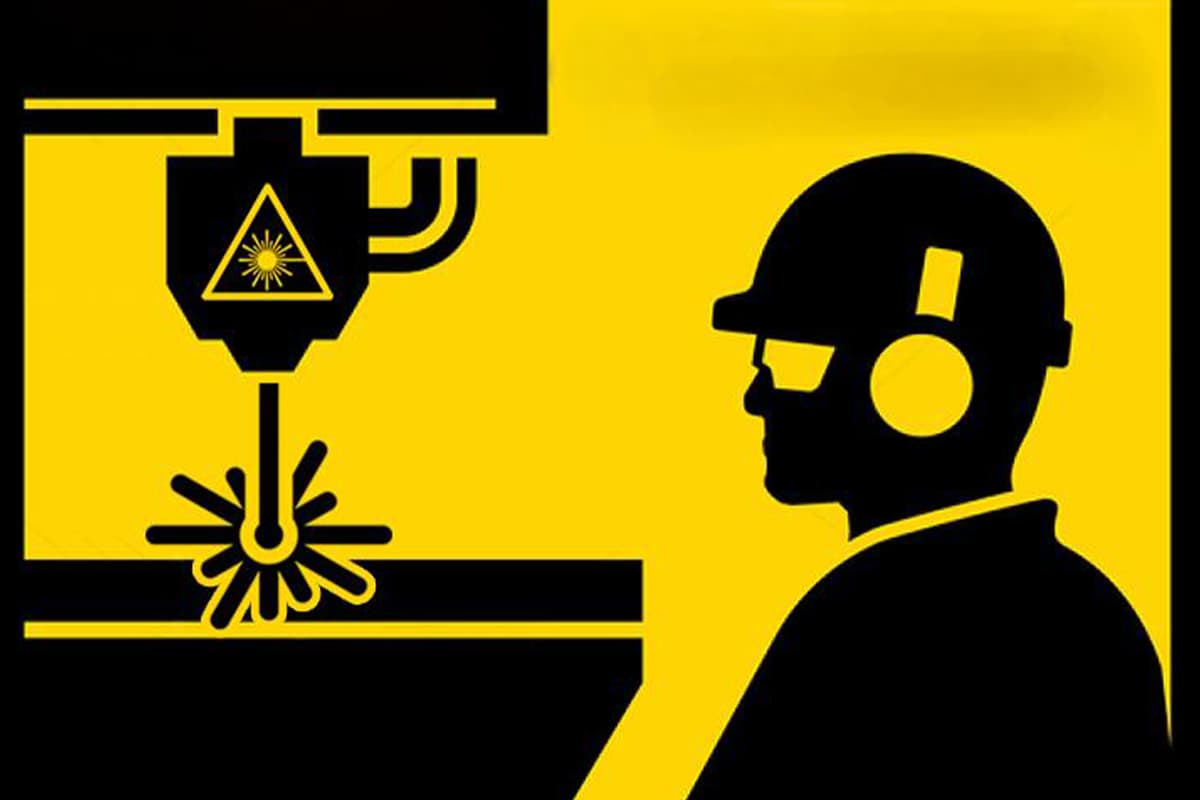
The laser beam is highly intense to direct or reflect onto human skin or eyes, which may cause severe harm.
Protective measures:
- Wear protective glasses: the operator should wear specialized design laser protective goggles to prevent harm. DO NOT look directly into laser beam. They also tend to be different colors according to the wavelength they absorb: blue or green for diode lasers, gray for CO2 lasers, and light green for fiber lasers.
- Wear protective clothes: long clothes and protective gloves can effectively avoid direct irradiation to the skin.
- Using a protective shield: the protective shield should be installed around the laser cutting machine, therefore, avoiding laser beam scattering and reflection.
2. High Temperature and Fire Hazards
The high temperature will generate during the laser cutting process. This may catch fire hazards, especially when cutting flammable materials.
Protective measures:
- Keep working place clean: clean all the flammable items in the working area to prevent fire hazards.
- Equipped with fire-fighting equipment: the firefighting equipment should be equipped, such as a carbon dioxide fire extinguisher or dry powder fire extinguisher.
- Monitor the temperature: the temperature sensors should be used to monitor the temperature of the cutting area. Thus, the operator can find and deal with the overheating circumstance immediately.
3. Electrical Hazards
The laser cutting machine tool often uses a high voltage power supply, thus there is a risk of electric shock and electrical fire.
Protective measures:
- Check the equipment regularly: check the electrical equipment and wiring, and make sure that they are in good condition. Thus, electrical leakage and short circuits can be avoided.
- Use the qualified electrical equipment: ensure that all the electrical devices fit the relevant safety criteria, and can be installed and maintained by professional staff.
- Train the operator: the operator should accept electrical safety training, and ensure that they can master the basic electrical safety knowledge and emergency handling methods.
4. Inhalation of Fumes and Particles
There will be a large amount of smoke and fine particles generated during the cutting process. Long-term inhalation will damage the respiratory system.
Protective measures:
- Install ventilation system: high effective ventilation and smoke exhaust system should be installed in the cutting area, eliminating harmful fumes and particles.
- Wear a protective mask: the operator should wear a qualified protective mask to prevent harmful substance inhalation.
- Test air quality regularly: the air quality should be monitored regularly in the workspace to ensure it fits the safety standards.
5. Laser Radiation Protection
Laser radiation not only harms the eye and skin but also brings potential hazards to other organs.
Protective measures:
- Use low-power laser: use the low-power laser under the premise of meeting the processing requirements, reducing the radius hazard.
- Set the warning label: set the obvious warning label surrounding the laser cutting machine to remind the operator of laser radiation.
- Health checking regularly: check the operators’ health regularly, so that the health problems caused by radiation can be found and handled in time.
6. Harmful Gas Protection
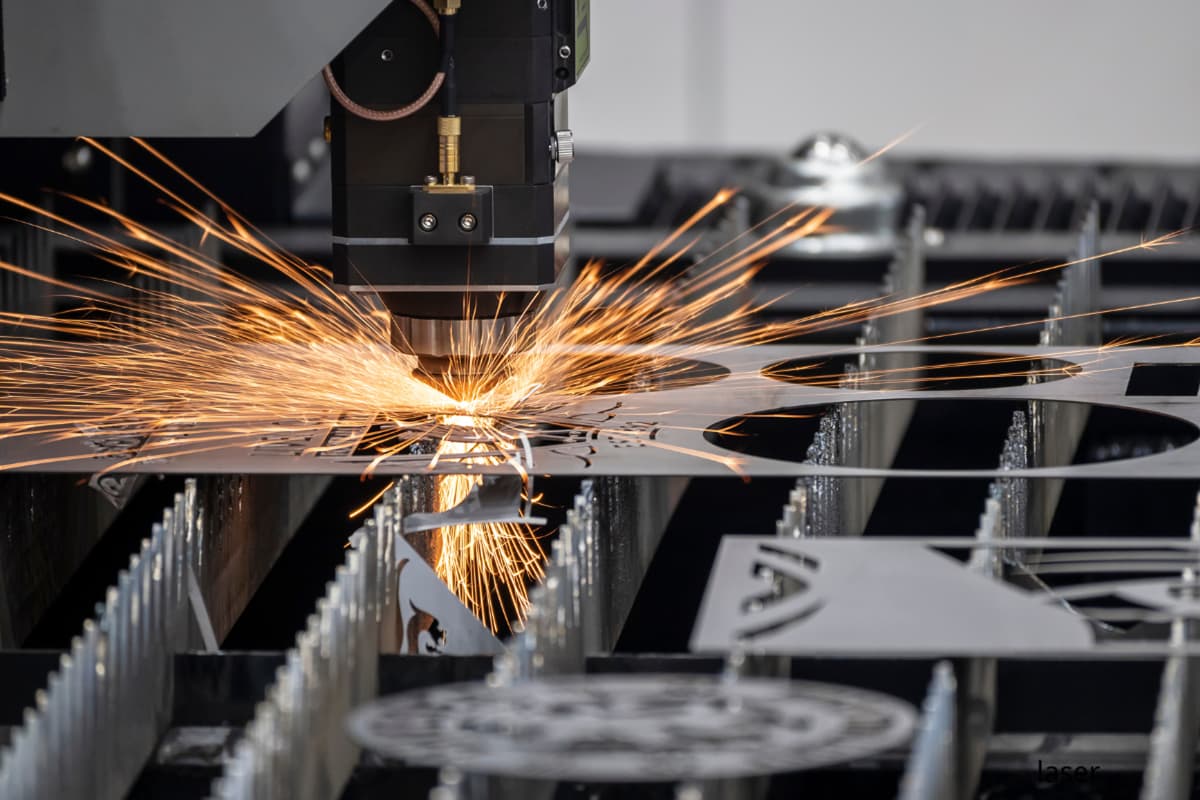
Some materials will produce harmful gases during the laser cutting process, such as chlorine gas, and fluorine gas. This will cause large damage to the human body's health.
Protective measures:
- Choose the proper material: try not to use the material that emits the harmful gases. Or deal with the material before cutting.
- Enhance ventilation: ensure the ventilation is good in the cutting zone, and emit the harmful gases immediately.
- Use the gas detection equipment: the gas detection equipment should be installed to monitor the harmful gas concentration to prevent excessive levels.
7. Mechanical Injury Protection
The laser cutting machine consists of many mechanical parts, such as a cutting head, and transmission device. If treated improperly, it may cause mechanical injury.
Protective measures:
- Follow the operation regulation strictly: the operator should obey the operation regulation to prevent misuse.
- Use the safety device: necessary safety devices should be installed, such as an emergency stop button, and protective cover.
- Maintain the equipment: it is necessary to maintain the equipment regularly, thus ensuring it is in a safe condition.
Ⅴ. Regulatory Framework: Decoding Global Standards and Building a Compliant Operations System
Understanding and adhering to relevant safety regulations isn’t about adding unnecessary constraints to production; it forms the foundation for mitigating legal risks, protecting employees, and achieving sustainable operations. A single act of noncompliance can cost a company many times more than its entire safety investment. This section serves as your guide through the complex world of global laser safety standards, helping you build a robust, efficient, and audit-ready compliance management system.
1. Visual Guide to Laser Safety Classes: The Risk Matrix from Class 1 to Class 4
Every commercial laser product must be classified and labeled according to its potential hazards. This classification system, defined by the International Electrotechnical Commission (IEC) in the core standard IEC 60825-1, serves as the universal language of global laser safety management and the logical starting point for all protective measures.
| Safety Class | Definition and Risk Characteristics | Key Control Measures and Application Scenarios |
|---|---|---|
| Class 1 | Intrinsically safe. Under all reasonably foreseeable conditions of normal use, the laser radiation poses no hazard to humans. | No special controls required. Safety is ensured either by inherently low laser power or by complete enclosure of high-power lasers within a robust housing equipped with safety interlocks—for example, laser printers and CD players. Insight: A laser cutter using a Class 4 core can still be certified as a Class 1 product if its protective housing fully contains any laser radiation and the interlock system instantly shuts off the beam when doors are opened. This represents the pinnacle of safety engineering. |
| Class 2 | Low-power visible lasers (400–700 nm wavelength). The human eye’s natural blink reflex (approximately 0.25 seconds) provides adequate protection against retinal injury. | Administrative control. Avoid deliberate prolonged viewing of the beam. Commonly used in supermarket barcode scanners and low-power laser pointers. |
| Class 3R | Moderate-power lasers. Direct eye exposure presents a potential hazard, but the overall risk and probability of injury are relatively low. | Administrative controls and warnings. Warning labels and basic safety training are required, and optical instruments (e.g., telescopes) must never be used to view the beam. |
| Class 3B | Medium- to high-power lasers. Direct or specular reflection viewing is extremely dangerous and can cause irreversible eye damage instantly. Diffuse reflections on rough, non-reflective surfaces are typically safe. | Strict engineering and administrative controls. Must operate within a designated "Laser Controlled Area" clearly marked with warning lights and signs. Operators must wear laser protective eyewear appropriate for the laser’s wavelength and power. Devices require key-switch operation and safety interlocks. |
| Class 4 | High-power lasers. The most hazardous category, encompassing all industrial laser cutters. Direct, specular, or even diffuse exposure can cause severe, permanent eye and skin injuries. There is also significant risk of fire and hazardous airborne contaminants. | The most stringent multi-layered controls. Includes all Class 3B measures with stricter requirements. The beam path must be fully enclosed; for open-beam systems, use a dedicated room with physical barriers and controlled access. A Laser Safety Officer (LSO) must be appointed, and intensive safety training and certification for all personnel are mandatory. |
Self-Assessment: How to Identify the Risk Class of Your Equipment Quickly
The simplest way is to check the IEC/GB-compliant warning label affixed by the manufacturer. This standardized label specifies the laser’s classification (Class 1, 2, 3R, 3B, or 4) along with radiation warnings. If a high-power laser cutter bears a Class 1 label, treat its protective enclosure and safety interlock system as your lifeline, and inspect their integrity regularly.
2. Navigating the Regulatory Maze: Essential International and Regional Standards You Must Know
Although the fundamental principles of laser safety are globally consistent, specific regulations and mandatory standards vary by region. Understanding your jurisdiction’s core requirements is a prerequisite for compliant operation.
(1) Global Benchmark: IEC 60825-1
This is the world’s most authoritative and foundational standard for laser product safety, titled Safety of Laser Products – Part 1: Equipment Classification and Requirements. It establishes uniform rules for classification, labeling, and the manufacturer’s informational obligations. Most national laser safety regulations are derived from or directly adopt this standard.
(2) U.S. Standards: OSHA & ANSI Z136.1
In the United States, compliance relies on two complementary pillars:
1)OSHA (Occupational Safety and Health Administration)
As a federal enforcement agency, OSHA implements the Occupational Safety and Health Act, which includes the General Duty Clause requiring employers to maintain a workplace free of recognized hazards. In practice, OSHA treats ANSI Z136.1 as a nationally recognized consensus standard and uses it to assess and penalize noncompliance in laser safety cases. Violations can result in fines ranging from tens of thousands to hundreds of thousands of dollars.
2)ANSI Z136.1 – Safe Use of Lasers
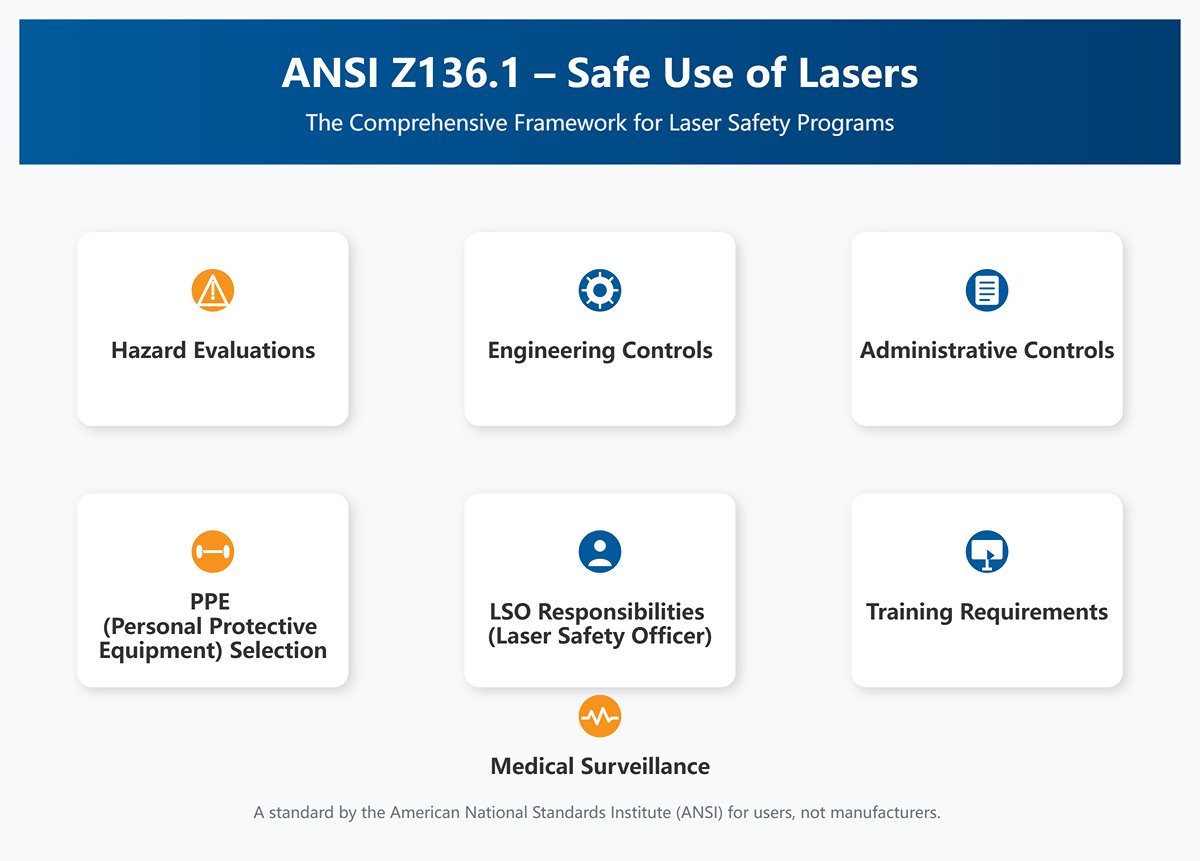
Often referred to as the Bible of Laser Safety in the U.S., this standard—issued by the American National Standards Institute—addresses users, not manufacturers. It provides a comprehensive framework for a laser safety program, detailing hazard evaluations, engineering and administrative controls, PPE selection, Laser Safety Officer (LSO) responsibilities, training requirements, and medical surveillance.
(3) European Standards: CE Marking and Machinery Directive
All laser cutting machines sold within the European Union must bear the CE mark, signifying the manufacturer’s declaration of conformity with all applicable EU directives. For laser cutting equipment, the key directive is:
1)Machinery Directive (2006/42/EC)
Specifies the essential health and safety requirements that all mechanical equipment must meet.
(4) Harmonised Standards
To demonstrate compliance with the Machinery Directive, manufacturers typically follow a set of harmonised standards. Those directly addressing laser safety include EN 60825-1 (identical to IEC 60825-1) and EN ISO 11553-1 (focused on safety requirements for laser processing machinery). Compliance with these standards presumes conformity with the directive’s safety obligations.
(5) Chinese National Standards: GB 7247 Series
China’s laser safety standard system centers on the GB 7247 series, which directly affects production licensing and safety inspections for domestic enterprises.
1)GB 7247.1
The foundational standard of the series, equivalent to IEC 60825-1, specifying equipment classification and requirements. Companies must track its latest version to ensure ongoing compliance.
2)Other sections in the series
The GB 7247 system also includes guidelines addressing specific areas, such as GB/T 19702 (Safety and Health Requirements for Laser Processing Machines). Together, they form a comprehensive national standard framework. Companies operating in China must adhere strictly to all standards within this series.
3. Building an Internal Compliance System: A Practical Path from Documentation to Auditing
Merely understanding the regulatory text is not enough—the real challenge lies in translating those requirements into daily operations that are actionable and traceable. A sound internal compliance system should rest on three fundamental pillars:
(1) Appointing a Laser Safety Officer (LSO)
For any organization using Class 3B or Class 4 lasers, ANSI Z136.1 mandates the appointment of an LSO. The LSO acts as the cornerstone of the organization’s laser safety program, entrusted with the authority and responsibility to assess, monitor, and enforce laser hazard controls. Key responsibilities include:
1)Conduct hazard classification and risk assessments for all laser equipment.
2)Identify and implement appropriate control measures (engineering, administrative, PPE).
3)Approve written Standard Operating Procedures (SOPs) for all laser operations.
4)Ensure all laser users receive proper safety training at the required level and maintain complete records.
5)Regularly audit and verify the effectiveness of safety measures, reporting findings to management.
6)Lead emergency response and root cause investigations whenever a laser-related incident or near miss occurs.

(2) Establishing Written Safety Procedures (Standard Operating Procedures, SOPs)
Operating “by intuition” is the enemy of safety management. Every activity involving Class 3B or Class 4 lasers must have a detailed, written SOP. More than just a manual, the SOP serves as a core safety contract, and should cover:
1)Clear Hazard Identification: Explicitly list all potential laser and non-laser hazards specific to the operation, such as fire or toxic fumes.
2)Safety Control Measures: Specify details like protective eyewear type (OD rating, wavelength range), interlock inspection procedures, and beam path control requirements.
3)Standardized Operational Steps: Outline every stage of safe operation—from startup preparation, program loading, focus calibration, and routine operation to shutdown procedures.
4)Emergency Response Plans: Define clear procedures and key contacts for handling fire, accidental exposure, or equipment failure.
All operators must sign an acknowledgment—after completing training and fully understanding the SOP—before being authorized to work with laser systems.
(3) Establishing Recordkeeping and Audit Mechanisms:
As the management saying goes, “What’s not recorded hasn’t happened.” Robust documentation is the foundation of compliance verification and continuous improvement, serving as compelling evidence during regulatory inspections. Key records include:
1)Training Records: Document each employee’s laser safety training date, content, evaluation results, and authorization level.
2)Equipment Inspection Logs: Record regular checks of safety interlocks, protective enclosures, ventilation systems, and protective eyewear, with assigned personnel accountability.
3)Incident and Near-Miss Reports: Every laser-related accident or near miss must be documented, investigated, and analyzed for root causes to prevent recurrence.
4)Routine Audits: The LSO should conduct periodic internal audits (e.g., quarterly or semi-annually) using checklists to identify potential compliance gaps and areas for improvement.
Ⅵ. Defense—Forging an Impenetrable Triple Safety Fortress
If the “Foundation” section helped you understand the battlefield and the “Regulations” section provided the battle map, this part equips you with the most advanced weapons and tactics. An effective safety system does not rely on a single element—it is a layered defense composed of engineering controls, administrative measures, and personal protective equipment. Should one layer fail, the next stands ready to intercept.
1. The First Line of Defense: Engineering Controls—Eliminating Risk at the Source
Engineering controls represent the highest level of protection. The guiding principle is simple yet powerful: use physical design to prevent hazards from occurring in the first place, rather than relying on human vigilance alone. This is the most reliable and fundamental defense line.
(1) Protective Enclosures and Safety Interlocks: The “Life Lock” Against Accidental Exposure:
The value of a Class 1 certified laser cutting machine lies in its robust, fully enclosed housing and responsive interlock system.
1)Core Mechanism
A Safety Interlock is an electromechanical device designed to instantly disable the laser and motion system whenever a protective door or service panel is opened. Its sole purpose is to guarantee that the human body can never be exposed to a laser beam during high-power operation.
(2) Deadly Misconception: Why You Must Never “Bypass” or Override It
Some operators may use dummy plugs or hacks to bypass the interlock for convenience. This is equivalent to removing the lock on a safe.
Once bypassed, the equipment—both legally and physically—instantly shifts from a “inherently safe” Class 1 device to a fully open, extremely hazardous Class 4 machine.
This puts not only yourself and colleagues in danger without protection, but also exposes your company to severe regulatory penalties and legal consequences.
Remember: Any modification to a safety interlock is a gamble with your life and your company’s future.

(3) Ventilation and Fume Extraction Systems: Capturing the Invisible Toxins:
Airborne contaminants generated during laser processing (LGACs – Laser Generated Air Contaminants) are the leading cause of long-term occupational health risks. An effectively designed extraction system must capture and purify these pollutants directly at the source.
1)Selection Logic: A professional filtration system generally includes three stages of filtering:
2)Pre-filter: Traps large dust particles and protects the main filters.
3)HEPA Filter: Captures fine particulates such as PM2.5 with 99.97%+ efficiency at 0.3 microns.
4)Activated Carbon Filter: Adsorbs volatile organic compounds (VOCs) and toxic gases produced when cutting materials like plastics or plywood.
5)Material-Based Design: Different materials require different purification focuses. Cutting wood or MDF produces heavy dust and formaldehyde, rapidly consuming both HEPA and carbon filters. Cutting acrylic (PMMA) mostly emits VOCs, saturating the activated carbon faster. Never cut PVC (polyvinyl chloride)—it releases corrosive hydrogen chloride gas that severely damages equipment and emits highly toxic substances.
6)Maintenance Core: Establish a clear schedule for filter replacement based on the type of material processed and operating hours, and keep meticulous records. Purifiers equipped with filter blockage alerts or gas sensors are a better choice—they transform maintenance from guesswork into data-driven precision.
(4) Work Area Design: Communicating Risk Through Environment
A well-designed workspace should subtly guide safe behavior through its layout and visual cues.
1)Laser Controlled Area (LCA): For Class 4 lasers, designate a physically isolated “Laser Controlled Area.” The entrance must display prominent warning signs and status indicators (e.g., “Laser Active – Do Not Enter”), which should be integrated with an access control system so that opening the door automatically stops the machine.
2)Beam Path Containment: All beam paths should be enclosed within physical barriers, such as beam tubes, wherever possible. For open beams, use non-reflective, heat-resistant beam dumps or apertures to absorb the main beam and any stray reflections.
3)Eliminate Reflective Surfaces: Avoid mirror-like materials within the workspace. Operators should remove watches, jewelry, or any other reflective accessories. Walls, ceilings, and equipment surfaces should be coated with dark, matte finishes to minimize the risk of diffuse reflection.
(5) Fire Detection and Suppression Systems: Automating the Entire Response Cycle
Given the inherent fire risks of laser cutting—especially with flammable materials—automated fire prevention and suppression systems are mandatory.
1)Detection and Interlocking: The system should incorporate flame, smoke, or temperature sensors. Upon detecting an anomaly, it must not only trigger audible and visual alarms but, more importantly, immediately cut the laser and main power supply to prevent escalation.
2)Automatic Fire Suppression: For enclosed areas within equipment, CO₂ suppression systems are ideal. They quickly reduce oxygen concentration to extinguish flames without leaving residue, ensuring no harm to delicate optical or electrical components. Select the system according to the internal volume of the equipment to ensure sufficient extinguishing capacity.
2. Second Line of Defense: Administrative Control — Shaping Safe Work Habits
If engineering controls are the hardware, administrative controls are the operating system that ensures everything runs effectively. Through procedures, training, and culture, they turn safety requirements into personal discipline and instinctive behavior.
(1) Standard Operating Procedures (SOPs): Embedding Safety in Every Step
A high-quality SOP isn’t a document that gathers dust—it’s a living guide for daily operations. It should clearly define every safety step from startup to shutdown and include:
1)Pre-Shift Checklist: Cover critical items like interlocks, emergency stops, ventilation, air pressure, and lenses.
2)Material Verification Process: Before operation, cross-check the Material Safety Data Sheet (MSDS) to confirm suitability and identify potential hazards.
3)Handling Abnormal Conditions: Specify the exact responses to unusual noises, sparks, or excessive smoke.
4)Maintenance Safety Protocols: Detail the “Lockout/Tagout” (LOTO) procedure to guarantee complete energy isolation during servicing.

(2) Training and Authorization: Ensuring Everyone Is a Qualified Operator
Allowing untrained personnel to operate a laser cutter is no different from letting someone drive without a license. A tiered training and authorization system is essential:
1)Basic Training (All Personnel): Learn fundamental laser principles, hazard classifications, health impacts, and emergency procedures.
2)Operator Training (Authorized Users): Gain in-depth familiarity with specific equipment, SOP execution, routine maintenance, and troubleshooting.
3)Maintenance Technician Training: Receive advanced instruction in electrical, mechanical, and optical safety, and obtain authorization to perform LOTO procedures.
4)Core Principle: Only after passing both theoretical and practical assessments—and signing confirmation of understanding all safety regulations—may an individual be granted operational privileges. All training records must be documented and archived.
(3) Building a Safety Culture: From ‘Being Told to Be Safe’ to ‘Choosing to Be Safe’
The highest form of safety management is when safety becomes a deeply ingrained cultural mindset.
1)Leadership Commitment: Management must lead by example, strictly follow safety rules, and continually invest in safety improvement.
2)Encourage Reporting: Establish a non-punitive reporting system so employees feel empowered to report near-misses and hazards. Reward reports and treat them as learning opportunities—the cheapest lessons often yield the greatest value.
3)Ongoing Communication: Use pre-shift briefings, safety boards, and regular updates to share knowledge, incident reviews, and improvement results—making safety visible and tangible.
3. Third Line of Defense: Personal Protective Equipment (PPE) — The Final Shield of Protection
PPE is your last safeguard against injury. When engineering and administrative controls fail, it becomes your sole defense from irreversible harm. Choosing and wearing PPE correctly is the most direct act of responsibility for your own life.
(1) Eye Protection: Choosing Right, Not Just Feeling Safe
Laser safety goggles are the most critical piece of PPE. Inadequately selected eyewear offers no real protection.
Three Key Selection Factors:
1)Wavelength: Must match the wavelength of your laser precisely. For example, goggles for a CO₂ laser (10600 nm) cannot be used for a fiber laser (1064 nm).
2)Optical Density (OD): The OD value represents how effectively the lenses attenuate laser energy. An OD 6 filter reduces intensity to one-millionth of its original value. Determine the minimum OD required based on your laser’s power or energy output.
3)Visible Light Transmission (VLT): Choose lenses with higher VLT for a clear field of view, as long as they provide adequate protection.

(2) Common Misconceptions: Why Sunglasses or Regular Safety Glasses Fail Against Lasers
These are designed to block ultraviolet and visible light across broad wavelengths, not concentrated laser radiation. High-power lasers can instantly penetrate or melt such lenses, producing dangerous debris that can injure the eyes. Wearing non-specialized glasses in laser environments is more dangerous than wearing none at all—it creates a false sense of safety.
(3) Skin and Body Protection: Prioritize Flame Resistance and Heat Shielding
For Class 4 lasers, especially during open access or maintenance, skin is vulnerable to thermal and reflected light injuries. Wear flame-retardant clothing made from materials like Nomex® and heat-resistant leather or specialized protective gloves.
(4) Respiratory Protection: The Essential Backup for Engineering Controls
In cases of inadequate ventilation or when processing materials that emit high concentrations of hazardous fumes or particulates, wear appropriate respiratory protection—such as an N95 mask for particulates or a gas mask with chemical filter cartridges for toxic vapors—to ensure safe breathing.
In summary, these three defensive strongholds—robust engineering barriers, precise management protocols, and reliable personal armor—form a multi-layered, dynamic laser safety system. Each is indispensable, working together to ensure that while you harness the power of the laser, you remain firmly within the bounds of safety.
Ⅶ. Emergency Protocols: Survival Rules You Must Know When Accidents Strike
Even with the most comprehensive prevention system in place, we must always be prepared for the unexpected. In high-energy operations such as laser cutting, accidents can occur in an instant. The difference between a near miss and an irreversible tragedy often lies in how one responds within mere milliseconds. This chapter is not a set of cold regulations—it is a collection of survival principles that must be ingrained in your reflexes. They ensure that in moments when adrenaline surges, every action you take is calm, professional, and effective as a 'first responder.'
1. Establishing an Emergency Action Plan (EAP)
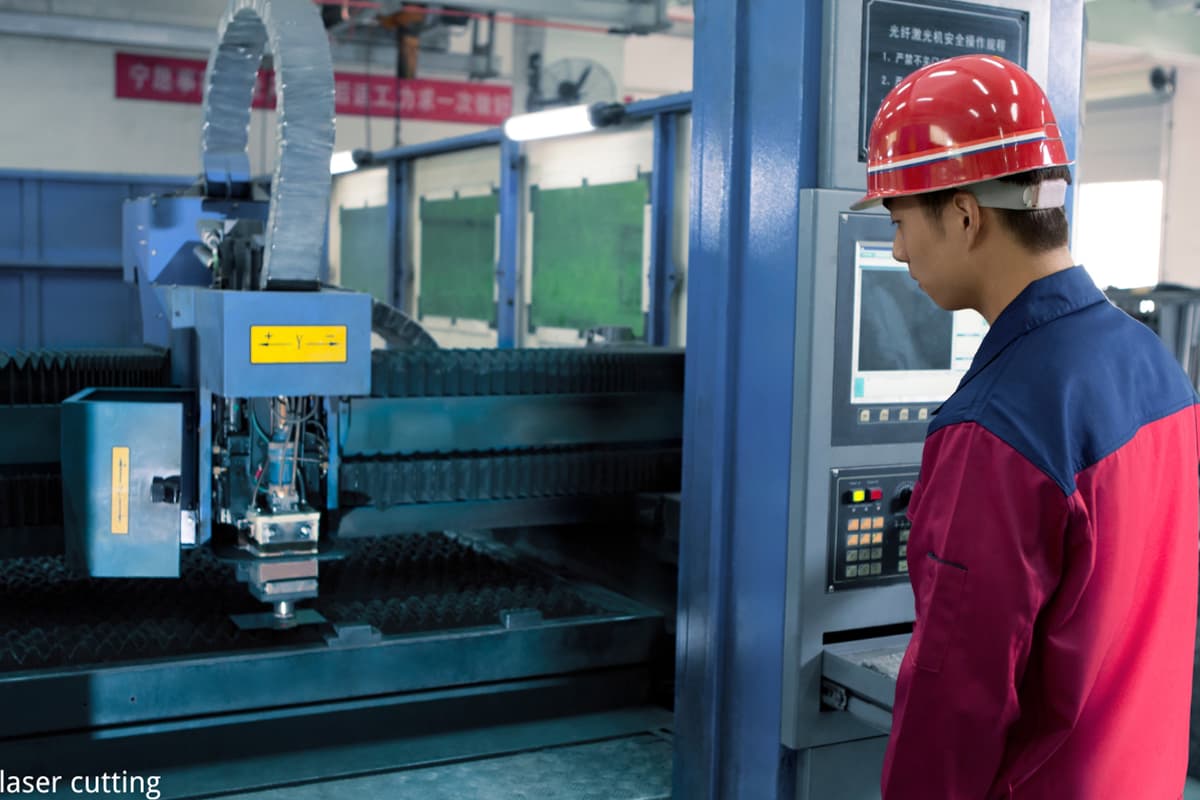
The true value of an Emergency Action Plan (EAP) is not in how polished or well-printed it looks, but in whether it has been reinforced through repeated training and drills, becoming second nature to every employee. An effective EAP must be concise, intuitive, and cover the following key situations:
(1) Fire Response: Choosing and Using the Right Extinguisher Is a Science
The risk of fire during laser cutting is ever-present. Selecting the wrong extinguisher can not only fail to stop the fire but may also cause irreversible damage worth millions to your equipment.
1)Best Option: CO₂ (Carbon Dioxide) Fire Extinguisher
- Principle: CO₂ extinguishers release low-temperature dry ice and gas that instantly displace oxygen around the fire and drastically cool the area, achieving both smothering and cooling effects.
- Key Advantage: No Residue. This is the primary reason it is the top choice. CO₂ evaporates completely after use, leaving no residue that could contaminate or corrode expensive optical components (lenses, laser systems), delicate electronic circuit boards, or mechanical drive assemblies. This allows production to resume quickly with minimal cost and downtime.
2)Alternative Option: ABC Dry Powder Extinguisher
- Principle: Uses chemical powders that interrupt the chain reactions of combustion, providing high efficiency and broad application.
- Critical Drawback: Highly Corrosive Residue. After deployment, it leaves a difficult-to-clean powder layer that is corrosive—once inside the machine, it can cause irreversible damage to guide rails, gears, and sensors. Therefore, it should be used only as a last resort when CO₂ cannot control the fire.
- Evacuation Map: Every workspace must display a clearly marked evacuation map identifying emergency exits, fire extinguisher locations, first-aid kits, and assembly points. All personnel must be familiar with at least two independent escape routes.
(2) Laser Exposure First Aid: Acting Correctly Under Pressure
In the event—or even suspected event—of laser exposure, every second counts.
1)Eye Injury First Aid
- Immediate Shutdown: At the moment of exposure, press the nearest emergency stop button and alert everyone nearby loudly.
- Stay Still: The injured person should keep their head upright and still to minimize potential internal bleeding in the eye.
- Do Not Apply Pressure: Never rub or press the injured eye. Any pressure can worsen retinal damage. Use clean gauze or an eye shield to gently cover the eye and apply a cold compress to ease swelling around the area if necessary.
- Seek Medical Attention Immediately: Eye injuries from Class 3B or Class 4 lasers require professional medical evaluation even if there is no noticeable pain or vision change. Retinal burns are often painless but can lead to permanent blindness. Call emergency services immediately and specify that it is a 'laser-related eye injury.'
2)Skin Burn First Aid
For mild thermal burns, rinse thoroughly with running cool water for at least 15 minutes to lower the temperature. For severe burns or blisters, do not attempt self-treatment—cover with a sterile dressing and seek medical help right away.
(3) Equipment Malfunction Handling: Standard Procedure After Emergency Shutdown
- Press the Emergency Stop (E-Stop): In any situation with unknown abnormalities (strange noise, smell, or loss of control), your first reflex should always be to hit the emergency stop button.
- Assess the Situation: Once personal safety is ensured, quickly evaluate the scene—check for smoke, fire, or fluid leaks.
- Report and Isolate: Notify your supervisor or Laser Safety Officer (LSO) immediately. Before professional personnel arrive, cordon off the malfunctioning equipment area with warning tape or signs to prevent accidental access or operation.
- Preserve the Scene: Do not attempt to restart or modify any settings—keep the equipment exactly as it was when the malfunction occurred, as this will provide vital clues for subsequent incident analysis.
(4) Wall-Mounted Emergency Response Flowchart
For easy recall and rapid reference during emergencies, it is recommended to design the following flowchart as a concise visual poster and place it beside each machine.
| Emergency Situation | Step 1 (Self/Mutual Aid) | Step 2 (Control the Situation) | Step 3 (Seek Assistance) |
|---|---|---|---|
| Fire | Press the emergency stop button | Use a CO₂ extinguisher aimed at the base of the flames | If uncontrollable, evacuate immediately and trigger the fire alarm |
| Eye Exposure | Close eyes and move away from the beam | Press the emergency stop button | Keep head upright; have colleagues call emergency services |
| Skin Burn | Press the emergency stop button | Rinse continuously with cool water | For severe burns, call emergency services immediately |
| Equipment Failure/Abnormal Noise | Press the emergency stop button | Assess risk (fire/smoke/electrical), move away from equipment | Report to supervisor/LSO and await professional assistance |
2. Learning from Accidents: In-Depth Analysis of Real Cases
Accidents are powerful teachers—but their lessons come at too high a price. Analyzing others’ mistakes is the only shortcut to prevent history from repeating itself. The following cases are drawn from credible institutional records, each vividly demonstrating why safety protocols are truly non-negotiable.
Case 1: Bypassed Safety Interlocks—The Fatal Cost of Complacency
- Incident Analysis: Safety interlocks are the 'lifeline locks' that ensure the laser and motion system instantly stop when the protective cover is open. However, for convenience during setup or to save time, some operators use tricks or devices to bypass these interlocks. OSHA reports reveal that many severe eye injury cases occurred the very moment operators decided to 'take a quick look' after bypassing safety systems. In one tragic case, a technician was crushed and killed when a machine with a bypassed interlock started unexpectedly during maintenance.
- Lessons and Insights: Disabling safety interlocks effectively turns a safe Class 1 device into an unshielded, highly dangerous Class 4 system—both physically and legally. It is the height of irresponsibility toward oneself and colleagues. Under no circumstances should safety interlocks ever be bypassed—for any reason.
Case 2: Toxic Gas and Fire from Incorrect Materials—The Critical Role of MSDS and Ventilation
- Incident Analysis: An operator mistakenly used a high‑power laser to cut a PVC sheet supplied by a client. Within minutes, the workshop was filled with pungent white smoke, and several employees began coughing violently and struggling to breathe. Subsequent inspection revealed severe corrosion on the machine’s metal parts and optical lenses. When PVC is heated by a laser, it releases highly toxic and corrosive hydrogen chloride gas, which reacts with moisture in the air to form hydrochloric acid.
- Lessons and Insights:
- MSDS review is non‑negotiable: Before cutting any unfamiliar material, always consult its Material Safety Data Sheet (MSDS) to identify its composition and thermal decomposition products.
- Ventilation is not optional: A high‑efficiency local fume extraction and filtration system is mandatory. It must be activated before the laser is turned on and kept running for at least five minutes after processing ends to completely purge any residual hazardous gases from the equipment and piping.
Case 3: Electrical Accident During Maintenance — The Costly Consequence of Missing the LOTO Procedure
- Incident Analysis: While replacing the servo motor of a laser cutter, a maintenance technician shut off only the control panel power. Unaware of this, another worker at the distribution board switched the main power back on, energizing the machine instantly. The moving gantry severely crushed the technician’s arm.
- Lessons and Insights: The Lockout/Tagout (LOTO) procedure is the ultimate safeguard during maintenance. Authorized personnel must physically lock and tag the main power switch in the OFF position using their own lock and tag before beginning work. This simple action ensures that no one can accidentally restore power until maintenance is fully completed and the lock is personally removed.
3. Dispelling Common Safety Myths
Misconceptions are often more dangerous than ignorance because they create a false sense of security, leading to deadly oversights.
Myth 1: “A quick peek won’t hurt.”
Reality: This is one of the most dangerous and widespread myths in laser safety. The human eye’s lens is a powerful focusing system that concentrates incoming laser energy onto the retina, increasing energy density tens of thousands of times.
Even seemingly weak, diffuse reflections can cause permanent and irreversible retinal burns within milliseconds, leaving a blind spot that can never be repaired. Your blink reflex (around 0.25 seconds) is far too slow to protect you.
Myth 2: “The machine is completely safe once the enclosure is closed.”
Reality: A properly designed, fully enclosed (Class 1) system is safe during normal operation, but the assumption of “absolute safety” ignores three common risks:
- Reflections and leaks: When cutting highly reflective materials such as mirror‑finish stainless steel or copper, intense reflected beams can bounce around inside the enclosure and leak through viewing window gaps or panel seams.
- Pass‑through door hazard: Many machines feature front and rear pass‑through doors for oversized workpieces. Opening these doors instantly downgrades the system from a safe Class 1 to a hazardous Class 4 condition, allowing scattered laser beams to escape freely.
- Maintenance risk: The greatest danger occurs during maintenance. Once the enclosure is opened, operators are fully exposed to a Class 4 laser environment.

Myth 3: “My vacuum cleaner can replace a professional fume purifier.”
Reality: This misconception fundamentally misrepresents the nature of laser‑processing byproducts. Laser fume purifiers and household vacuum cleaners are worlds apart:
Different targets: Laser cutting produces not only visible “smoke and dust” (micron‑ and submicron‑sized particles) but also toxic gases (such as formaldehyde, benzene, and cyanide VOCs).
Different filtration mechanisms:
- Vacuum cleaner: Uses a simple filter to trap larger dust particles; it is completely ineffective against submicron particulates (which can penetrate deep into the lungs) and gaseous pollutants.
- Professional purifier: Employs a multi‑stage filtration system. Pre‑filters capture coarse particles; HEPA filters remove 99.97% of submicron particles; and crucially, an activated carbon layer adsorbs toxic gas molecules via its vast surface area and porous structure.
In short, a vacuum cleaner only removes dust, whereas a purifier eliminates both particles and poisons. Using a vacuum cleaner in place of a fume purifier effectively re‑releases the most hazardous nanoscale particles and toxic gases back into the workspace, causing hidden and long‑term health risks.
VII. Conclusion
In this article, we explored the safety features of laser cutting machines, common hazards and their preventive measures, emergency procedures as well as relevant safety standards.
The safety features of laser cutting machines include automated protection systems, emergency stop buttons, and fume extraction devices, all of which provide additional safety for operators.
However, despite these safety measures, operating laser-cutting machines still poses common hazards such as laser radiation, fire risks, and mechanical injuries.
Therefore, understanding and adhering to strict safety standards and operational procedures is crucial to ensure workplace safety and productivity.
For a detailed look at how advanced safety features are integrated into modern equipment, you can explore our brochures.
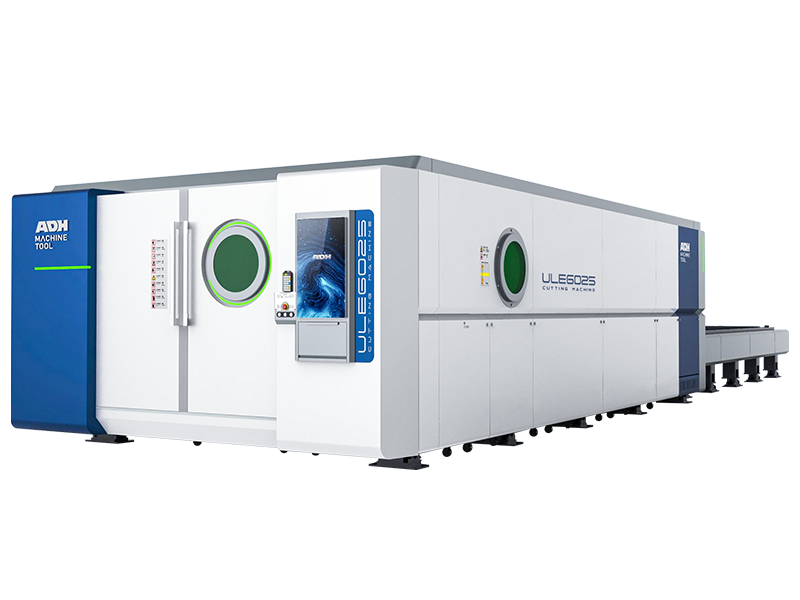
Enhance your operations with high-quality laser cutting machines from ADH Machine Tool. With 20 years of experience in manufacturing laser-cutting machines, we are committed to providing the most advanced and reliable equipment.
VIII. FAQs
1. How do I prevent toxic fumes and ensure proper ventilation?
To prevent toxic fumes and ensure proper ventilation during laser cutting, use a dedicated fume extraction system integrated into the laser cutter, supplemented by external hoods or ducts to capture fumes at the source. Choose materials that do not emit harmful fumes, and consult Material Safety Data Sheets (MSDS) for guidance.
Wear appropriate personal protective equipment like respirators, safety glasses, and gloves. Implement both natural and mechanical ventilation, using HEPA filters to capture fine particles. Regularly maintain ventilation and filtration systems and clean the work area to prevent dust accumulation, as discussed earlier.
If you have any questions or need a personalized consultation on improving your workplace safety, feel free to contact us.
2. What training or certifications are necessary for laser cutter operators?
Laser cutter operators need comprehensive training that includes understanding safety protocols, machine operation, troubleshooting, and material handling. Essential certifications include Laser Safety Certification, which ensures compliance with safety standards, and equipment-specific certifications provided by manufacturers.
Continuous learning through foundational, advanced, and specialty certifications is also recommended. Personal protective equipment, regular maintenance, and proper ventilation are crucial for maintaining safety standards, as discussed earlier.
3. How can I minimize toxic fumes during laser cutting?
To minimize toxic fumes during laser cutting, ensure proper ventilation systems are in place, such as fume extractors that capture and filter fumes at the source. Select materials that release fewer harmful emissions, avoiding those like PVC. Use personal protective equipment, including respirators and laser safety glasses.
Regularly maintain the laser cutter and replace filters in ventilation systems as needed. Additionally, ensure all operators are well-trained in safety protocols and emergency procedures to effectively handle any hazardous situations that may arise.
4. What is the recommended maintenance schedule for a laser cutter?
The recommended maintenance schedule for a laser cutter involves daily tasks like inspecting the machine, calibrating the control system, aligning the laser beam, checking coolant levels, and cleaning the cutting bed. Weekly tasks include cleaning the laser lens and mirrors, inspecting air filters, checking laser output, maintaining machine logs, and lubricating moving parts.
Monthly tasks involve a deep clean, inspecting belts and pulleys, checking the cooling system, verifying electrical connections, and inspecting the exhaust system. Annually, a professional should conduct a comprehensive inspection, replace worn components, inspect and align optical elements, update software, and test safety systems.









 English
  العربية
  বাংলা
বাংলা  Български
  Čeština
  Dansk
Dansk  Nederlands
  Deutsch
  Suomi
Suomi  Français
  Ελληνικά
  עִבְרִית
  हिन्दी
  Magyar
  Bahasa Indonesia
  Italiano
  日本語
日本語  Қазақ тілі
  한국어
한국어  Bahasa Melayu
  Norsk bokmål
  فارسی
فارسی  Polski
  Português
  Português do Brasil
  Română
  Русский
  Српски језик
  Slovenčina
  Español de México
  Español
  Svenska
  Kiswahili
  தமிழ்
தமிழ்  Türkçe
  ไทย
ไทย  Tagalog
  Українська
  Tiếng Việt
  اردو
اردو  简体中文
简体中文  香港中文
香港中文  繁體中文
繁體中文