I. Breaking In: Understanding the Core Logic of the Used Press Brake and Tooling Market
1.1 Core Definition: What Exactly Are We Trading?
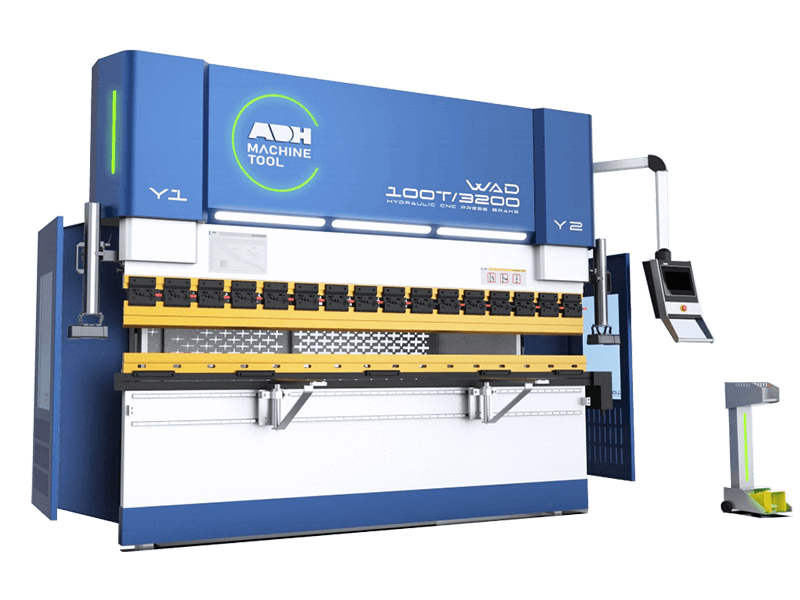
- Press Brake Body: The Platform of Power and Foundation of Potential This is the central asset being traded—the platform that generates force. Its core value lies in tonnage, length, frame rigidity, hydraulic/servo systems, and most critically, the control system (NC or CNC). The machine body determines your upper processing limits—how thick and how long a sheet it can bend. A modern CNC press brake, capable of micrometer-level control over ram travel (Y-axis) and backgauge (X, R, Z, and other axes), forms the ultimate foundation for complex, precise forming.
- Punch and Die: The Tools of Application and the Endpoint of Value These are the upper and lower dies—the functional tools that directly shape the workpiece. Their geometry, material (e.g., high-strength tool steel like 42CrMo), and accuracy define the product’s final form, bend radius, and surface quality. They’re where the machine’s potential is ultimately realized.
- Synergistic Value: The 1+1>2 Principle The combined value of both far exceeds the sum of their parts. A top-tier CNC press brake fitted with worn or low-precision tooling loses its high-accuracy capability—its precision becomes meaningless. Conversely, premium tooling installed on a machine with poor rigidity or low repeatability cannot perform properly and wears out faster. Beyond that, different clamping systems (American, European, Wila/Trumpf standards, etc.) directly affect changeover speed and positioning accuracy—key drivers of production tempo. Thus, evaluating a used press brake must always consider its tooling compatibility as part of an integrated "forming solution."
1.2 The Market Foundations: Why the Used Trade Never Dies
The vitality of the used equipment market is no coincidence. It elegantly balances the interests of buyers and sellers, creating a dynamic and efficient ecosystem of resource redistribution.
- For Buyers: The Art of Value Acquisition and Risk Management
- Unbeatable Cost Advantage: The key driver. Acquiring used machinery typically saves 40–70% compared to a new unit. The capital saved can be reinvested in raw materials, skilled labor, or market expansion—fueling business growth.
- Near-Zero Lead Time: New machines—especially custom builds—often require months for delivery. Used equipment is usually in stock and ready for immediate production, helping enterprises seize fleeting order opportunities in fast-moving markets.
- Proven Reliability: Equipment with years of stable operation in real-world production has already passed the toughest form of testing—practical use—reducing the risk of early breakdowns common with brand-new machines.
- Commitment to Sustainability: Choosing used equipment extends the lifecycle of existing resources, cutting manufacturing-related carbon emissions and material waste. It’s a tangible expression of corporate social responsibility (CSR) and green manufacturing values.

- For Sellers: Asset Activation and Strategic Upgrade
- Monetizing Idle Assets: Converting underutilized or redundant machines into healthy cash flow is an efficient way to improve balance sheets and financial liquidity.
- Maximizing Space Efficiency: Removing outdated equipment frees up valuable production floor space for advanced technologies—literally “making room for the new bird in the cage.”
- Efficient Capital Recovery: Selling old machines recovers part of the original investment, funding new technology acquisitions and accelerating technical upgrades and strategic transformation.

1.3 Global Overview: The Current Landscape and Scale of the Used Equipment Market
The used press brake market is far from a collection of random one-off deals—it’s a vast, highly globalized network operating with surprising precision.
- Market Size and Growth Drivers The global press brake market (including new equipment) has reached several billion dollars in value and continues expanding at a steady CAGR of roughly 5–7% annually. The used-equipment segment—its “shadow market”—benefits from strong demand in automotive, aerospace, construction, and general machinery industries, spurred by manufacturing upgrades and equipment renewal cycles worldwide.
- Characteristics of Key Regional Markets
- Asia-Pacific: The largest and fastest-growing region globally. China is not just a powerhouse for new-machine manufacturing but also the world’s leading hub for used-equipment trade, with massive clusters in Jiangsu and Guangdong. India and Southeast Asia, driven by booming infrastructure and industrialization, show surging demand for high-value, cost-effective used machinery.
- North America: A mature and fluid marketplace characterized by frequent equipment upgrades that generate abundant high-quality used machines from advanced manufacturing sectors. Buyers here particularly favor professionally refurbished units upgraded with modern CNC systems.
- Europe: Exemplified by Germany’s precision engineering, Europe is a rich source of well-maintained, premium used machinery. Second-hand units from top European brands (e.g., Trumpf, Bystronic, LVD) are sought after worldwide and regarded as symbols of exceptional quality.
- From Local Networks to Global Value Chains The worldwide circulation of used press brakes paints a clear value chain diagram:
- Origin (Sellers): Factories in developed industrial regions (North America, Western Europe, Japan) retire machines as they upgrade to newer technology.
- Local Dealers: Acquire equipment domestically, perform basic cleaning and testing, then resell to local buyers.
- Professional Refurbishers: Purchase promising used units for extensive rebuilding, system upgrades, and safety retrofits—giving machines a second life and reselling at premium prices with limited warranties.
- International Traders: The key links in the global chain, leveraging information and pricing gaps between oversupplied developed markets and high-demand emerging ones to achieve efficient worldwide resource allocation.
II. Precision Profiling: Revealing the Seven Core Buyer Archetypes—Who Will Ultimately Buy Your Machine?
Selling used equipment successfully isn’t a waiting game—it’s a strategic exercise in targeted matching grounded in market insight. Every piece of equipment, no matter its state, lies within the radar range of specific buyer groups. Understanding their needs, motivations, and decision logic is the only way to turn your “idle steel” into “sought-after assets.”
2.1 The Mainstay: Small to Midsize Metalworking and Manufacturing Shops
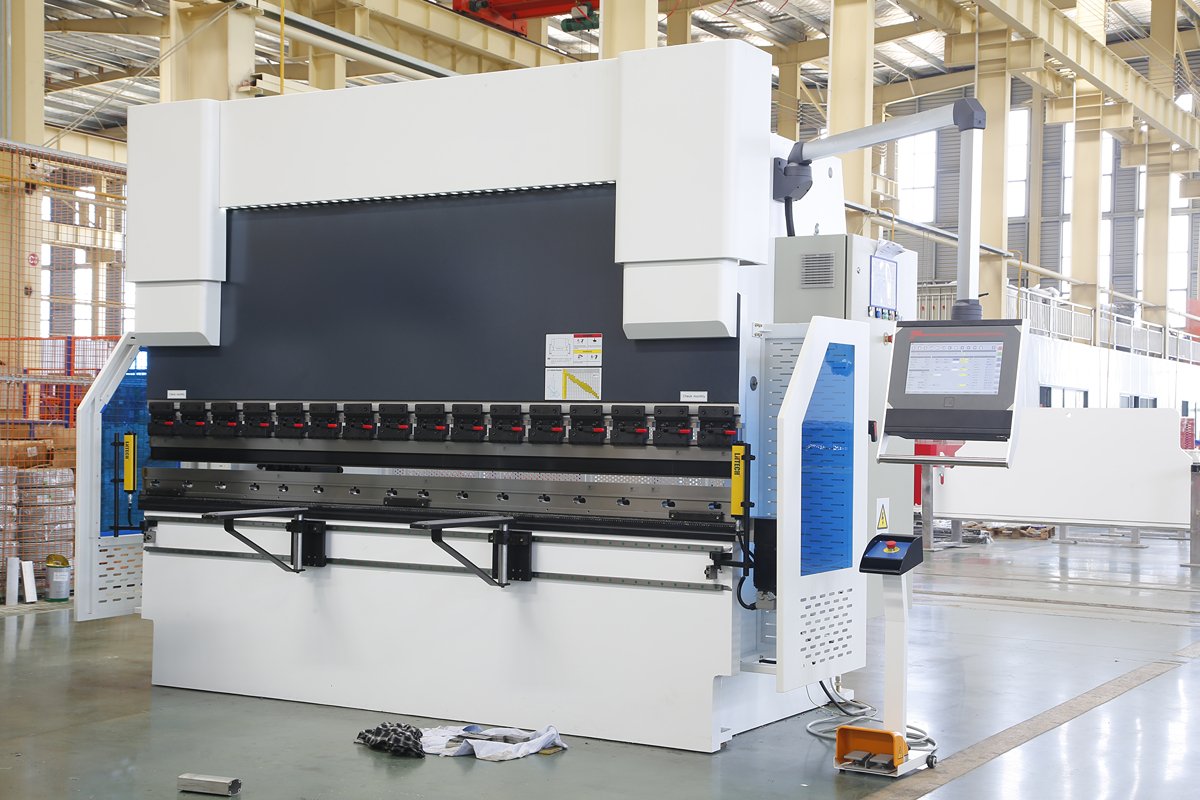
This group forms the largest and most stable foundation of the used press brake market—the backbone of transaction volume and your most critical customer segment.
Buying Motivation: Maximizing Capital Efficiency
For these profitability-conscious businesses with tight cash flows, every investment must deliver an immediate financial return.
Equipment Preference: Dependable, Workhorse-Level Productivity Tools
They’re not looking for showpieces of cutting-edge technology—they want tough, reliable machines that can go straight into service and keep earning steadily.
Mainstream Specifications: Models in the 20–200 ton range, with 3–4 meter beds, remain the crowd favorites. Their versatility allows them to handle over 80% of all sheet-metal bending tasks.
Ease of Operation: Buyers gravitate toward proven brands and models with intuitive interfaces, straightforward programming, and low maintenance costs. Overly complex systems or hard-to-find spare parts are seen not as assets, but as liabilities.
2.2 Hidden Gems: Start-up Manufacturers and Prototype Labs
This group represents the market’s rising stars — their purchasing decisions today are incubating the future demand for new machinery.
- Motivation: Minimizing Risk and Accelerating Innovation. Their central challenge is to validate business models and product designs rapidly under extremely constrained resources.
- Proof of Concept (PoC): Before a product can reach the market, countless design iterations and prototypes must be tested. A low-cost used press brake is their ideal tool for turning sketches into reality and achieving quick, affordable trial-and-error loops.
- Capital Leverage: In the early stages, every dollar counts. Investing scarce start-up funds in used equipment enables them to allocate more resources toward core R&D, marketing, and talent acquisition.
- Growth Trajectory: A Clear Step-Up Path. Their buying behavior outlines a classic growth curve — starting with a basic mechanical or NC press brake worth a few thousand dollars for initial prototyping; as the business stabilizes, they resell older machines to invest in more advanced used CNC models for improved precision and efficiency; eventually, once established as industry players, they become loyal buyers of brand-new high-end equipment.
2.3 Opportunists: Contract Manufacturers and Job Shops
These are highly tactical buyers whose decisions are marked by flexibility and an acute sense of timing.
- Motivation: Strategic Redundancy and Capacity Buffering. For them, used equipment serves as a low-cost form of "insurance" and a net for capturing short-term market opportunities.
- Production Backup: Adding a used machine identical or similar to their main production model is the most effective hedge against downtime caused by breakdowns, helping them avoid costly penalties and missed delivery commitments.
- Capturing Overflow Orders: During seasonal peaks or sudden order surges, used machinery allows temporary, low-cost capacity expansion—helping them secure profits that would otherwise be lost to bottlenecks.
- Profit Optimization: By flexibly scheduling across multiple machine types, they assign high-precision, high-margin orders to new equipment and routine, lower-margin ones to used machines—maximizing overall profitability.
- ROI Model: Pure Marginal Benefit Calculation. Their analysis is straightforward: How much additional revenue will this used machine generate in the next year (orders they couldn’t otherwise accept)? If that number quickly covers purchase and maintenance costs, it’s considered a guaranteed win.
2.4 Professional Players: Equipment Dealers and Refurbishers

They are the market makers and value alchemists of the used-equipment world—the vital link between sellers and end-users.
- Business Model: Arbitrage of Information and Technical Value. Their operations bridge global supply sources (factory clearances, equipment upgrades) and precise end-user demand points—essentially playing a sophisticated game of information asymmetry, technical enhancement, and global logistics.
- “Turning Stone into Gold” Refurbishment: Their primary value creation lies in technical repair and modernization. A classic example: they might take a mechanically solid but outdated press brake and retrofit it with a modern CNC control system, servo backgauge, and safety light curtain—transforming its performance and safety profile, often multiplying its value severalfold.
- Core Strengths: They possess advantages unmatched by individual sellers—global procurement networks, expert technical teams capable of handling complex electromechanical issues, and multi-channel sales networks targeting international, especially emerging, markets.
2.5 The Hidden Giants: Maintenance, Repair, and Operations (MRO) Teams of Large Manufacturers
A professional, discreet yet remarkably powerful buyer segment whose needs often defy expectations.
- Motivation: Sustaining Legacy Production Lines. Their goal isn’t to expand capacity but to keep decades-old, long-cycle production lines running reliably.
- Hunting for “Discontinued” Components: When a key part in an old press brake—possibly from a defunct brand or model—fails and OEM support has ceased, the MRO team’s only solution is to find an identical used machine on the market, often solely to harvest specific obsolete components like hydraulic valves, circuit boards, or specialty motors.
- Cost Control for Non-Core Processes: Within a large manufacturing ecosystem, acquiring well-tested used equipment for auxiliary or lower-precision processes is a smart, lean-production-oriented approach to cost efficiency.
- Procurement Style: Surgical Precision. Their search criteria are ultra-specific—targeting exact brands, models, and production years. As the top clients of refurbishers and parts recyclers, they demand exceptional parts compatibility and immediate usability.
2.6 Specialized Buyers: Technical Colleges and Training Centers
Driven by both educational budgets and teaching objectives, this group demonstrates clearly non-commercial purchasing behavior.
- Motivation: Maximizing Hands-On Practice within Limited Budgets. Their chief goal is to provide as many students as possible with real operating experience, ensuring practical training rather than purely theoretical instruction.
- Procurement Criteria:
- Safety and Durability Above All: As operators are often inexperienced students, machines must be structurally robust, long-lasting, and easily fitted with modern safety guards.
- Preference for Fundamental, Classic Models: Cutting-edge multi-axis or automated machines are unnecessary. Instead, simple, clearly structured hydraulic or NC press brakes better serve teaching needs due to their transparency and ease of maintenance.
2.7 Disassembly Experts: Repair Service Providers and Component Recyclers
Positioned at the terminal end of the industrial supply chain, these buyers act as the “organ donors” coordinators of the machinery world, giving discarded equipment renewed value.
- Motivation: Acquiring Valuable Core Components. For them, the goal of purchase is dismantling. Whether the machine functions is irrelevant—the prize lies in the still-operational, scarce core parts housed within.
- Niche Market: Breathing new life into aging equipment. They dismantle hydraulic pumps, servo motors, CNC control units, grating rulers, and even well-maintained molds, subjecting each to professional testing and categorized storage. These parts are then resold to factories (especially MRO teams) and small repair shops urgently in need of replacement components. In doing so, they offer a final avenue for value recovery to machines once deemed beyond repair—forming an indispensable, circular link within the broader second-hand ecosystem.
III. Buyer’s Viewpoint: The Ultimate 8+5 Evaluation Checklist—How to Spot True Hidden Value
Buying a used press brake is like treasure hunting in a fog-shrouded minefield. The price tag tells only the first chapter of the story—the real value lies within the texture of steel, the pulse of hydraulics, and the logic of the control system. Without a systematic evaluation framework, you might end up welcoming a “wolf in disguise” into your workshop, where repair and downtime costs quickly eclipse any savings at purchase.
This “8+5” key evaluation checklist is the distilled wisdom of countless seasoned engineers and equipment trading experts—a definitive compass to guide your decision-making. It helps you see beyond appearances, systematically assessing everything from the machine itself to the accompanying tooling and hidden costs, enabling you to pinpoint the “sleeping lion” that can unleash tremendous value for your operation.
3.1 Evaluating the Machine Body: 8 Critical Inspection Points
A thorough evaluation of the machine body is the cornerstone of sound investment—the rigor of this step will directly determine success or failure. Treat it as a comprehensive health assessment of your future production partner.
Brand Legacy & Service Life: The Value of Top Brands vs. the Risks of “Orphaned” Equipment
- Why it matters: A brand reflects not only its original build quality but also the long-term sustainability of its support ecosystem.
- Inspection checklist:
- Leading brands (Amada, Trumpf, Bystronic, ADH, etc.): These are the hard currency of the market. Their outstanding structural rigidity, mature hydraulic systems, and extensive service networks make them reliable production tools—even after 10–15 years of operation. The assurance of parts availability and technical support is your strongest guarantee for uninterrupted production. Reviewing the specifications in modern equipment Brochures can also provide a valuable benchmark for evaluating older models.
- Orphan Equipment: Refers to brands or models whose manufacturers have gone out of business or discontinued production long ago. No matter how attractive the price, they must be treated as high-risk investments. If proprietary circuit boards or custom mechanical parts fail, you could find yourself scouring the globe for replacements—often leading to total machine obsolescence.
- Critical Service Age: For CNC press brakes, 20 years marks a decisive threshold. Beyond this, control systems and electronic components typically start aging rapidly, and replacement parts become scarce. In contrast, purely mechanical or torsion bar–synchronized press brakes—if properly maintained—can easily remain structurally sound for over 40 years.
Tonnage & Length: Matching Core Production Needs and Avoiding Overspecification (“Big Horse, Small Cart”)
- Why it matters: The alignment between capacity and production requirements determines both efficiency and cost control.
- Inspection checklist:
- Precise Matching: Determine tonnage based on 80% of your core product range (material, thickness, length). A simple bending force calculation table can help you make a data-driven decision.
- Drawbacks of Oversizing (“Big Horse Pulling a Small Cart”): Over-specification means higher upfront investment and greater space requirements. More critically, a 200-ton machine performing jobs that need only 50 tons will consume far more energy per cycle than a 100-ton machine would—resulting in ongoing, hidden operational waste.
Control System: The CNC “Brain” and Hidden Pitfalls of Upgrading

- Why it matters: The control system is the machine’s intelligence core—defining accuracy, productivity, and user convenience.
- Inspection checklist:
- Value Gap: The difference between NC (numeric control) and CNC (computer numeric control) is profound. NC systems usually manage only basic Y-axis (ram stroke) and X-axis (backgauge) movements. In contrast, mainstream CNC systems (Delem, Cybelec, ESA, etc.) enable multi-axis synchronization, automatic angle calculations, tooling libraries, and graphical programming—boosting productivity severalfold.
- Upgrade Feasibility: Technically, upgrading an old NC system to a CNC system is possible—but economically it’s often a trap. The total cost (including the new system, servo motors, drives, wiring modifications, and labor) can rival or even exceed the price of a fully functional second-hand CNC press brake. Unless you’re working with a top-tier brand in superb condition, this route is generally not recommended.
Hydraulic & Electrical Systems: The Machine’s “Heart” and “Nervous System” Health Check
- Why it matters: These systems are the sources of power and control—also the areas most prone to failure.
- Inspection checklist:
- Hydraulic System (Heart): Run the machine under pressure for at least 15 minutes. Carefully inspect cylinders, hose joints, and valve blocks; wipe them with clean paper to check for oil leaks. Listen for unusual noises such as whining or knocking during load and no-load cycles—signs of internal wear or cavitation. Check the oil level and temperature gauges; hydraulic oil should appear clear and transparent—cloudy or emulsified oil indicates contamination by water or impurities.
- Electrical System (Nerves): Open the electrical cabinet and inspect for cleanliness and dryness. Check if wires show signs of aging, overheating discoloration, or improper rewiring. Worn contactors and relays are ticking time bombs for downtime. Test every button, switch, and emergency stop on the control panel to confirm responsive operation.
Frame & Structure: The Machine’s “Skeleton”—Foundation of All Precision
- Why it matters: Permanent deformation of the frame is an unfixable condition—it’s a death sentence for accuracy.
- Inspection checklist:
- Structural Integrity Check: Use a bright flashlight to inspect the frame—especially the C-shaped throat and bed connection—for hairline cracks or evidence of welded repairs, often left behind by severe overload accidents.
- Deflection Test: Place two precision gauge blocks at both ends of the lower bed and rest a straightedge across them. Observe any gap between the straightedge and the bed’s center portion. A visible gap indicates permanent deflection (commonly called “bowing”). Although modern machines may include crowning systems to offset this, it still signals potential structural stress.
- Guideway Wear: Move the ram and inspect both sides of the guideways for scratches, scuff marks, or uneven wear—these flaws directly affect smooth motion and vertical precision.
Operating History: A More Authentic Record of Wear Than Age Alone
- Why it matters: Two machines of the same production year may differ tenfold in actual wear levels.
- Inspection checklist:
- Operating Hours: Access the CNC system to check total power-on time and hydraulic pump runtime. These figures provide a more accurate indicator of wear than the manufacturing year. However, be cautious—this data can sometimes be reset.
- Maintenance Records: Request a complete service logbook from the seller. A detailed and continuous record—showing dates and brands of replaced hydraulic oil and filters—serves as undeniable proof that the machine has been properly cared for, carrying far more weight than any verbal assurances.
Parts Availability: Your Future Ammunition Supply and Service Network

- Why It Matters: Buying a machine with no available spare parts is like purchasing a pile of scrap metal.
- Inspection Checklist:
- Preliminary Research: Before making your final decision, contact the brand’s local agent or a specialized maintenance provider. Provide them with the model and serial number to confirm whether technical support and key spare parts (such as seals, valves, sensors, or control boards) are still available. This is a critical but often overlooked step in due diligence.
Documentation Integrity: The Repair “Treasure Map” and Operating Manual
- Why It Matters: Complete documentation is invaluable for independent maintenance, troubleshooting, and operator training.
- Inspection Checklist: Ensure that the following are included: Operation manual, electrical schematic, hydraulic schematic, maintenance manual, and factory accuracy inspection report. Among these, the electrical and hydraulic schematics are the technician’s “treasure maps” during repairs—potentially saving days or even weeks of troubleshooting time.
3.2 Die Evaluation: Five Critical Inspection Points
The included dies can either be a valuable bonus or high-cost industrial waste that you’ll need to dispose of.
- Working Surface Wear: Inspect the punch tip and the shoulders of the lower die’s V-groove carefully. A rounded tip or visibly indented shoulders indicate heavy wear, meaning the die can no longer produce sharp, precise bends.
- Physical Damage: Under strong light, examine both the cutting edges and non-working surfaces for micro-cracks, chips, or dents. Such imperfections will imprint directly onto your workpieces, resulting in defective products.
- Dimensional Accuracy: Use a precision caliper to measure the height consistency of each section within a die set. Significant variation can lead to inconsistent bend angles when used together.
- Material and Hardness: Ask the seller about the die material (commonly 42CrMo, etc.). If the die surface shows deep dents or deformation, it likely wasn’t properly heat-treated and is too “soft” to withstand high-stress operations.
- System Compatibility: Confirm the mounting interface type of the die. Common standards include European (Promecam), American, and Wila/Trumpf New Standard. Ensure compatibility with the machine being evaluated or with your existing workshop equipment; otherwise, the dies become worthless assets.
3.3 The Cost Iceberg: Revealing Hidden Expenses in Total Cost of Ownership (TCO)
The purchase price is only the tip of the iceberg; the vast hidden costs beneath the surface ultimately determine whether the investment pays off.
| Hidden Cost Category | Specific Items | Explanation & Insights |
|---|---|---|
| Logistics & Installation | - Transport and hoisting fees - Foundation preparation - Power capacity upgrades | Long-distance transport and professional hoisting for heavy equipment can cost thousands or even tens of thousands. The foundation must often be re-poured to meet load-bearing requirements. Older machines may require special three-phase voltage or transformer upgrades. |
| Commissioning & Training | - Installation and calibration - Operator training - Safety upgrades | Even fully functional machines require professional leveling and precision calibration. Different control systems demand tailored operating and programming training. Older machines often lack modern safety devices such as light curtains or laser protection, which must be installed to meet safety regulations—an essential and potentially costly investment. |
| Tooling & Software | - Additional die purchases - Offline programming software | The included dies rarely cover all production needs, making new die purchases inevitable. Efficient CNC press brake operation typically requires specialized offline programming software, adding another layer of investment. |
| Operation & Maintenance | - Initial full servicing - Spare parts stock - Contingency repair fund | Immediately replacing all hydraulic oil, filters, and inspecting wear parts after purchase is a wise move. Building an initial stock of critical spares—like seals and relays—helps prevent long downtime. For used equipment, especially those without warranty, set aside a repair fund equivalent to 10–20% of the purchase price for unexpected failures. |
IV. Advanced Tactics: Avoid Ten Deadly Traps and Become a Master Negotiator
Deadly Trap #1: Ignoring Total Cost of Ownership (TCO)
- Symptom: Treating the equipment's sticker price as the final cost — a classic beginner mistake. That $50,000 machine may end up costing you $80,000 in reality.
- Avoidance Guide: Enforce a 'TCO Budget Rule.' Before making any purchase commitment, compile a detailed cost checklist and quantify every potential expense: transport and rigging, foundation modification, power upgrades, safety system enhancements (like light curtains), extra tooling, operator training, initial full maintenance, and an emergency repair fund equivalent to 15% of the equipment price. Only by comparing TCO across all options can you pinpoint true value.
Deadly Trap #2: Skipping Professional Inspection
- Symptom: Trying to save a few hundred or thousand dollars by trusting a seller’s verbal assurances or relying on your own quick inspection is essentially a high-stakes gamble.
- Avoidance Guide: Treat an independent third-party inspection as a non‑negotiable investment. Hire an experienced technician with no financial ties to the seller and extensive expertise in your target machine brand. Armed with professional diagnostic tools and seasoned judgment, they can uncover critical faults invisible to the untrained eye—like frame weld cracks hidden under fresh paint, severe wear inside the hydraulic system, or concealed defects on the main control board. This inspection report becomes your strongest negotiating weapon and may literally save you from a five‑figure disaster.
Deadly Trap 3: Mismatched Capacity (Wrong Sizing)
- Symptom: Either “using a sledgehammer to crack a nut”—buying heavy-duty equipment far beyond daily needs, wasting energy and floor space—or “too little horse for the cart,” meaning the machine’s tonnage is insufficient to handle higher‑margin, value‑added orders, causing you to miss growth opportunities.
- Avoidance Guide: Plan based on the 80/20 rule. Analyze the products that have generated 80% of your volume and profit over the past year and the next two years. Define your baseline requirements according to the bending force (material, thickness) and length these core jobs demand. Then build in a 20–30% capacity buffer for future growth—but don’t overspend on equipment just to handle rare, one‑off jobs.
Deadly Trap 4: The Technology Gap
- Symptom: Purchasing a machine that looks advanced on paper but whose CNC control system or software has become a “technological orphan”—no longer supported by the manufacturer, spare parts discontinued, and incompatible with modern factory management systems.
- Avoidance Guide: Focus on the ecosystem, not isolated features. When evaluating CNC systems, the brand (such as Delem, Cybelec, or ESA) and model matter far more than screen size. Investigate market adoption levels, community support activity, and worldwide spare‑parts availability. A robust older machine with an open, upgradeable control system may deliver far greater long‑term value than a newer unit locked into a proprietary, closed platform.
Deadly Trap 5: Ignoring Space and Power Requirements
- Symptom: The machine arrives at your facility to great excitement—only to discover it won’t fit through the workshop door, the floor can’t support its weight, or the plant lacks adequate three‑phase industrial power.
- Avoidance Guide: Conduct a full site due‑diligence check early in negotiations. Request precise footprint drawings from the seller (including maximum motion envelope), total machine weight, and detailed electrical specifications. Before quoting, have your electrician and structural engineer perform an on‑site assessment and factor any necessary modifications—wall removal, foundation reinforcement, transformer upgrades—into your total cost calculation.
Deadly Trap 6: Failing to Verify Seller Credibility
- Symptom: On loosely regulated platforms, buyers are lured by fake listings or unrealistically low prices—only to have the seller vanish after receiving a deposit, or to receive a machine that bears little resemblance to the description.
- Avoidance Guide: Build a multilayer trust‑verification system. Prioritize reputable equipment dealers with established operations and solid market reputations. For private or small‑scale sellers, insist on a live video call where they power up the machine and show key components in real time. Cross‑check their reputation in industry forums or professional networks. Remember: any seller who refuses live verification is flashing a giant red warning sign.
Deadly Trap 7: Rushed Decision‑Making
- Symptom: Succumbing to a seller’s artificially created urgency—“many buyers are asking about it”—and letting that pressure override thorough evaluation, leading to an emotional, impulsive purchase.
- Avoidance Guide: Establish and strictly follow a personal buying discipline. Impose a 24‑ to 48‑hour “cool‑down period” before finalizing any deal. During this time, refrain from contacting the seller; instead, systematically review every item on your evaluation checklist. A truly worthwhile opportunity won’t evaporate just because you take the time to think rationally.
Deadly Trap 8: Inadequate Financing Preparedness
- Symptom: Finding the ideal machine but losing it due to slow funding approvals—or, in haste, accepting a high‑interest bridge loan that eats into your profit.
- Avoidance Guide: Act like a cash buyer. Before your equipment search even begins, coordinate with your bank or equipment‑financing company to secure a clear pre‑approval limit. This preparedness lets you move quickly when the right opportunity arises and positions you as an almost “cash‑ready” buyer—often earning you better pricing leverage.
Deadly Trap 9: Neglecting Operator Training
- Symptom: A powerful CNC press brake arrives at your shop, but because operators aren’t familiar with its control system, it’s used merely as a simple NC unit—leaving 80% of its capability untapped and occasionally leading to costly crash damage.
- Avoidance Guide: Treat training as a core part of your equipment investment. Specify in the purchase contract who will provide the training, its duration, scope, and cost. If the seller cannot deliver it, immediately contact the control system’s official agent or an accredited third‑party trainer, and include that expenditure in your total investment. Remember: without well‑trained operators, even the best machine is nothing more than dead weight.
Deadly Trap 10: Skipping After‑Sales Support Negotiations
- Symptom: Assuming all used machines are sold strictly “as‑is,” thereby relinquishing any chance for post‑sale support or guarantees.
- Avoidance Guide: Remember—everything is negotiable. Even in used‑equipment deals, you can and should push for added value. Request, for instance, a 30‑ to 90‑day limited warranty on key components (hydraulic pump, CNC main board) from professional dealers, or at least 10–20 hours of free remote technical support. In the final negotiation stage, these small asks are often easy concessions for a seller eager to close the deal.
V. Conclusion
So, you’ve made it through the complete guide to the used press brake market! You now know who the key buyers are, how to evaluate a machine like an expert using the 8+5 checklist, and how to sidestep those common negotiation traps.
You have all the tools you need to spot a great deal and make a confident choice. The only thing left to do is put your knowledge to work. Whether you’re buying or selling, the team at ADH Machine Tool is ready to help. Contact us today for some straightforward advice and to explore our inventory of quality used punch and die press brakes. We're here to help you find exactly what your shop needs.






 English
  العربية
  বাংলা
বাংলা  Български
  Čeština
  Dansk
Dansk  Nederlands
  Deutsch
  Suomi
Suomi  Français
  Ελληνικά
  עִבְרִית
  हिन्दी
  Magyar
  Bahasa Indonesia
  Italiano
  日本語
日本語  Қазақ тілі
  한국어
한국어  Bahasa Melayu
  Norsk bokmål
  فارسی
فارسی  Polski
  Português
  Português do Brasil
  Română
  Русский
  Српски језик
  Slovenčina
  Español de México
  Español
  Svenska
  Kiswahili
  தமிழ்
தமிழ்  Türkçe
  ไทย
ไทย  Tagalog
  Українська
  Tiếng Việt
  اردو
اردو  简体中文
简体中文  香港中文
香港中文  繁體中文
繁體中文