In metal fabrication, a common question is: Are press brakes hydraulic? While hydraulic press brakes are widely used and considered the industry standard, not all press brakes rely on hydraulic power.
This article explores the different types of press brakes, including hydraulic, servo-electric, and mechanical models, revealing their unique principles, advantages, and best uses. Understanding these differences is crucial to choosing the right press brake that best fits your production needs and boosts your manufacturing efficiency.
I. Opening Insights: A One-Sentence Answer to Your Core Question
When you type “Are press brakes hydraulic?” into a search engine, you’re not just asking a technical question—you’re touching on an issue that lies at the heart of production efficiency, cost control, and long-term competitiveness. Let’s get to the essence of what this truly means.
1.1 The Clear Answer: Not All Press Brakes Are Hydraulic—But Hydraulic Models Dominate Today
The short answer: No, not all press brakes are hydraulic. Equating “press brake” exclusively with “hydraulic press brake” is one of the most common—and misleading—misconceptions in the industry.
Thanks to their unmatched power output, mature control systems, and remarkable cost-effectiveness, hydraulic systems have reigned supreme in the press brake industry for the past half-century. They form the very foundation of today’s metal forming sector—much like heavy-duty trucks: powerful, reliable, and built to tackle the toughest loads.
Yet technology never stands still. Just as the automotive industry has embraced electric and hybrid powertrains, the press brake family has evolved to include servo-driven models. Thus, a more accurate and forward-looking understanding is this: Hydraulic press brakes remain the industry’s mainstay today, but they are now shaping the future of metal forming alongside more precise and energy-efficient technologies. To explore this evolution in depth, you can read more on are press brakes hydraulic.
1.2 The Press Brake Landscape: Understanding the Three Mainstream and Emerging Technologies
To give you immediate clarity, think of the current press brake market as a “family” of technologies—each with its own personality, strengths, and specialization:
Hydraulic Press Brake – The Powerful, Flexible Industry Cornerstone
- Principle: It operates by controlling hydraulic oil in two synchronized cylinders to drive the ram (the moving beam) that provides the forming force.
- Key Traits: High power, wide tonnage range, mature technology, and excellent price-performance ratio. It’s the workhorse for processing medium to thick plates and large components.
Servo-Electric Press Brake – The Precise and Efficient Future Trend
- Principle: High-precision servo motors drive the ram directly through a ball screw or belt system, fully eliminating the hydraulic circuit.
- Key Traits: Fast, accurate, and energy-saving. With energy consumption reduced by more than 50%, lightning-fast processing, micron-level precision, and no hydraulic oil maintenance, it’s the undisputed “efficiency champion” for precision sheet-metal production.
Mechanical Press Brake – The Simple, High-Speed Workhorse
- Principle: A flywheel stores energy, which is released through a clutch to drive the ram along a fixed stroke.
- Key Traits: Extremely fast and structurally straightforward. However, because its stroke and tonnage are not adjustable and safety is limited, it has largely been replaced in modern precision manufacturing—though it still thrives in high-volume, simple stamping operations.
There’s also a hybrid model that combines the strengths of both hydraulic and electric systems—a testament to the pursuit of ultimate efficiency and power. Understanding this technology family tree is the essential first step toward making the right decision. For more insights and detailed technical references, download our brochures from ADH Machine Tool.
1.3 Why Choosing the Right Type Matters: More Than a Machine—It’s Your Productivity Engine
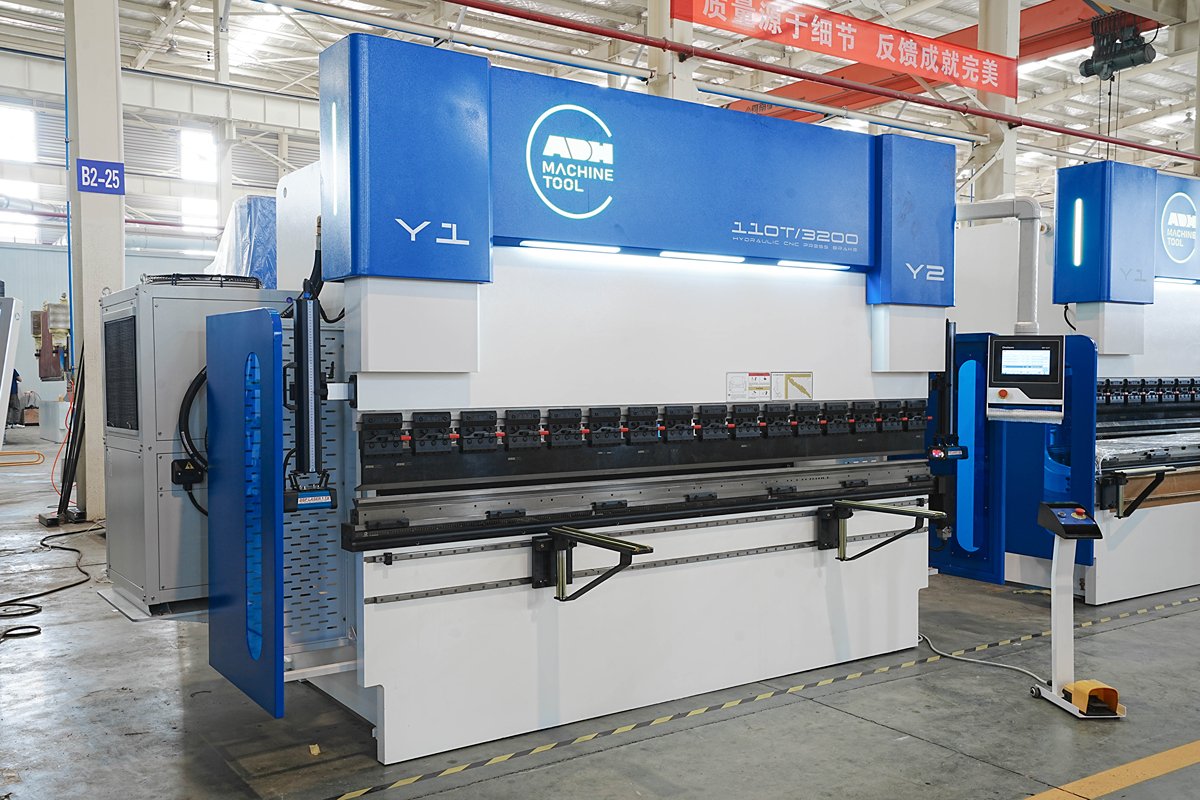
Selecting a press brake isn’t just another equipment purchase—it’s a strategic investment that determines whether your workshop acquires a “money-making machine” or a “money-burning one.” The wrong choice can saddle you with high power bills, frequent maintenance, rising scrap rates, and missed market opportunities. Learn more about are press brakes hydraulic to ensure you’re making a sound investment decision.
- Scenario 1: The “Profit Engine” for Precision Manufacturing
Imagine producing high-precision enclosures for the electronics or medical sectors—low-volume, high-variety orders with demanding accuracy and turnaround times. In this setting, a servo-electric press brake is your profit catalyst. Its lightning-fast speed and unmatched repeatability ensure flawless parts on the first try, while its low energy consumption continuously trims your operating costs. - Scenario 2: The “Anchor” of Heavy Engineering
Now picture your factory bending thick steel plates for construction equipment or heavy machinery. Here, brute strength and reliability are paramount. A robust CNC hydraulic press brake becomes your indispensable partner—delivering thousands of kilonewtons of controlled force to shape heavy metal with absolute precision, ready for any future challenge. - The Essence of the Decision
Clearly, this is no longer a simple “hydraulic or not” question. It’s about perfectly aligning your company’s production DNA—product types, materials, precision levels, and batch sizes—with the right technological DNA. This first decision will have a lasting impact on your productivity, cost structure, and overall competitiveness for years to come. For personalized consultation, feel free to contact us.
II. Head-to-Head Comparison: The Core Principles, Strengths, and Ideal Applications of the Three Main Press Brake Types
In the world of press brakes, the power source defines the character, capability, and destiny of each machine. Hydraulic, servo-electric, and mechanical systems represent three distinct eras of industrial evolution—from the raw power of the mechanical age to the intelligent precision of the digital era. To make a truly informed choice, we must dive into their inner workings and understand the logic driving each technology.
2.1 Hydraulic Press Brake – The Powerful, Flexible Industry Cornerstone
If the metal forming industry were a vast fleet, the hydraulic press brake would be its flagship carrier—massive in tonnage, versatile in function, and the pillar sustaining the fleet’s combat power.
Principle: The Art of Force
- The hydraulic press brake draws its strength from a brilliant application of Pascal’s Law. At its heart lies a closed hydraulic system where the motor-driven pump pressurizes the oil—pulsing like a heart—to feed the large cylinders on either side of the frame. CNC-controlled proportional servo valves regulate the flow and pressure with the precision of a faucet. This controlled hydraulic might drives the ram downward in a powerful yet steady motion. Modern CNC hydraulic brakes utilize displacement sensors such as linear scales for closed-loop feedback, ensuring micron-level positioning accuracy—a true fusion of raw power and intelligent control.
Core Advantages:
- Unmatched Tonnage Capacity: The hydraulic system’s greatest strength lies in its ability to deliver immense pressure—ranging from a few dozen to several thousand tons—making it the only viable solution for heavy fabrication such as shipbuilding parts and thick structural plates.
- Outstanding Flexibility and Control: Stroke length, speed, pressure, and dwell time can all be fully programmed. The machine can stop, retract, or decelerate at any point in the cycle, enabling complex part geometries while ensuring operator safety.
- Built-in Overload Protection: Hydraulic systems come with an integrated relief valve—a flawless safeguard. When the load exceeds the preset limit, the system automatically releases pressure, effectively protecting costly machines and molds from catastrophic damage caused by direct mechanical impact.
- Proven Cost Efficiency: With decades of market validation, hydraulic technology boasts a mature supply chain and well-developed ecosystem. As a result, its initial purchase cost at equivalent tonnage levels is significantly lower than that of newer servo-electric systems.
Unavoidable Drawbacks:
- The Original Sin of Energy Efficiency: The heart of traditional hydraulic systems—the oil pump—must keep running even during machine standby to maintain system pressure. This leads to considerable energy waste, much like a car idling at high RPMs while waiting at a red light.
- Speed and Precision Limitations: Constrained by the physical properties of hydraulic oil—its flow and viscosity—the system’s cycle time is typically slower than servo-electric machines. Variations in oil temperature can also slightly affect positioning accuracy, often requiring preheating or cooling systems to ensure stability.
- Complex Maintenance Requirements: A hydraulic system resembles a human circulatory system, with numerous pipes, valves, and seals. Regular oil and filter replacements, along with potential leakage risks, lead to higher maintenance costs and increased environmental management demands.
Ideal Application Scenarios:
Synonymous with versatility and heavy-duty performance, hydraulic press brakes are the go-to choice for sheet metal shops that handle a wide range of materials—from thin to thick plates—and for manufacturers in heavy machinery, structural steel, and energy equipment industries. A high-quality CNC hydraulic press brake offers the best balance of reliability and value.

2.2 Servo-Electric Press Brake – The Future of Precision and Efficiency
If hydraulic press brakes embody raw power, then servo-electric models represent the pinnacle of speed and precision. They eliminate the “greasy” complexities of hydraulics, operating instead like a top-tier assassin—swift, precise, and silent with every movement.
Operating Principle:
- The Digital-Driven Revolution The servo-electric press brake is powered by a high-torque AC servo motor. Through precision ball screws or advanced belt transmissions, the motor’s rotational motion is converted directly and efficiently into the ram’s linear movement. A CNC controller orchestrates the process in real time, while high-speed encoders feedback positional data thousands of times per second—creating a rapid-response, fully closed-loop control system. It’s a pure transformation from digital command to physical motion, completely eliminating delays and energy loss in between.
Core Advantages:
- Unmatched Accuracy and Repeatability: Positioning precision can easily reach ±0.001mm (1 micron)—over ten times better than top-grade hydraulic models. For industries such as electronics, medical instruments, and telecommunications, this translates into near-perfect yield rates.
- Exceptional Production Efficiency: Thanks to the instant response and superior acceleration/deceleration of servo motors, cycle times are 30–50% faster than hydraulic systems. When processing large batches of thin-sheet parts, the servo-electric press brake becomes a true performance powerhouse.
- Revolutionary Energy Efficiency: “Power-on-demand” is its core philosophy. The motor consumes energy only during ram movement, with near-zero power use at idle. Overall energy savings reach 50–80%, meaning the electricity saved over time could easily pay for another new machine.
- Quiet, Clean, and Maintenance-Free: It completely eliminates hydraulic pump noise and leaks, creating a serene and spotless workshop environment. With no hydraulic oil or filters to replace, maintenance workloads and operating costs are dramatically reduced.
Unavoidable Drawbacks:
- Limited Tonnage Capacity: Due to servo motor and transmission cost and technical constraints, most pure electric models currently operate below 300 tons, making them unsuitable for heavy plate forming applications.
- High Initial Investment: Premium servo motors, drives, and precision transmission components contribute to a significantly higher upfront cost compared to hydraulic units of equivalent power, requiring more substantial initial capital.
Ideal Application Scenarios:
- Tailor-made for high precision, high speed, and lightweight production, servo-electric press brakes excel in electronics, telecommunications, medical devices, aerospace, and precision chassis manufacturing. For more guidance, visit are press brakes hydraulic. For thin sheets (typically below 6mm) with high added value, they are an unparalleled tool for boosting efficiency and competitive advantage.
2.3 Mechanical Press Brake – The Simple Workhorse of Mass Production

Mechanical press brakes are the “living fossils” of the bending machine family. Originating from the punch press concept, they embody the Industrial Revolution’s pursuit of pure speed and brute force—simple yet uncompromising.
Operating Principle: Instant Release of Stored Energy
- A motor drives a massive flywheel at high speed, converting electrical energy into stored kinetic energy. When the operator engages the clutch, the flywheel releases that energy through a crank-link mechanism to power the ram, completing an irreversible stroke in a split second—like a heavy hammer fixing the shape in one decisive blow.
Two Sides of the Same Coin:
- Its strengths—extreme punching speed and structural simplicity—are precisely what led to its decline in modern manufacturing. Once the ram starts its stroke, it cannot be stopped, slowed, or pressure-adjusted mid-cycle, posing serious safety risks. Accuracy depends solely on mechanical rigidity and wear levels, resulting in poor repeatability. Massive noise and vibration further conflict with modern shop-floor standards.
Application Scenarios:
- In the realm of precision manufacturing, mechanical press brakes have virtually disappeared. They survive only in outdated production lines making large volumes of simple, low-precision parts such as washers or brackets. For any enterprise seeking modern, flexible manufacturing, these machines should no longer be part of the consideration set.
2.4 Ultimate Comparison Matrix: A Clear View of 12 Key Performance Metrics
If the earlier descriptions were an in-depth diagnosis, the matrix below serves as your final report. It quantifies the performance of all three technologies across twelve critical dimensions—giving you instant clarity and helping you make the most strategic, needs-based decision possible.
| Key Indicator | Electric Servo Press Brake | Hydraulic Press Brake | Mechanical Press Brake |
|---|---|---|---|
| Accuracy & Repeatability | Very High (★★★★★) up to ±0.001mm | Good (★★★☆☆) around ±0.01mm | Poor (★☆☆☆☆) accuracy not controllable |
| Cycle Speed | Extremely Fast (★★★★★), 30–50% faster than hydraulic | Moderate (★★★☆☆), limited by hydraulic oil flow | Fast (★★★★☆) but only within fixed stroke |
| Energy Efficiency | Excellent (★★★★★), saves 50–80%, “power on demand” | Low (★★☆☆☆), pump runs constantly, high energy use | Moderate (★★★☆☆), consumes power only during pressing |
| Maximum Tonnage | Limited (★★☆☆☆), typically <300 tons | Very High (★★★★★), reaches several thousand tons | High (★★★★☆) but pressure is uncontrollable |
| Control & Flexibility | Exceptional (★★★★★), full control over speed, position, and pressure | High (★★★★☆), fully controllable but slower response | None (☆☆☆☆☆), stroke cannot be stopped once initiated |
| Initial Purchase Cost | High (★★☆☆☆) | Moderate (★★★★☆) | Low (★★★★★) |
| Long-Term Operating Cost (TCO) | Very Low (★★★★★), minimal electricity and maintenance expenses | Medium (★★★☆☆), higher power and hydraulic upkeep costs | Low (★★★★☆), but very limited applicability |
| Maintenance Complexity | Extremely Low (★★★★★), nearly maintenance-free | High (★★☆☆☆), requires regular oil changes, filter replacement, leak checks | Moderate (★★★☆☆), needs clutch and brake servicing |
| Noise Level | Extremely Low (★★★★★), very quiet | Moderate (★★★☆☆), modern units <63dB | Very High (★☆☆☆☆), heavy impact noise |
| Environmental Impact | Excellent (★★★★★), clean and energy-efficient | Average (★★☆☆☆), prone to oil leaks, high energy use | Poor (★★☆☆☆), significant noise pollution |
| Safety | Exceptional (★★★★★), fully electric control with multiple safeguards | High (★★★★☆), modern safety systems equipped | Very Low (★☆☆☆☆), stroke cannot be interrupted |
| Core Applications | High-precision, high-efficiency thin sheet processing | Versatile, ideal for medium to thick plates | Simple, high-volume stamping production |
III. Decision Framework: A Five-Step Method to Choose a Money-Maker, Not a Money-Burner
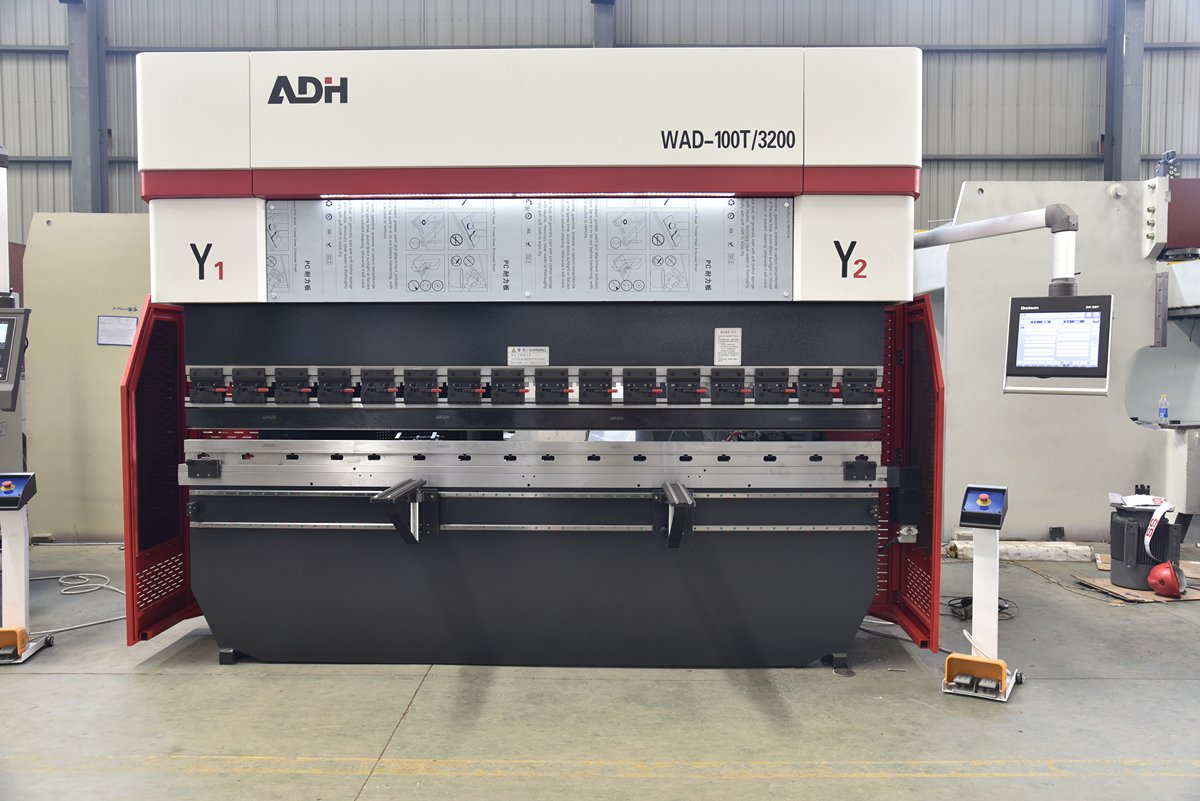
In the previous chapters, we dissected the technological DNA of different press brakes. Now we move to the most critical stage of the decision process: transforming that knowledge into a precise, rational purchasing choice. This isn’t just another equipment buy—it’s a strategic investment that shapes your company’s future. By following these five steps, you’ll systematically identify the machine that continuously generates profit rather than one that drains it.
3.1 Step One: Diagnose Your Production DNA
Before browsing any machine catalog, become the attending physician of your own factory—accurately diagnosing your unique “production DNA.” It’s the foundation of every sound decision. Any selection detached from your actual operational needs is nothing more than a castle in the air. Ask yourself these four fundamental questions with uncompromising honesty:
- Material & Thickness: What materials make up about 80% of your workload? Common mild steel, challenging stainless steel, or lightweight aluminum? What is their typical thickness range? This determines your required base tonnage. Key rule of thumb: processing high-strength steel demands 1.5–2 times the tonnage needed for the same thickness of mild steel. Miscalculations can lead to machine overload or wasted power.
- Part Size & Complexity: What’s the maximum length of your typical workpiece? That defines your bed length. How complex are your bends—simple 90-degree boxes or intricate parts with multiple angles, arcs, and hemming operations? The latter requires advanced CNC controls, multi-axis backgauges (such as 6-axis), and even angle measurement systems to achieve one-pass precision.
- Volume & Cadence: Is your production model “small batches, high mix” for agile manufacturing, or “large batches, low mix” for mass production? The former demands lightning-fast die changeovers and programming efficiency—making electric servo presses or hydraulic machines with automatic tool changers (ATC) ideal choices. The latter prioritizes rapid cycle speeds and uninterrupted reliability.
- Precision Requirement: How tight are your customers’ tolerance demands? If your products serve aerospace, medical, or high-end electronics industries, ±0.3° angular tolerance and ±0.01mm repeat accuracy are essential baselines—territory dominated by all-electric servo press brakes. For structural applications like building components, a standard CNC hydraulic press will more than suffice.
Completing this “diagnostic report” gives you a sharply defined blueprint of your ideal machine.
3.2 Step Two: Calculate Total Cost of Ownership (TCO) Instead of Chasing the Price Tag
The shift from amateur buyer to professional investor begins when you move your focus from the “price tag” to the “value lifecycle.” Comparing only the initial purchase price is the most dangerous trap in equipment selection. The real cost encompasses the entire lifecycle — the Total Cost of Ownership (TCO).
TCO = Initial Investment + (Operating Costs + Maintenance Costs) × Service Life − Potential Residual Value
Initial Investment: This covers far more than the bare machine cost. It includes transportation, installation, foundation work, initial tooling, necessary software licenses, and operator training—every upfront expense.
Operating Costs: The hidden iceberg beneath the surface.
- Electricity: The biggest variable. An electric servo press brake consumes 50–80% less energy than a hydraulic machine of equivalent tonnage. Over years of 8-hour daily operation, the energy savings alone can offset the higher initial purchase price.
- Labor Costs: A machine that’s easy to program and highly automated dramatically reduces reliance on seasoned operators, minimizes setup time, and—when paired with robotics—enables 24-hour “lights-out” production.
Maintenance Costs:
- Hydraulic System: The recurring costs of replacing hydraulic oil, filters, and seals—as well as dealing with potential oil leakage and its environmental or material impact—represent a significant ongoing expense.
- Electric Servo System: Requires virtually no consumables for routine maintenance, with workload and cost approaching zero.
- Downtime Losses: This is the most expensive cost of all. A low-priced but unreliable machine can cause production delays and order interruptions far exceeding any initial savings.
Etch this phrase into your memory: The cheapest machine often ends up being the most costly to run. When making your decision, insist that the supplier provide detailed energy consumption data, a standard maintenance checklist, and spare part pricing to conduct a thorough TCO (Total Cost of Ownership) analysis.

3.3 Step Three: Evaluate Your Operational Ecosystem
A top-tier Formula 1 car fitted with tractor tires will never achieve championship speed. Likewise, an advanced press brake cannot unleash its full potential in isolation—it must integrate seamlessly into your existing operational ecosystem.
- Personnel Skills: Does your operations and maintenance team have the capability to handle advanced CNC systems and modern software? If not, factor in the cost of quality training. Choosing machines with intuitive interfaces and user-friendly controls can drastically shorten the learning curve.
- Workshop Layout & Logistics: Does your facility meet the space, power, and air supply requirements for the new equipment? Are the workflows for loading, unloading, and finished goods storage efficient? If you plan to introduce automation units (such as robots) in the future, you must start reserving space for them now.
- Software & Dataflow: Can your design department convert 3D CAD drawings directly into bending programs? Selecting a press brake that integrates with your ERP or MES system enables real-time synchronization of production planning, equipment status, and quality data—your entry ticket to smart manufacturing.
- Tooling Compatibility: Can your existing tooling library (such as Amada-style or Wila/Trumpf-style dies) be used directly on the new machine? If not, the cost of replacing the entire tooling set can be a massive additional investment.
A machine that doesn’t fit into your existing ecosystem will only become an isolated island and a bottleneck in your workflow.
3.4 Step Four: Plan Ahead—Reserve Space for Growth and Automation
Your business is evolving. What seems optimal today might become a constraint in three years. Therefore, your equipment selection must be forward-looking, with built-in flexibility for future expansion and transformation.
- Scalability: Favor press brakes with modular designs. Some high-end brands let you start with a standard single machine today and later add features like an automatic tool changer (ATC), laser angle measurement system, or even connect two machines in a tandem configuration for processing extra-long parts. This kind of “plug-and-play” upgrade capability gives you the confidence to adapt to future market shifts.
- Automation-Ready: Even if you have no immediate automation plans, it is essential to choose an “automation-ready” machine—one that already includes standard electrical and software interfaces. When you eventually introduce robotic loading and unloading, integration will be fast and cost-effective. Conversely, retrofitting a machine without these interfaces later can be astronomically expensive.
- Embrace Technological Trends: Keep an eye on emerging innovations such as AI-assisted programming and Industrial IoT (for remote monitoring and predictive maintenance). Opting for brands that actively invest in these areas ensures your equipment won’t be easily outdated, maximizing its lifecycle value.
3.5 Step Five: Avoid the Three Common Selection Pitfalls
As you approach the final stage of decision-making, stay sharp and watch out for the following mental traps—each capable of turning your investment into a costly mistake:
- Pitfall 1: “Tonnage Worship”—The Bigger-is-Better Fallacy: The misconception that higher tonnage is always beneficial leads many to buy heavy-duty machines far beyond their actual needs. Result: Wasted upfront investment, slower cycle times, and higher standby energy consumption. Using a 200-ton press brake to bend everyday 1mm sheets is like “using a cannon to shoot mosquitoes”—inefficient and costly. Solution: Base your tonnage selection on the requirements of 80% of your routine tasks and allow a 20–30% buffer for occasional heavy jobs. That’s the most economical and efficient configuration.
- Pitfall 2: “Brand Obsession” or “Price-Only Focus” Fallacy: Either blindly trusting a big-name brand or chasing the lowest quote, while ignoring subtle but critical differences among brands for specific applications. Result: You may end up with an overpriced machine unsuited to your core operations or a cheap one that fails to meet performance and reliability standards. Solution: Bring your typical workpieces to various brand showrooms or customer sites for live testing. Seeing real results—supported by data and product quality—is the most powerful way to cut through all marketing rhetoric.
- Pitfall 3: Ignoring After-Sales Service and Spare Part Support: Focusing solely on equipment specs while overlooking service terms and parts availability. Result: Equipment’s true cost lies more in maintenance than purchase. A brand that cannot provide timely technical assistance or quick spare parts delivery can leave you with weeks of downtime due to a $50 sensor failure—an immeasurable loss. Solution: Before signing, carefully review the supplier’s service coverage, response times, and local inventory levels. More importantly, talk directly with existing customers to learn about their real service experiences.

IV. Conclusion
In summary, understanding that press brakes are not exclusively hydraulic is vital for making an informed choice. This article has outlined the three main types—hydraulic, servo-electric, and mechanical—highlighting each one's unique working principles, strengths, and ideal applications.
You can find detailed specifications for each type in our Brochures. By following a structured five-step decision framework, manufacturers are empowered to select the press brake that aligns perfectly with their production DNA, cost considerations, operational ecosystem, future automation needs, and common pitfalls to avoid.
For tailored advice and to ensure you invest in the most effective press brake technology for your specific manufacturing needs, contact us today. Our experts are ready to guide you through every step of the selection process, helping you transform your equipment into a true production powerhouse.
V. Frequently Asked Questions (FAQ)
Q1: I’m running a small, newly launched factory with a very limited budget. How should I choose?
A: A very practical question. For startups where budget matters above all, a well-maintained used CNC hydraulic press brake from a reputable brand is often a smarter choice than a brand-new but unproven budget machine of questionable quality. The logic is to minimize risk and secure reliable output. A second-hand, properly serviced machine from a trusted maker usually offers better structural rigidity and system stability. Follow these key guidelines:
- Hire an expert for inspection: Invest a small amount to have an independent engineer thoroughly check mechanical accuracy, hydraulic performance (looking for leaks and stable pressure), and CNC functionality.
- Prioritize mainstream controls: Opt for widely used CNC systems such as DELEM or CYBELEC. This ensures easier access to technical support and spare parts later.
- Verify service and spare parts availability: Confirm that either the manufacturer or third-party suppliers still support your chosen model with essential components.
- Never compromise on safety: Ensure that safety systems such as light curtains and emergency stops are intact and functioning—this is an absolute non-negotiable.
Q2: Servo-electric press brakes are the future trend—should I wait until the technology is more mature and cheaper?
A: This is a classic “waiting for Godot” dilemma. Technology always evolves, but business opportunities don’t wait. The right question is: “Is my operation already in the optimal strike zone for servo-electric technology?” If your core work involves precision sheet metal, every day you delay costs you through higher electricity use, lower efficiency, and poorer quality. Meanwhile, competitors adopting servo technology are gaining market ground. In that case, servo-electric isn’t a “future option”—it’s a current necessity. The efficiency and operational savings quickly outweigh any potential price drop you’re hoping for. If you mainly work with thick plates, though, hydraulics remain dominant for the foreseeable future—no need to worry.
Q3: You mentioned hybrid servo-hydraulic press brakes—are they the best of both worlds?

A: Hybrid press brakes use servo motors to drive hydraulic pumps, providing oil “on demand.” They indeed blend the high tonnage of hydraulics with the energy efficiency of servo systems—but they’re not a universal silver bullet.
- Advantages: Compared with traditional hydraulics, they deliver substantial energy savings (often 30–60%), faster response, and lower noise.
- Disadvantages: Their design is more complex than pure servo-electric models, still involves hydraulic maintenance, and generally costs more than standard hydraulic systems.
- Positioning: Think of them as an “upgraded hydraulic version.” Ideal for operations handling medium-thick plates that require high tonnage and care deeply about energy efficiency and running costs. If your parts are predominantly thin sheet, a full servo-electric system remains the simpler, more high-performance choice.
Q4: When deciding, what matters more—the brand or the technology type (hydraulic vs. servo-electric)?
A: It’s like asking whether to choose the car model or the manufacturer first—both matter, but at different decision levels.
- Technology type is a strategic choice: It defines the machine’s capability limits and economic model, and must align with your Production DNA. It’s the first step—deciding between an “off-road vehicle” (hydraulic) or a “sports car” (servo-electric). Get this wrong, and everything else falls apart.
- Brand choice is a tactical execution: Once you’ve chosen the right technology, the brand determines reliability, precision stability, software usability—and most importantly, service speed and parts support. A top brand means fewer breakdowns, steadier accuracy, and lower downtime risk.











 English
  العربية
  বাংলা
বাংলা  Български
  Čeština
  Dansk
Dansk  Nederlands
  Deutsch
  Suomi
Suomi  Français
  Ελληνικά
  עִבְרִית
  हिन्दी
  Magyar
  Bahasa Indonesia
  Italiano
  日本語
日本語  Қазақ тілі
  한국어
한국어  Bahasa Melayu
  Norsk bokmål
  فارسی
فارسی  Polski
  Português
  Português do Brasil
  Română
  Русский
  Српски језик
  Slovenčina
  Español de México
  Español
  Svenska
  Kiswahili
  தமிழ்
தமிழ்  Türkçe
  ไทย
ไทย  Tagalog
  Українська
  Tiếng Việt
  اردو
اردو  简体中文
简体中文  香港中文
香港中文  繁體中文
繁體中文