
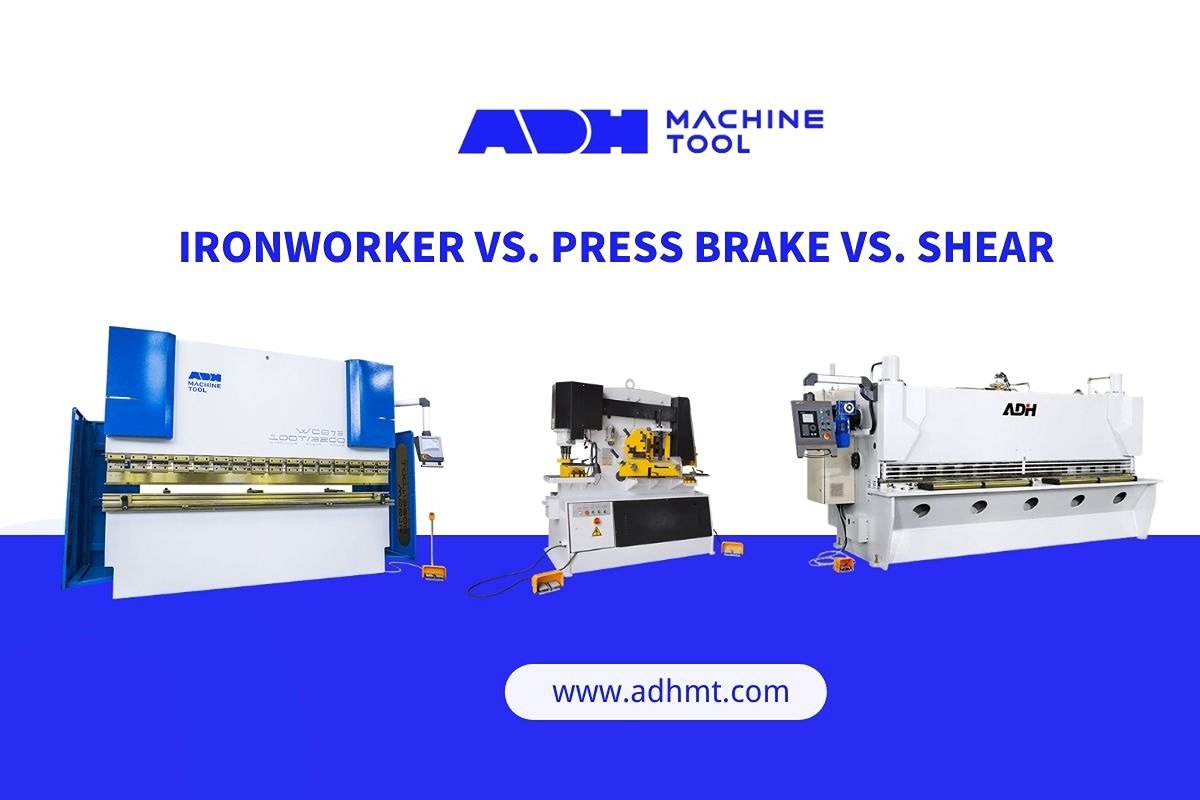
In metal fabrication, profitability hinges on efficiency, precision, and versatility. The foundational debate of Ironworker vs. Press Brake vs. Shearing Machine is critical, as each represents a distinct fabrication philosophy. For a broader understanding of how these machines interact in modern production lines, explore our Press Brake and Shearing Machine Overview.
This guide deconstructs each machine's function and mechanics, provides a rigorous framework for investment, and concludes with essential safety and maintenance protocols. Our goal is to equip you with the knowledge to strategically deploy this equipment for maximum performance and return on investment.
I. Clearing the Fog: Grasp the Core Concepts and Battlefield Positions in Three Minutes
In the vast battlefield of metal fabrication, the ironworker, press brake, and shear are three distinct yet indispensable strategic forces. Misunderstanding their functions can lead to chaotic workflows, uncontrolled costs, and compromised quality. Conversely, mastering their unique capabilities, limitations, and synergy is the cornerstone for every workshop manager and engineer seeking an efficient, lean production system. This is not merely an equipment guide—it is strategic insight into the intelligent art of manufacturing.
1.1 Ironworker: The “Swiss Army Knife” of Metalworking
The hydraulic ironworker is the ultimate multitasker—rightly called the “Swiss Army Knife” of metal fabrication. Its design philosophy centers on functional integration and maximum efficiency. Powered by a robust hydraulic system, it operates multiple workstations within one machine, compressing what once required several machines and multiple handling steps into a highly compact, streamlined process.
- Core Functional Arsenal: A standard ironworker typically integrates five key capabilities:
- Punching: Like a precise sniper, it swiftly and cleanly creates holes in steel plates or profiles for fasteners and connections—a defining, high-frequency operation distinguished by speed and accuracy.
- Shearing: The versatile foot soldier—able to cut flat bars, square bars, and round rods neatly and efficiently.
- Angle Shearing: A specialist for structural work, capable of cutting angle iron precisely at 90° or 45° without secondary processing.
- Notching: Executes accurate corner cuts to prepare materials for subsequent bending or assembly tasks.
- Bending: Using accessory tools, it performs basic bending with moderate precision—ideal for quick, auxiliary operations.
- Battlefield Position & Strategic Limitations: The ironworker’s greatest strength lies in workflow integration. For steel structure shops, maintenance facilities, or small-batch multiprocess production, it delivers exceptional output with minimal space usage and reduced material handling. Yet, its versatility defines its limits: it offers broad functionality rather than peak specialization. Its bending precision cannot match a dedicated press brake, and its cutting speed and range fall short of a professional shear. It is an outstanding “generalist commander,” not the supreme expert of any single discipline.
1.2 Press Brake: The “Metal Sculptor” of Precision Forming
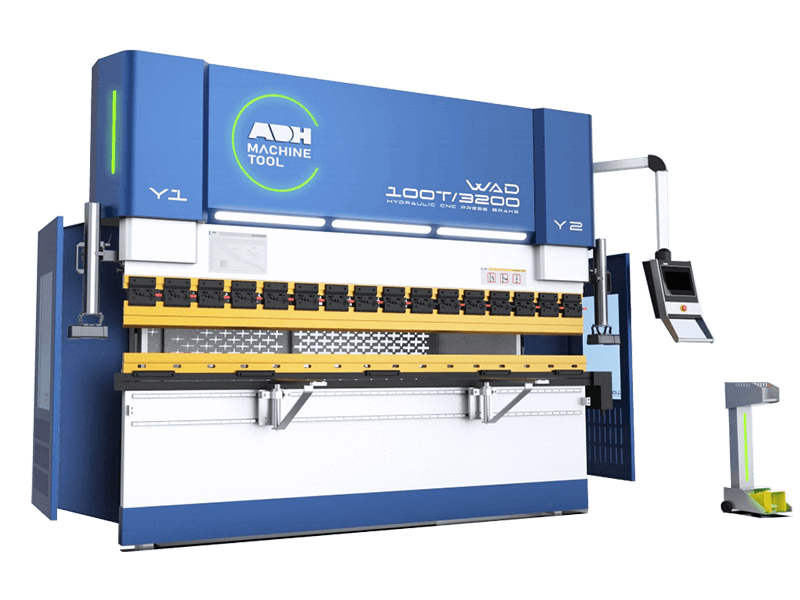
If the ironworker is the battlefield multitasker, the press brake is the artisan—the “metal sculptor” that transforms 2D sheets into precise 3D forms. Its sole mission is to shape metal through controlled plastic deformation with unmatched precision.
- Core Craftsmanship: Using a perfectly aligned upper die (punch) and lower die (die block), the press brake applies immense, precisely regulated pressure to bend metal along predetermined lines. Its brilliance lies in one word—control:
- Micron-Level Precision: Modern CNC press brakes combine mechanical, hydraulic, and computational technology to control the ram’s downward stroke with micrometer accuracy, achieving angular precision within ±0.1° or better.
- Springback and Deflection Compensation: Because metal elasticity causes “springback” after bending, advanced press brakes employ real-time angular measurement and hydraulic or mechanical crowning systems to offset frame deflection, ensuring uniform angles from end to end.
- Battlefield Position: From aerospace components to server chassis to seamless appliance exteriors—any domain demanding precise geometry and aesthetic perfection is the press brake’s turf. It is not about speed; it is about defining the upper limit of product quality.
1.3 Shear: The “Pathfinder” of High-Speed Linear Cutting
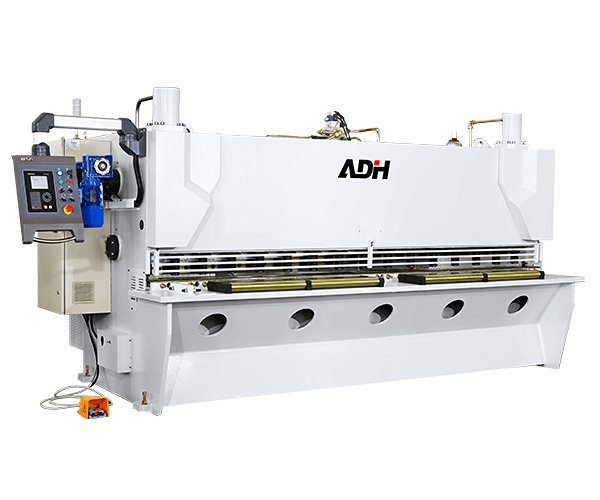
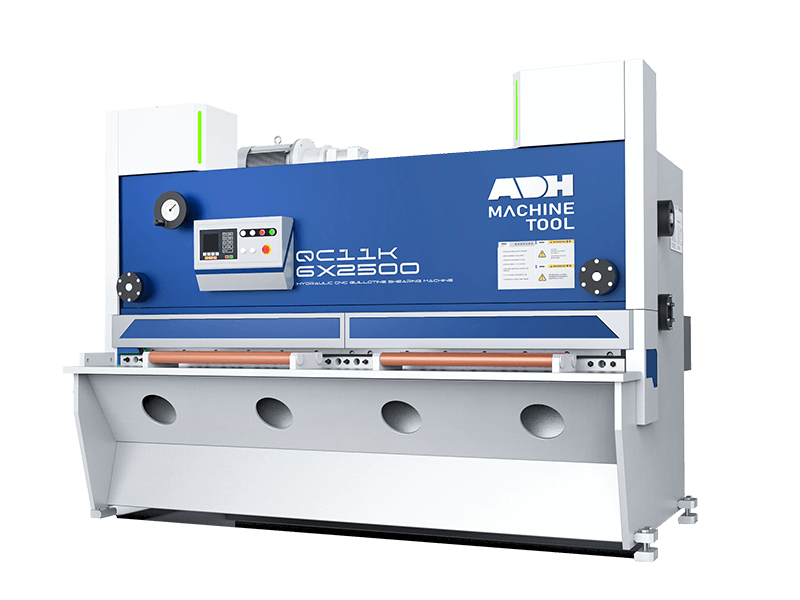
The shear stands at the front line of production—a purebred machine dedicated to fast, cost-effective cutting of large sheet metal. Working like a giant industrial guillotine, its upper and lower blades move with offset alignment to generate tremendous shearing force that cleaves sheets instantly and cleanly.
- Core Advantages:
- Extreme Efficiency: For large-scale material preparation, the shear operates faster than laser, plasma, or any alternative cutting technology—each stroke yields a perfectly straight, flawless edge.
- Excellent Cut Quality: Precisely adjusted blade clearance minimizes burrs and produces crisp edges, reducing or even eliminating the need for post-processing.
- Cost Efficiency: As a cold-cutting process, it consumes little energy, generates no heat-affected zones, and causes minimal material distortion—making it extremely economical to operate.
- Battlefield Position: The shear defines the starting point of every sheet-metal production line. It delivers standardized blanks to downstream operations such as punching and bending—feeding the entire workflow with consistent, precise “ammunition.” While its role is singular, its impact is foundational and far-reaching.
1.4 Strategic Overview: Why Understanding Their Synergy Matters
Viewing these machines in isolation wastes their full potential. True productivity comes from understanding how they complement each other in a synchronized production strategy. In a typical precision manufacturing flow, they perform a seamless relay:
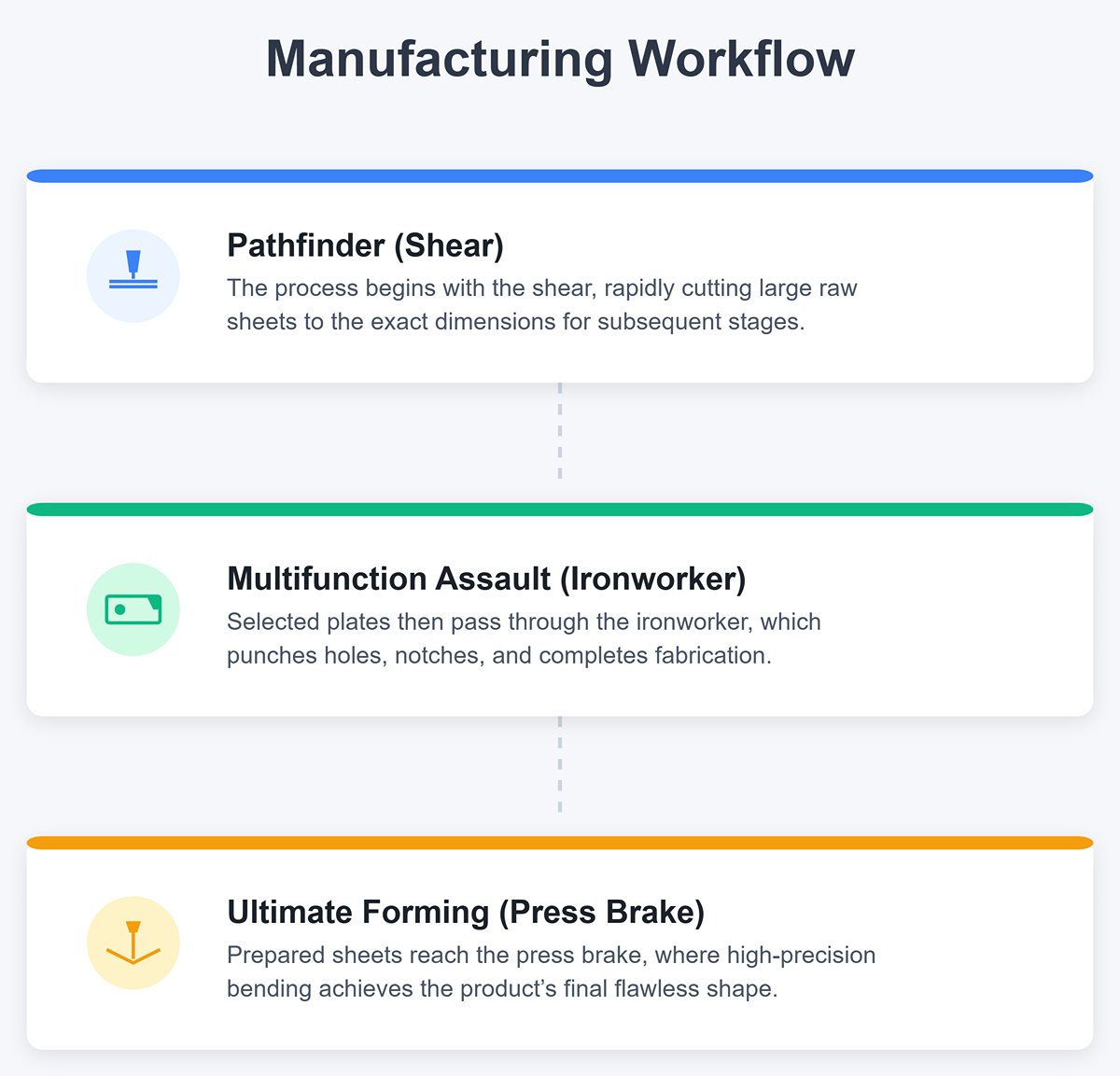
- Pathfinder (Shear): The process begins with the shear, rapidly cutting large raw sheets to the exact dimensions required for subsequent stages.
- Multifunction Assault (Ironworker): Selected plates or profiles then pass through the ironworker, which punches holes, notches, and sometimes completes full component fabrication for simpler parts.
- Ultimate Forming (Press Brake): Finally, prepared sheets reach the press brake, where high-precision bending achieves the product’s final flawless shape.
Strategic Summary: One Diagram to Understand It All
| Feature | Ironworker | Press Brake | Shear |
|---|---|---|---|
| Core Role | Process Integrator (multi-function system) | Quality Definer (precision forming expert) | Efficiency Driver (high-volume preparation) |
| Main Function | Punching, shearing, notching, basic bending | Ultra-precise bending | Ultra-efficient straight-line shearing |
| Workpiece Type | Plates, angle steel, channel steel, bars, and other profiles | Primarily metal sheets | Primarily metal sheets |
| Accuracy Level | Structural grade – not suitable for appearance-critical parts | Instrument grade – micron and 0.1° precision achievable | High, but limited to linear dimensional accuracy |
| Efficiency Model | Overall process efficiency high (reduces part transfer) | Single process slower – perfection-focused | Unit efficiency extremely high (unmatched in straight cuts) |
| Synergetic Role | Handles auxiliary machining to reduce press brake workload | Receives semi-finished pieces, adding final value | Provides standardized “raw material” for all subsequent processes |
II. Into the Core: A Mechanical Perspective on How Each Machine Works
If Chapter One was our strategic map, this chapter is the battlefield analysis. Here, we’ll dissect these steel beasts with the analytical scalpels of mechanics and physics—exposing the driving forces, control systems, and execution mechanisms that separate the merely functional from the truly exceptional. This is the layer of engineering logic that ultimately defines product quality.
2.1 Ironworker: The Art of Multi-Task Execution Under Integrated Power
At the heart of the ironworker lies a powerful hydraulic system—but that’s only the beginning. Its true artistry lies in transforming raw hydraulic force into refined precision across five distinct workstations.
- From “Force” to “Perfect Motion”: The Mechanics of Evolution – A hydraulic cylinder produces pure linear thrust, but a direct push-shear causes violent impacts, tool wear, and deformation—especially in angles. Top-tier ironworkers incorporate mechanical linkages such as crank-slider or Scotch yoke mechanisms to elevate performance. These systems convert the cylinder’s constant-speed linear motion into a cutting stroke with more uniform velocity and smoother torque transmission at the moment of contact. It’s the difference between a brute’s strike and a swordsman’s controlled, lethal swing—delivering less distortion, longer blade life, and superior cut quality. This is the mechanical essence behind high-quality shearing.
- “Intelligence” in the Hydraulic Circuit – Advanced ironworkers feature hydraulic systems that are far more than simple on-off loops—they’re integrated “smart networks” of control valves harmonizing efficiency and safety:
- Load-Holding Valves – Crucial safety guardians. When the operator releases the foot pedal mid-operation, this valve instantly locks the hydraulic cylinder in place, preventing unintended slide descent due to gravity or material rebound—offering a solid sense of security.
- Regenerative Circuits – Efficiency in motion. During rapid no-load descent, instead of venting return oil back to the tank, the regenerative circuit channels it into the pressure chamber, exploiting differential pressure to accelerate movement dramatically. The result? Noticeably shorter work cycles and higher throughput in repetitive operations.
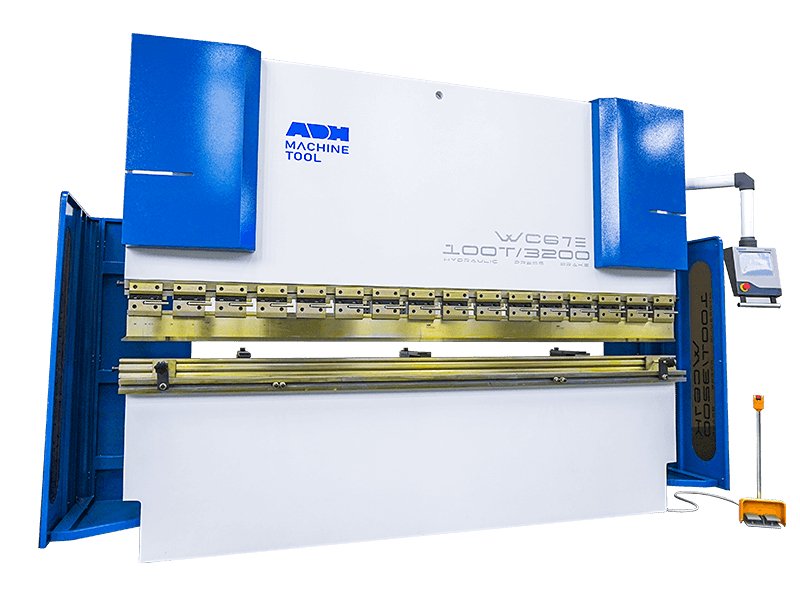
2.2 Press Brake: The Physics and Control Science of Metal Plastic Deformation
The press brake’s mission is to defy the limits of physics—to bend metal sheets into exact 3D forms. Its ultimate precision depends on conquering two physical adversaries: machine deflection and workpiece positioning accuracy.
- Overcoming Deflection: The Art of Active Compensation – When hundreds of tons of pressure are applied across a long sheet, both the ram and bed deform slightly downward—like a wooden beam under load—causing the middle angle to differ from the ends. High-end press brakes counter this with an active crowning system:
- Mechanical Crowning – Comparable to fitting the machine with a precision “adjustable spine.” A set of interlocking wedges beneath the lower bed is moved laterally by CNC-controlled motors, creating an exact, opposing curvature to cancel deflection. Fast, rigid, and highly accurate.
- Hydraulic Crowning – More akin to giving the machine “smart hydraulic muscles.” Short-stroke cylinders distributed under the bed exert independent pressures computed from real-time deflection values, shaping a perfect compensation curve. Ideal for long or thick plates requiring flexible correction.
The chosen compensation method directly determines the linearity limits a press brake can achieve.
- Beyond Angles (Y-Axis): The Control Science of the Backgauge – A flawless part requires not only precise angles (governed by the Y-axis stroke) but also accurate bend positions. That’s where the backgauge comes in—an equally critical dimension of CNC control.
- X-Axis – Controls forward/backward movement of the backgauge, setting basic bend depth.
- R-Axis – Raises or lowers the backgauge fingers to accommodate different die heights or avoid interference during complex bends.
- Z1/Z2 Axes – Allow independent left/right movement along the crossbeam, enabling asymmetric bending such as angled edges.
Advanced systems feature up to 6 or even 8 backgauge axes, allowing precise positioning for conical and irregular shapes. The number and precision of the backgauge axes are as crucial as the Y-axis—together forming the press brake’s true capability ceiling.
2.3 Shear: The Physics of a Perfect Cut
The shear’s job may seem straightforward, yet achieving a vertical, smooth, burr-free “perfect cut” demands mastering its underlying physics. The secret lies in controlling two critical parameters with precision: blade gap and shear angle.
- Dynamic Control of Blade Gap: The minute space between the upper and lower blades is the lifeline of cutting quality. When the gap is too small, it accelerates blade wear and can even cause chipping; too large, and the sheet is torn rather than sheared, creating heavy burrs and distortions. In factories that constantly switch between sheets of varying thickness and materials, manually adjusting the gap—with feeler gauges and dozens of bolts—is an operational nightmare. That’s why automatic blade gap adjustment defines the boundary between professional-grade and entry-level shears. By simply entering material data into the CNC system, the machine automatically sets the optimal gap within seconds. This is not just a leap in efficiency—it’s the foundation for consistent, high-quality output.
- The Material Science Behind the Blade: Shear blades are far from ordinary steel—they are precision-engineered tools, the product of advanced metallurgy where material selection is both an art and a science.
- Standard Blades: Typically made from high-carbon, high-chromium tool steel (such as D2 or Cr12MoV), these blades undergo strict heat treatment to achieve exceptional hardness and wear resistance, making them ideal for cutting mild steel.
- Blades for Stainless Steel: Because stainless steel is tough and prone to galling, these blades are made from modified tool steels containing tungsten or molybdenum, offering better impact toughness. They also use a larger edge angle to withstand higher temperatures and abrasion during cutting.
- High-Performance Blades: For cutting high-strength, wear-resistant steels such as Hardox, the blades must be made of high-speed steel (HSS) or even carbide-tipped materials to deliver comparable durability and performance.
The blade itself is a high-value strategic consumable—its composition, heat treatment, and geometry directly define a shear’s performance limits and long-term operating costs.
III. Ultimate Equipment Selection Framework: From Needs to Return on Investment
In the previous chapters, we explored the “what” and the “why.” Now we turn to the most crucial question—“how to choose.” This is not a simple buying checklist but a rigorous framework designed to help workshops of any scale make intelligent, strategically sound equipment investments. A poor choice can shackle efficiency and drain finances for years; the right one becomes a powerful engine of growth.
3.1 The Four-Dimensional Needs Assessment Model (4D Analysis)
Before being dazzled by shiny machine specifications, we must take a scalpel-sharp look at our own production DNA. This four-dimensional model forces us to answer the most fundamental and revealing questions.
Product Dimension: What do you produce?
- Geometric Complexity: Are your products simple linear cuts and punched structural parts, or intricate enclosures with multiple bending angles and strict forming sequences?
- Accuracy and Tolerance: Are your parts destined for construction, where millimeter tolerances (±1 mm) are acceptable, or for electronics, where angular precision must be within ±0.1°?
- Aesthetic and Surface Standards: How critical are surface finish, edge burr removal, and uniform bend radii? The answer determines whether you can access higher-margin market segments.
Production Dimension: How do you manufacture?
- Batch Size: Do you run single-piece or small-batch, highly customized jobs, or large-scale, repetitive production runs in the thousands?
- Takt Time and Lead Time: How sensitive is your line to production speed and delivery schedules? Are your customer deadlines so tight that any interprocess waiting time is unacceptable?
- Process Flow: Examine your production map—how do parts move between workstations? Are bottlenecks caused by frequent handling or by queueing at a particular operation?
Material Dimension: What do you manufacture with?
- Material Type and Thickness: Are you mainly processing easy-to-cut mild steel, or tougher materials such as stainless steel, aluminum, or high-strength alloys? What is the range of thickness you handle?
- Material Form Factor: Do you primarily source full-size sheet stock (e.g., 4'x8', 5'x10') requiring frequent cutting, or standard-length profiles such as angles, channels, and rounds?
Operational Dimension: What is your factory’s DNA?
- Shop Floor Space and Layout: Is your floor space limited and highly valuable, or do you have room to deploy multiple specialized lines?
- Human Resources and Skill Levels: Are your operators versatile, experienced machinists able to run multiple machines, or are they entry-level workers who need minimal training? Do you have—or plan to hire—technicians skilled in CNC programming and precision setup?
- Budget and Financial Strategy: What is your available capital expenditure (CAPEX)? How deeply have you considered your long-term operational expenses (OPEX)?
Decision Guideline: Completing this assessment will give you a clear “needs portrait.” A profile marked by high precision, small batch sizes, complex geometry, and aluminum material points strongly toward a high-end CNC press brake. In contrast, a profile indicating medium precision, large-volume production, and diverse structural steelwork suggests a combination of an ironworker and a shear. Know yourself before you know your machine.
3.2 Function and Performance Comparison Matrix (Nine Key Indicators)
With your needs profile defined, this quantitative matrix allows an objective evaluation of how each of the three machine types aligns with your requirements.
| Key Performance Indicator (KPI) | Ironworker | Press Brake | Shear |
|---|---|---|---|
| 1. Functional Versatility | Very High (5/5): Punching, shearing, bending, and notching—all in one machine. | Very Low (1/5): Limited to bending only; designed for a single purpose. | Very Low (1/5): Performs only straight cuts; focused and specialized. |
| 2. Bending Accuracy / Angle Control | Low (1/5): Suitable only for simple bends with minimal precision requirements. | Very High (5/5): Precision is its core value; CNC control achieves ±0.1°. | Not Applicable (0/5) |
| 3. Bending Length | Low (1/5): Restricted by machine width and tooling size; best for short workpieces. | High (4/5): Easily handles long sheets—its primary battlefield. | Not Applicable (0/5) |
| 4. Straight-Cutting Efficiency | Medium (3/5): Can shear plates and profiles, but limited in speed and length. | Not Applicable (0/5) | Very High (5/5): The undisputed champion for high-volume straight cutting. |
| 5. Complex Shape Capability | Medium (3/5): Achievable through punching and slotting combinations, though inefficient. | Low (1/5): Large-radius bends possible via step bending, but quality is limited. | Very Low (1/5): Virtually none. |
| 6. Setup / Tool Change Time | Long (2/5): Changing dies across five stations is time-consuming; not ideal for frequent switches. | Medium (3/5): CNC models with quick-change clamps offer moderate efficiency. | Long (2/5): Adjusting blade clearance takes time. |
| 7. Space Efficiency | Very High (5/5): Replaces multiple machines—a space-saver for small workshops. | Medium (3/5): The machine itself occupies a considerable footprint. | Medium (3/5): Requires ample area for material feed and discharge. |
| 8. Operator Skill Requirement | Medium (3/5): Operators must understand safe handling across multiple stations. | High (4/5): CNC programming and precision setup demand technical expertise. | Low (2/5): Relatively straightforward and repetitive operation. |
| 9. Per-Operation Cost | Medium (3/5): For multi-step parts completed in one setup, cost per unit is very low. | High (4/5): For simple tasks, its precision control can be an unnecessary expense. | Low (2/5): Extremely low cost per unit length of cut. |
3.3 Core Decision Logic: Synergy vs. Specialization
This is the strategic heart of equipment selection—a choice deeply rooted in your production model and business philosophy.
- Choosing “Synergy” – Invest in an Ironworker
- Ideal Scenarios: Prototyping, maintenance workshops, structural steel fabrication, small metal product plants, or any environment with variable workflows and diverse product types.
- Core Advantage: Minimizes part transfer time and work-in-progress inventory. For example, a small bracket requiring two holes, one corner cut, and one bend can be finished in a single clamping within minutes on an ironworker. Using three separate machines—with queuing, transport, and repositioning—could take half an hour. This process consolidation is its greatest efficiency driver.
- Decision Signal: When your 4D evaluation reveals “high product variety,” “small batches,” “limited space,” and “tight budget,” the ironworker becomes the most rational strategic entry point.
- Choosing “Specialization” – Invest in a Shear + Press Brake Combination
- Ideal Scenarios: Precision sheet metal manufacturing, electronic enclosures, kitchen equipment, decorative panels, and other medium-to-large batch production settings.
- Core Advantage: Maximizes single-process efficiency and final product quality. The shear delivers unmatched cutting speed and cost efficiency for raw material preparation, while the press brake ensures top-tier bending precision. This assembly-line specialization achieves the lowest per-part cost and highest consistency in mass production.
- Decision Signal: When your 4D evaluation shows “single product type,” “high precision requirements,” “large-scale production,” and “time-sensitive delivery,” specialization is your pathway to scalable, high-quality manufacturing.
3.4 ROI and Total Cost of Ownership (TCO) Considerations
Financial metrics are the ultimate judge. Exceptional decision-makers look beyond the price tag to see the full lifecycle economic value of their equipment.
- Return on Investment (ROI) = (Annual Profit Increase + Annual Cost Savings) / Initial Investment
- Ironworker ROI primarily stems from cost savings—reducing the need for multiple machines, saving valuable floor space, and minimizing operator headcount.
- Shear ROI benefits from economies of scale—in high-volume production, its superior efficiency dramatically lowers labor and energy costs per part.
- Total Cost of Ownership (TCO) = Initial Investment + Hidden “Below-the-Surface” Costs
- Initial Investment (CAPEX): The price tag is just the visible tip of the iceberg.
- Hidden Costs (OPEX) – The true decision-maker!
- Tooling and Die Costs: A frequently underestimated ongoing expense. Complete punch sets for ironworkers, precision-ground dies for press brakes, and spare blades for shears all add up. A high-quality press brake die set can be a significant investment.
- Energy Consumption: Hydraulic systems consume power even in standby mode—factor in full electricity costs.
- Maintenance and Spare Parts: Hydraulic oil, filters, seals, plus servo motors and linear scales in CNC systems—all are consumables with finite lifespans.
- Training and Programming: Hiring or training a qualified CNC press brake operator costs significantly more than training a shear operator.
- Scrap Rate Costs: A poorly configured or imprecise machine can generate scrap that rapidly eats into profits. Investing in higher-precision equipment is essentially paying upfront to reduce future scrap losses.
Final Decision: Integrate your 4D evaluation results into the 9-indicator matrix, select the equipment combination aligned with your core strategy (synergy or specialization), and validate its financial soundness through TCO and ROI analysis. This comprehensive, disciplined, closed-loop decision framework ensures every dollar you invest directly propels your business toward a stronger future.
IV. Safety, Maintenance, and Pitfall Prevention: Extending Equipment Life and Protecting Your Team
Investing in a heavy-duty metalworking machine is only the first step in a long journey. The real challenge lies in ensuring its safe operation day after day, maintaining its original precision, and ultimately achieving the lowest possible Total Cost of Ownership (TCO).
This chapter isn’t a dull instruction manual—it is your strategic shield, safeguarding your team and your investment so that it continues to generate value for the next decade and beyond. To ignore it would be to expose both your valuable assets and your skilled personnel to ongoing, unnecessary risk.
4.1 General Safety Protocols (Applicable to All Equipment)
The following protocols are not recommendations—they are inviolable commandments of the metal fabrication workshop. Through continual training and supervision, they must become second nature to every operator, ingrained in muscle memory and instinct.
- Energy Isolation (Lockout/Tagout - LOTO): The sacred prelude to maintenance. Before performing any maintenance, servicing, die cleaning, or repair, the LOTO procedure must be executed. This involves far more than pressing an emergency stop button—that only halts motion, not energy. True LOTO means completely disconnecting and locking out the main power supply while also releasing residual pressure from the hydraulic system. It is the sole, absolutely reliable method to prevent catastrophic injury caused by unexpected machine start-up during maintenance.
- Respect Safety Devices: The final line of defense. Never disable, bypass, or modify safety mechanisms under any circumstance—this includes light curtains, dual-hand controls, physical guards, and emergency stops. These are the life-saving barriers engineered through lessons written in blood. Choosing convenience over safety is nothing less than gambling against the laws of physics—and it’s a bet you will lose.
- Identify the “No Mercy Zones”: The physical boundary of operation. Every machine has a hazardous operation zone—where dies close or blades descend. This is where physics shows its merciless side. Operators and assistants must ensure that no part of their body (fingers, hair, loose clothing) ever enters this zone.
- Beware of High-Pressure Hydraulics: The invisible blade. Hydraulic systems contain pressures reaching several thousand PSI. Never tighten or loosen fittings while the system is pressurized. When searching for leaks, never use your hand—jets of fluid under pressure can penetrate the skin like a needle, causing severe tissue damage and requiring immediate surgical intervention. Use a piece of cardboard to detect leaks safely.
- Stable Workpieces and Stance: Controlling variables. Ensure that sheets or profiles are properly supported and restrained to prevent shifting or tipping during processing. Such movement can damage both the part and the operator. Maintain a stable, well-balanced stance at all times—never overstretch to reach the workpiece.
- Proper Personal Protective Equipment (PPE): The mark of professionalism. Wearing certified safety glasses and steel-toed boots is fundamental. Depending on the task, cut-resistant gloves and ear protection may also be required. Remember one critical exception: Never wear gloves when operating machinery with entanglement hazards, as a caught glove can pull your hand into the machine.
4.2 Machine-Specific Maintenance and Service Checklists
Preventive maintenance is the most cost-effective and intelligent investment you can make to extend machine life and preserve consistent accuracy. It eliminates problems before they evolve into catastrophic failures.

Ironworker
- Daily “Morning Check”:
- Inspect hydraulic oil level and temperature to ensure the system’s “blood” is sufficient and healthy.
- Visually inspect all punches and dies for cracks or early signs of excessive wear.
- Clear scrap and debris from the work area—keep the “battlefield” clean.
- Test all safety guards and devices to confirm they are properly installed and functioning.
- Weekly “Health Check”:
- Lubricate all moving joints as per the manufacturer’s diagram—feed the machine its proper “nutrients.”
- Inspect and tighten all bolts securing tool holders and dies to prevent looseness, which compromises precision and safety.
- Examine hydraulic hoses and fittings closely for any signs of leakage.
- Monthly “Deep Inspection”:
- Check the contamination indicator on hydraulic filters and replace the elements decisively when needed—keep the “blood” clean.
- Inspect and calibrate punch alignment, which is crucial for high-quality punching results.
Press Brake
- Daily “Wake-Up”:
- After startup, let the hydraulic system run idle for 10–15 minutes to warm up. This stabilizes oil temperature and ensures exceptional accuracy from the very first job.
- Inspect and clean the upper and lower dies; any residual metal debris can leave permanent “scars” on the next workpiece.
- Test the response of light curtains and foot pedals for proper sensitivity.
- Weekly “Housekeeping”:
- Check and clean the backgauge guide rails and drive system—dust is the sworn enemy of positioning accuracy.
- Verify the pressure and functionality of die clamping systems (hydraulic or manual).
- Quarterly/Annual “Comprehensive Service”:
- Inspect and calibrate the crowning system to restore perfect straightness.
- Clean the linear encoders with a lint-free cloth—their cleanliness directly determines ram positioning accuracy.
- Replace hydraulic oil and filters thoroughly at the intervals recommended by the manufacturer (typically every 2,000–4,000 hours).
Shear
- Daily “Sharpness Check”:
- Inspect blade edges for chips or wear.
- Clean the blade zone and table to prevent scrap from affecting cutting precision.
- Check hold-down pressure to ensure consistent clamping of sheets.
- Weekly “Calibration”:
- Check and adjust blade clearance based on the sheet thickness being cut. This is essential for high-quality cuts and extended blade life—never skip this step!
- Lubricate all guideways and joints.
- Monthly “Rotation”:
- Check the torque of all blade fastening bolts to ensure they remain immovable.
- Most shear blades have four usable edges. Regularly rotating them 90 degrees when one edge wears out can quadruple blade life.
4.3 Twelve Costly Mistakes Common to Both Novices and Veterans
These errors are like chronic diseases within a machine—slowly eroding precision and lifespan, while leading to expensive repairs and unavoidable downtime.
- [Press Brake] The Sin of Overload or Off-Center Work: Attempting to bend plate thicker than the machine’s rated tonnage, or repeatedly bending small parts at one end of the bed. The former causes permanent structural “injuries,” while the latter leads to uneven guide wear—destroying accuracy entirely.
- [Shear] The Eternal, Unchanged Blade Gap: Using a gap set for thin sheets to cut thick material can chip blades; using a wide gap for thin sheets tears rather than cuts, leaving burrs and distortions.
- [Ironworker] “Dry punching” or misalignment: Activating the punch without placing any material underneath, or failing to align the punch accurately with the die, can instantly shatter costly carbide punches and dies.
- [Press brake] Mismatch between V-die opening and material thickness: Using a lower die with a V-opening that’s too narrow for the material thickness causes the required tonnage to rise exponentially, leading to severe overload. Remember the golden rule: the V-opening should be at least eight times the thickness of carbon steel sheet.
- [General] Using damaged dies or blades: A press brake punch with even a tiny nick will leave an unsightly indentation on every product, resulting in an entire batch being scrapped. A chipped shear blade produces rough, uneven edges that ruin the quality of all cuts.
- [Press brake] Bending near holes or cutouts: Performing bends directly across holes or notches without proper support—such as a polyurethane pad—can distort the holes and create extreme localized stress on the tooling, potentially cracking precisely ground molds.
- [General] Neglecting the “health” of hydraulic oil: Running on contaminated or heavily oxidized hydraulic oil is like letting cholesterol clog a machine’s bloodstream. It wears out expensive pumps and servo valves and can eventually paralyze the entire hydraulic system.
- [Press brake] Violent collision with backgauge: Failing to account for the part’s movement path during programming or manual operation can cause it to strike the backgauge fingers violently, damaging the costly servo system.
- [Ironworker] Shearing materials of unknown hardness: Using blades designed for mild steel to cut unannealed tool steel or hardened parts is like trying to bite through stone—it instantly ruins the blades.
- [General] Uneven installation base: If the machine is not precisely leveled during installation, prolonged operation under its own weight and working stresses can distort the frame, cause abnormal guideway wear, and irreversibly compromise machining accuracy.
- [Press brake] Using the punch tip to “scribe lines”: Some operators press the expensive upper punch lightly against the sheet to mark positioning lines. This seemingly harmless habit causes fatal wear on the precisely ground punch tip, gradually destroying bend accuracy.
- [Expert-level mistake] Ignoring the “material factor” in tonnage charts: Tonnage charts for all press brakes are based on mild steel with a tensile strength of about 400 MPa. When bending stainless steel, multiply the required tonnage by roughly 1.5; for high-strength steel, by 3–4 times. A seasoned operator relying solely on “feel” from carbon steel settings can unknowingly keep the machine under chronic overload, sharply reducing its structural lifespan. This is the subtle line that separates a craftsman from a true expert.
V. Conclusion
In summary, the choice is strategic: the Ironworker offers versatility, the press brake delivers precision, and the Shear provides unmatched speed. Aligning this decision with your unique production needs is the key to maximizing your return on investment.
Understanding this is the first step. The next is implementation. At ADH Machine Tool, we translate your needs into the perfect fabrication solution. To explore machine specifications, models, and performance details, browse our Brochures for in-depth insights. Contact us today for an expert consultation and let's build your competitive edge together.













 English
  العربية
  বাংলা
বাংলা  Български
  Čeština
  Dansk
Dansk  Nederlands
  Deutsch
  Suomi
Suomi  Français
  Ελληνικά
  עִבְרִית
  हिन्दी
  Magyar
  Bahasa Indonesia
  Italiano
  日本語
日本語  Қазақ тілі
  한국어
한국어  Bahasa Melayu
  Norsk bokmål
  فارسی
فارسی  Polski
  Português
  Português do Brasil
  Română
  Русский
  Српски језик
  Slovenčina
  Español de México
  Español
  Svenska
  Kiswahili
  தமிழ்
தமிழ்  Türkçe
  ไทย
ไทย  Tagalog
  Українська
  Tiếng Việt
  اردو
اردو  简体中文
简体中文  香港中文
香港中文  繁體中文
繁體中文